ongoing artistic research · river lea

follow
y/our
river

Riverine ecologies and deep mapping along the River Lea — an ongoing artistic research project developed through walking, image-making, relational portraiture and ecological publishing.
River Lea landscape
Lower Lea Valley, East London (UK) · 2022–2024

about

Follow Y/Our River
— Riverine Ecologies and Deep Mapping

River walking / Deep mapping / Riverine archives / Relational portraiture / Ecological publishing / More-than-human methodologies

Follow Y/Our River is a long-term artistic research project developed along the River Lea, tracing its course from source to confluence with the Thames. Situated within the hydro-social landscape of the Lower Lea Valley, the project investigates the river as ecological system, infrastructural corridor, and living archive shaped by centuries of industrial extraction, urban development, and hydrological transformation.

Rather than treating the river as subject of representation, the project positions it as collaborator and method — a dynamic system through which to rethink image-making, publishing, and collective attention.

Walking and photography operate as primary tools of inquiry. Through sustained dérive, embodied encounters, and site-responsive gestures, the project explores how human and more-than-human agencies co-inhabit riverine space.

Artists

paula roush
tamara stoll
hḗrā santos

project unfolding

Follow Y/Our River began in autumn 2022 as an artist-led residency initiated at Bow Locks — once home to the msdm House-Studio-Gallery. The project unfolded along the Lea Valley, a territory shaped by ancient springs, reservoirs, industrial waterways, flood control systems, and post-industrial regeneration schemes.

The residency activated the valley as a living archive of water infrastructures and ecological memory. Moving between source and estuary, the artists engaged with archaeological remains, East London waterworks, sculptural interventions, biodiversity zones, and informal social uses of the riverbanks.

The river’s tidal condition — governed by the Thames and, ultimately, by Atlantic currents — became a structuring principle. Temporal cycles of flow and retreat informed both the walking methodology and the editorial processes that emerged from it.

research focus

The project asks:

• How can walking function as a form of ecological listening?
• What forms of relational portraiture emerge when attention shifts from individual subjects to entangled systems?
• How can publishing operate as a watery strategy — fluid, permeable, non-linear?

Follow Y/Our River examines:

• river valleys as layered territories of labour, extraction, ritual, and memory;
• water infrastructures as political and ecological actors;
• the potential of deep mapping to reveal micro-histories embedded within landscape;
• the role of editorial practice in producing situated ecological knowledge.

methodology
walking, image-making, and publishing as research

The work unfolds through the entanglement of three strands:

1. River walking and deep mapping
Through repeated walks from source to estuary, the artists traced historical, ecological, and infrastructural layers of the Lea Valley. Deep mapping functioned not as cartographic representation but as embodied practice — attentive to sensory experience, micro-encounters, and overlooked transitions.

2. Relational portraiture
Portraiture was reconfigured as a hybrid, mobile method capturing the river’s multi-species inhabitants — people, animals, plants, infrastructures — within shared spatial conditions. Ritual gestures were inscribed into landscape, foregrounding presence over documentation.

3. Publishing as watery strategy
The project generated publications, manuals, performances, and workshops that treat publishing not as output but as process. The river’s temporal and material logic informed editorial decisions — fragmentation, layering, prompts, performative reading.

Publishing here operates as a fluid structure: responsive, iterative, and permeable to encounter.

two publications · two editorial structures

publications

publication 01 · open book · 2023

Follow Y/Our River
Lea-minal Edges

Follow Y/Our River — Lea-minal Edges artist's bookFollow Y/Our River — Lea-minal Edges artist's book
Prompts for Transitory States of Being

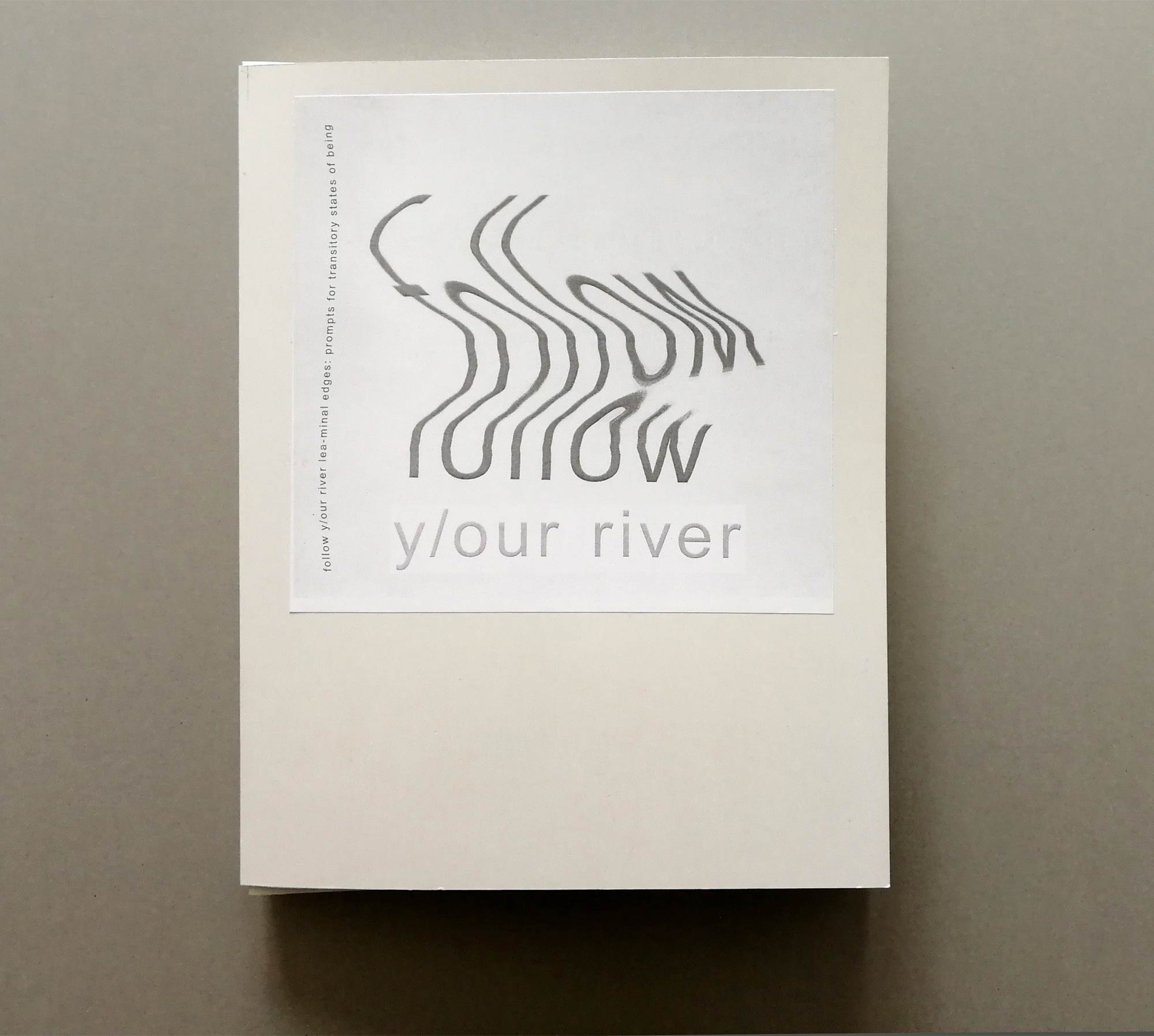
The book unfolds as an open-ended exploration: 19 loose folios, sewn and glued booklets, folding posters, and postcards — all enclosed in a tactile archive that invites physical engagement with its narrative, mirroring the river’s endless unfolding.

The project began in autumn 2022 as a collaboration between paula roush, tamara stoll and hḗrā santos. Through photography and walking, the artists approached archaeological, ecological, sculptural and archival sites across the Lea Valley and developed hybrid relational methods of portraiture connecting human and non-human mobile subjects along the river.

The term lea-minal draws attention to the liminal edges of the River Lea — soft boundaries where materials enter transformative relationships and where water and land come together as ecological materiality.

publication 01

editorial

Follow Y/Our River — Lea-minal Edges:
Prompts for Transitory States of Being

In the autumn of  2022, after four years since our initial meeting at the river Lea Bow Locks where msdm publications studio was situated, hḗrā, tamara and I (paula) embarked on a self-initiated artist residency along the Lea Valley. During this period, we engaged in dialogue with various manifestations of the river Lea, which presented an opportunity for us to explore new research and form connections along the fluid geography of the Lea Valley. Its timeline spans from ancient water sources and industrial waterways to contemporary urban hydro-spectacles, reflecting humanity’s changing relationship with water over time, from a deity to a resource, from common use to private commodity.

Our experience during the residency inspired us to develop hybrid relational methods of portraiture that capture human and non-humans along the river as mobile subjects connected to one another. Hera and I worked on inscribing rituals for transitory states of being into the landscape of the Lower Lea Valley and the traces of the East London Waterworks. Tamara, on the other hand, engaged with people, animals and plant life she encountered along the river, starting at its mouth and following the waters thirty miles north, outside of London.

Through photography and walking along the river, we approached archaeological, ecological, sculptural, and archival sites that the Lea Valley has become, as well as compiling a database of site-specific publishing related to Lea’s life in print since the 19th century. Our efforts resulted in two publications, this one titled ‘follow y/our river lea-minal edges: prompts for transitory states of being,’ which is an open book to be activated by the reader; and the other, ‘Follow y/our river: a manual for deep mapping in the Lower Lea Valley,’ which is a guide that Tamara and I created for the Photography program at the School of Arts and Creative Industries / London South Bank University where we teach.

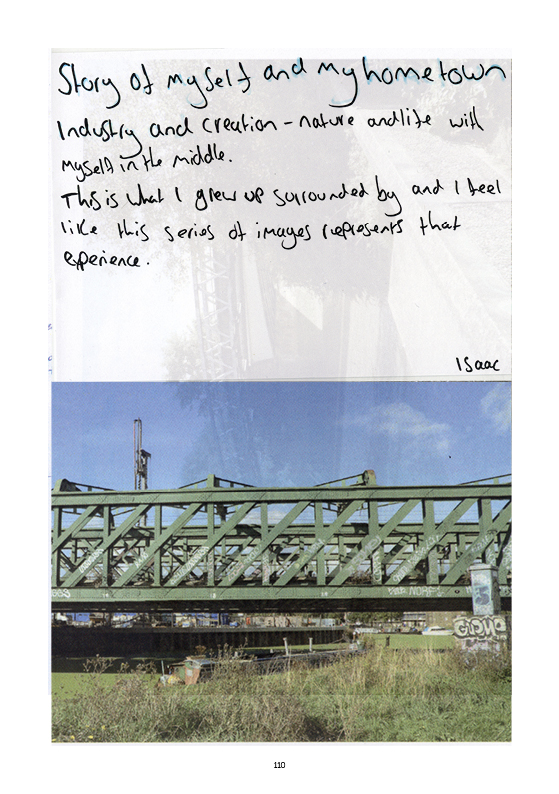
Our students were invited to conduct fieldwork along the river Lea using transdisciplinary approaches such as photographic, geographical, ecological, and experiential methods, to develop a narrative about the Lea Valley. Each student engaged in a dialogue with their respective watery places, delving deep into their personal memories and experiences with water, to create visual stories that reflect our evolving relationship with the landscape. These works were first exhibited at Copeland Gallery in December 2022 and subsequently published as photobooks for the Photobook Popup.

This week-long student-run publishing fair coincides with our book launch and exhibition at Borough Road Gallery in May 2023. We have developed an editorial lab for readers to create their own constellation of ‘follow y/our river,’ with an invitation to activate prompts for transitory states of being in the gallery space.

On the wall of msdm studio is an index card with a quote from Joseph Campbell that states, ‘Follow your bliss.’ This quote reminds us of the importance of pursuing what we are passionate about and being on purpose to our community. Campbell’s ideas are relevant to anyone on the path of transformation and self- development, and this project invites you to consider the life-shifting implications of following your bliss too. By connecting to your river, you can recognise that it has been waiting for you all along, and this is the river of your bliss.

We created a new word, lea-minal, by drawing attention to the liminal edges of the river Lea. This term suggests the soft boundaries where materials are in a transformative relationship with each other. These edges are where water and land come together to become an ecological materiality, in which movement and flow, applied to human and non-human bodies of water, can coexist and be embodied in the river and its lea-minal edges.

three foldable pocket books

Three Ways

Walk One — Leamouth to Three Mills

Walk Two — Back Rivers to Filter Beds

Walk Three — Wick to Hale

Developed from tamara stoll’s walks in the Lower Lea Valley in winter 2022/23, attending to ecological, social and industrial infrastructure and to conditions of access, ownership and displacement. The three double-sided posters are folded into pocketbooks and taken back onto the routes.

Walk One — “Following y/our river, what grounds are you walking on? How close are you to the waters?”

Walk Two — “How have these waters been contested? How has displacement been resisted?”

Walk Three — “Following y/our river, what is visible, and what is invisible to your eyes?”

one book · various locations

Lea wateryquery

ongoing, various locations

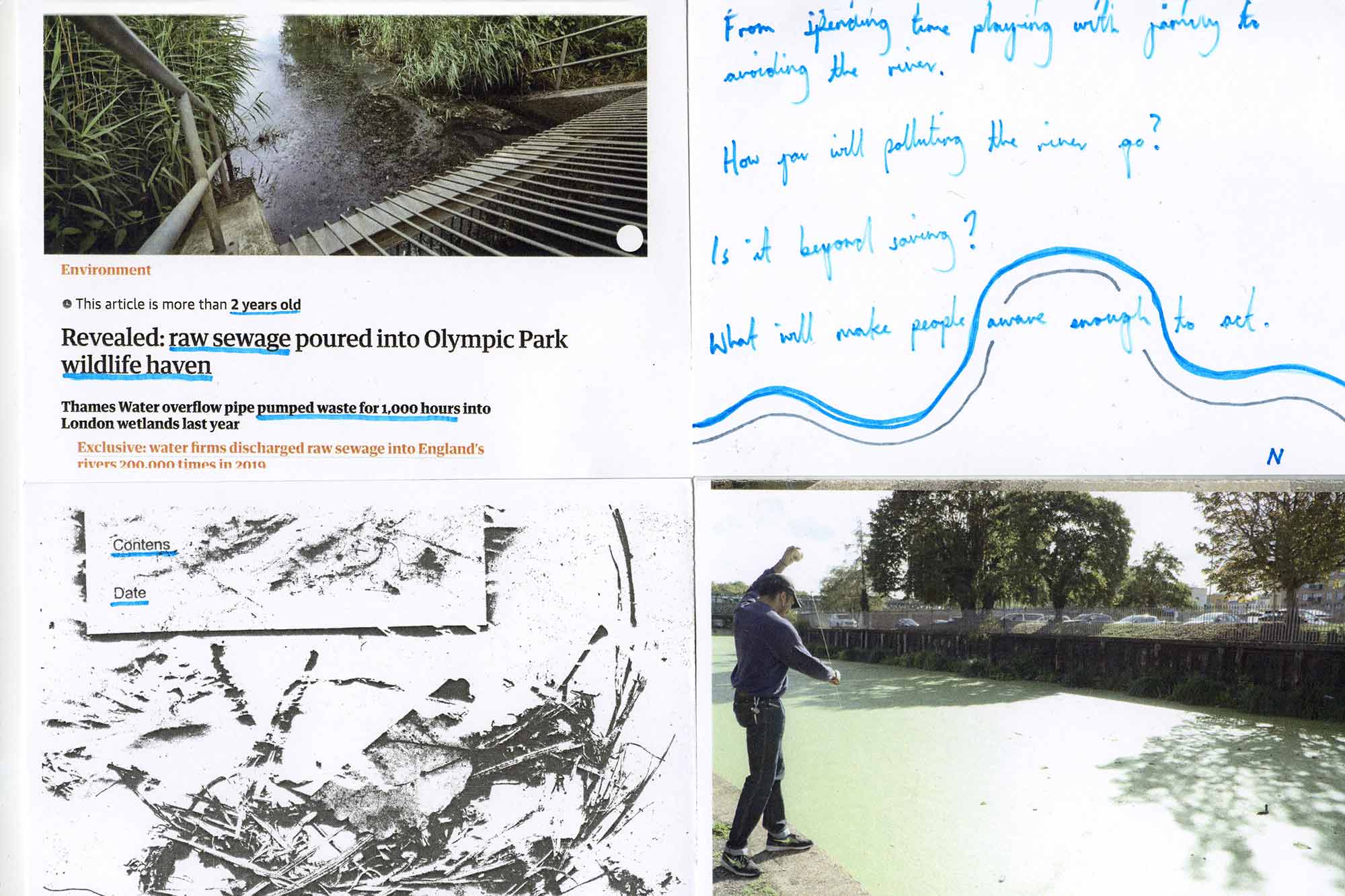
Photographic experiments capturing thriving underwater life are juxtaposed with documentation and archival materials of pollution and toxicity in and along the River Lea waters — from the construction of the Northern Outfall Sewers in 1859 to current Thames Water sewage discharges into London rivers.

two books

Sixteen points of connection

Cynthia and Charley — New River, Hertford
Robin — near Ware Lock
Indigo — Stanstead St Margarets
Daniel — Dobbs Weir Lock
Canada geese — Cheshunt Lake
Lindsay — River Lea Navigation
Eartha — near the M25
Rory — Ramney Marsh
Butterfly — Brimsdown Industrial Estate
Huner — by King George’s Reservoir
Mahsun — by King George’s Reservoir
Horse — Enfield Lock
Tamsin — by West Warwick Reservoir
Group of swans — Old Ford Lock
Coot family — Three Mills
Gediminas — Leamouth

In summer 2022, tamara walked from the mouth of the river northwards for roughly thirty miles. Encounters with fellow walkers became invitations to pause and look at the water; a winter return along the route added photographs of watery bodies, waterways, infrastructure and landscape. Sixteen points of connection explores relations between humans, ecology, place and water in the Lea Valley.

three cards · cyanotype prints · various locations

follow y/our river

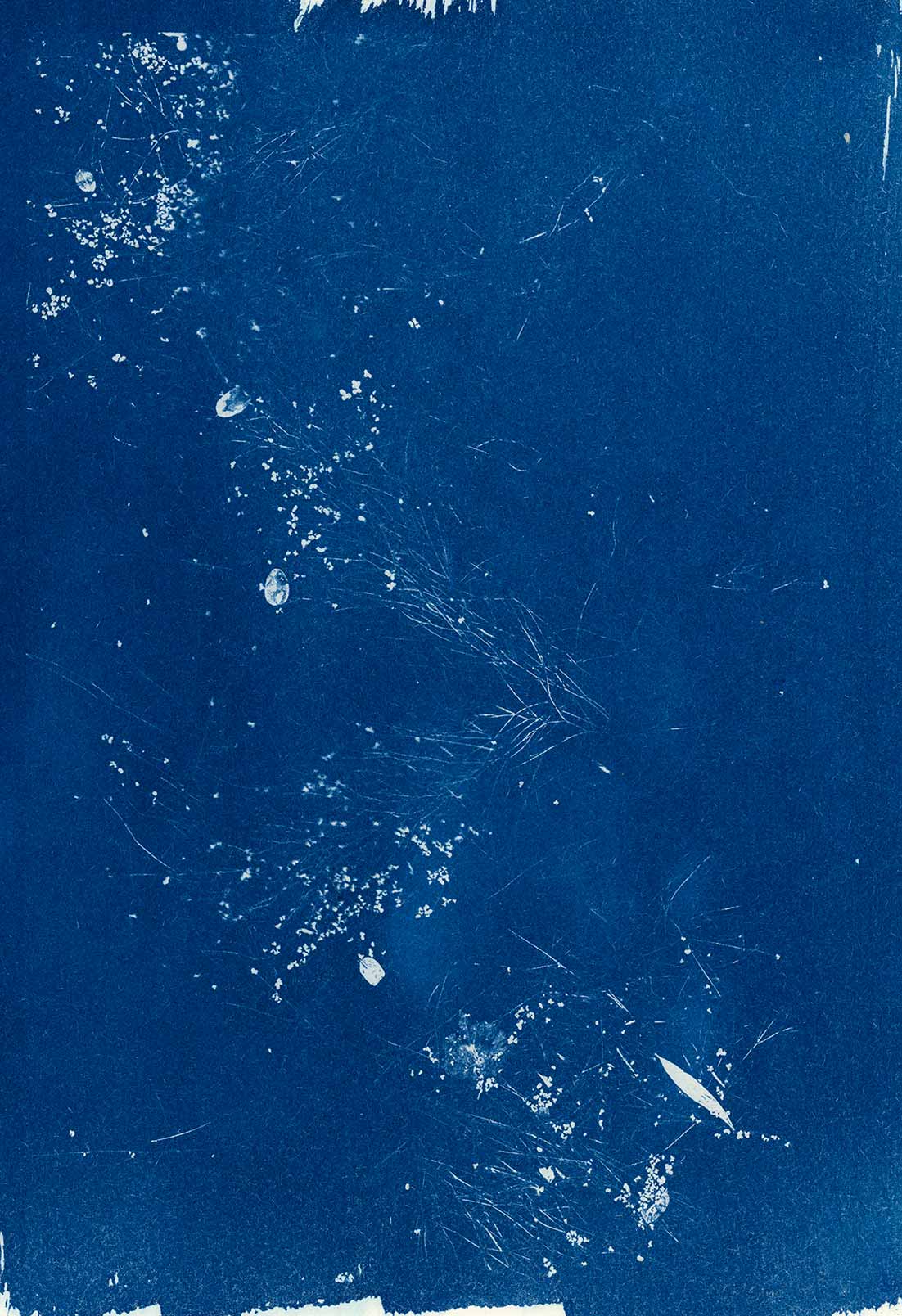
Three cards of cyanotype prints with prompts for transitory states of being.

Follow y/our river towards a specific transition you have in mind for yourself.

Follow y/our river towards a safe place where you can experience compassion.

Follow y/our river towards the liminal edges of consciousness, where the boundaries between the human and the non-human begin to dissolve.

19 loose folios

Nine Nodes

Ritual Landscapes
Landscape-scale ecology
Archive of the Transitory State of Being
Art therapy for a trans body
Body scans
Wet vortex

Old River Lea · Middlesex Filter Beds · Nature’s Throne · Hackney Marshes · Old Ford Lock · Smeed Road · Fish Island · Bow Creek · Limehouse Cut

Ritual Landscapes
The Middlesex Filter Beds become a lea-minal stage for rituals of transition, connecting the site’s hydrological transformation and histories of collective resistance with paula and hḗrā’s collaborative work.

Landscape-scale ecology
Along the Old River Lea, habitat restoration and community-led ecological work foreground river edges as living, changing infrastructures.

Wet Vortex
paula’s everyday relation to the Lower Lea Valley and her collaboration with hḗrā connect Bow Creek, Limehouse Cut, collected plants, water prints and cyanotypes.

Archive of the Transitory State of Being · Body scans · Art therapy for a trans body
hḗrā’s personal photographs, documents, scanner portraits and photo-therapy exercises move between personal memory, transition, healing and collective activism.

publication 02 · pedagogical protocol · 2022

Follow Y/Our River
A Manual for Deep Mapping
in the Lower Lea Valley

Follow Y/Our River — A Manual for Deep Mapping in the Lower Lea ValleyFollow Y/Our River — A Manual for Deep Mapping in the Lower Lea Valley
editorial / introduction
The River Lea and the Lower Lea Valley as a classroom site for transdisciplinary landscape photography.

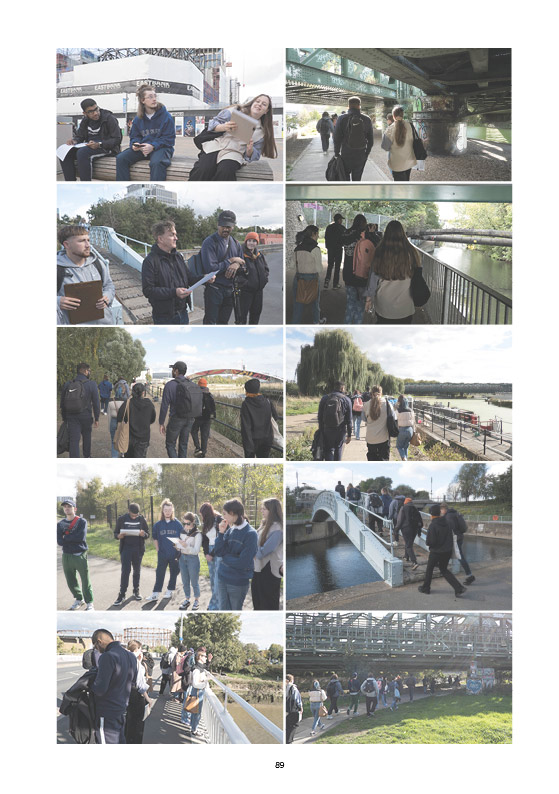
Developed by paula roush and tamara stoll with Y2 Photography at the School of Arts & Creative Industries, London South Bank University, the manual emerged from fieldwork along the River Lea using photographic, geographical, ecological and experiential methods.

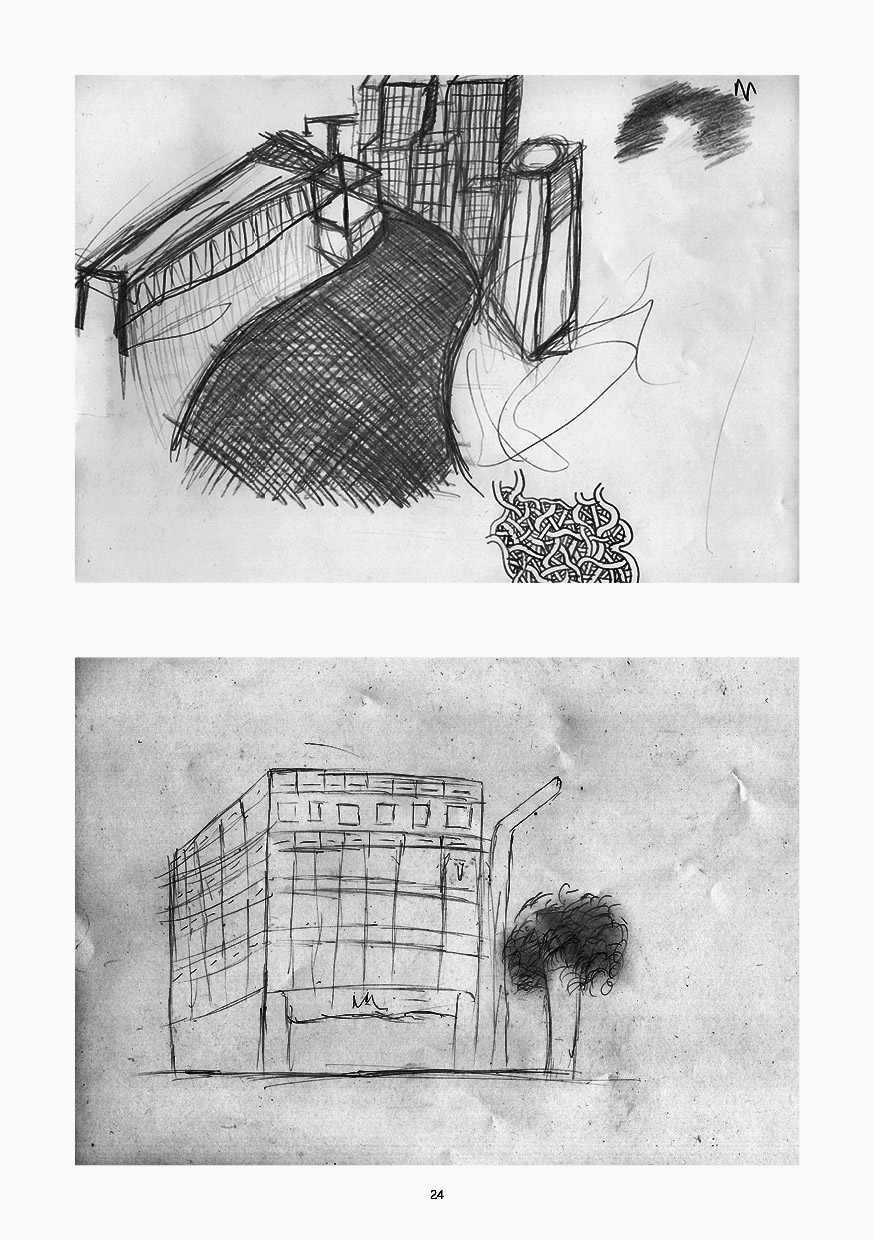
The publication approaches deep mapping as a subjective, embodied and situated practice. Students engaged with watery places, personal memories and experiences with water while assembling visual narratives about the evolving relationship between people and landscape.

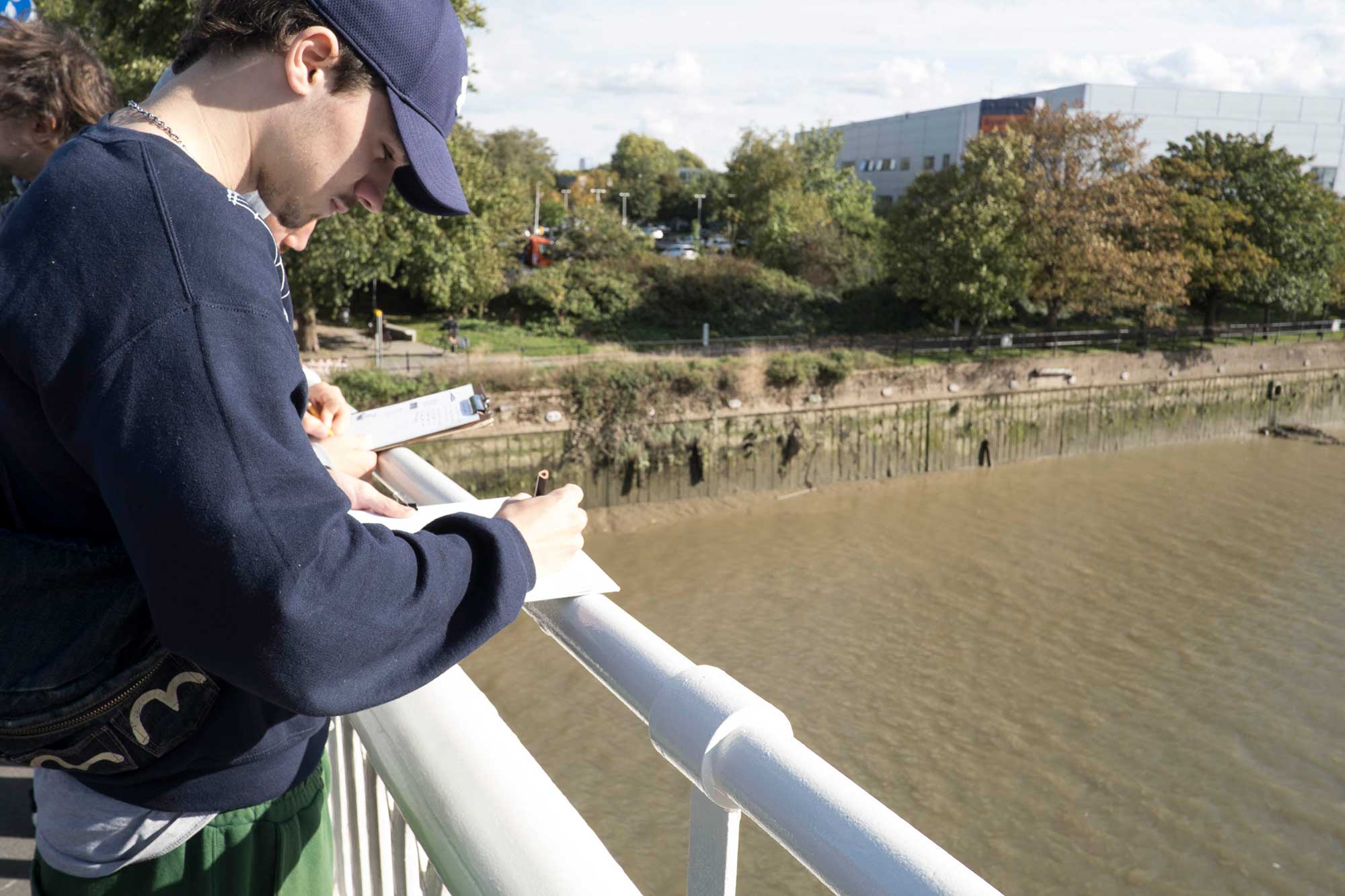
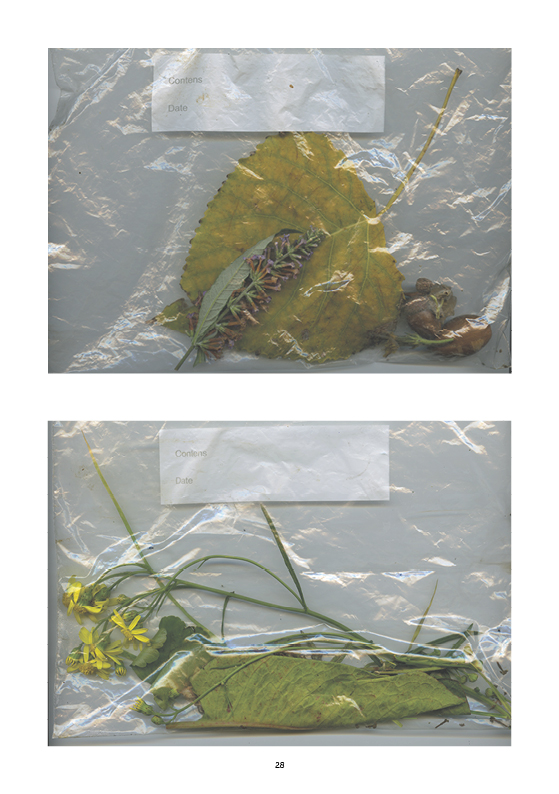
The fieldwork took place along a 6.5 km itinerary through the Lower Lea Valley with ten observation points. Students worked through photographic, geographical, ecological and experiential methods, producing hand-drawn maps and diagrams, collecting water, soil, plants and objects, photographing human-made structures, nature, liminal spaces and infrastructure, and developing personal deep maps after the walk.

The protocol moves between observation, research archives, situated references, material collection, walking and subsequent editorial organisation. The ten observation points belong to this pedagogical publication — not to the internal structure of lea-minal edges.

Lower Lea Valley deep mapping protocol

events

Borough Road Gallery · May 2023

book launch · exhibition · editorial lab

The monographic exhibition brought together the publishing practices of paula roush, tamara stoll and hḗrā santos. Readers were invited to create their own constellation of printed matter and activate prompts for transitory states of being in the gallery.

workshops

Lower Lea Valley · 7 October 2022

Follow Y/Our River workshop

Follow Y/Our River deep mapping workshop

A site-specific deep mapping workshop with Y2 Photography students at London South Bank University. The practice foregrounded intimate, subjective and experiential readings of landscape alongside political, social, economic, infrastructural and environmental dimensions.

6.5 km · 10 observation points · hand-drawn maps · materials · photographs · research archive · personal deep mapping

Cody Dock · 28 September 2024

Book of Water (Tidal Lea)

Book of Water Tidal Lea

A participatory artwork and editorial workshop developed for the Totally Thames Festival in partnership with Cody Dock. Synchronised with the River Lea’s tidal rhythm, it combined meditative walking, water and plant collection, ecological and cameraless printing, collaborative book-making and collective reflection.

Conception: paula roush · co-facilitation: hḗrā santos · assistance: Swapnil Patil. The collective artist’s book measured 89 × 332 cm open and used grass paper, handmade papers, river water, ink, charcoal, cord, botanicals and other organic materials.

Book of Water collective book

colophon

follow y/our river lea-minal edges:
prompts for transitory states of being

paula roush, tamara stoll and hḗrā santos
ISBN 978-1-7390996-4-0

Photography and texts: paula roush, tamara stoll + hḗrā santos
Editorial design: paula roush + tamara stoll
Typesetting: The Modern Designer

Production assistance: IC Visual Lab; Swap studio

Supported by School of Arts and Creative Industries / Centre for the Study of the Networked Image at London South Bank University.

Creative Commons (CC BY-NC-SA 4.0) · Edition 100

Published by msdm [mobile strategies of display & mediation] publications + road less travelled press