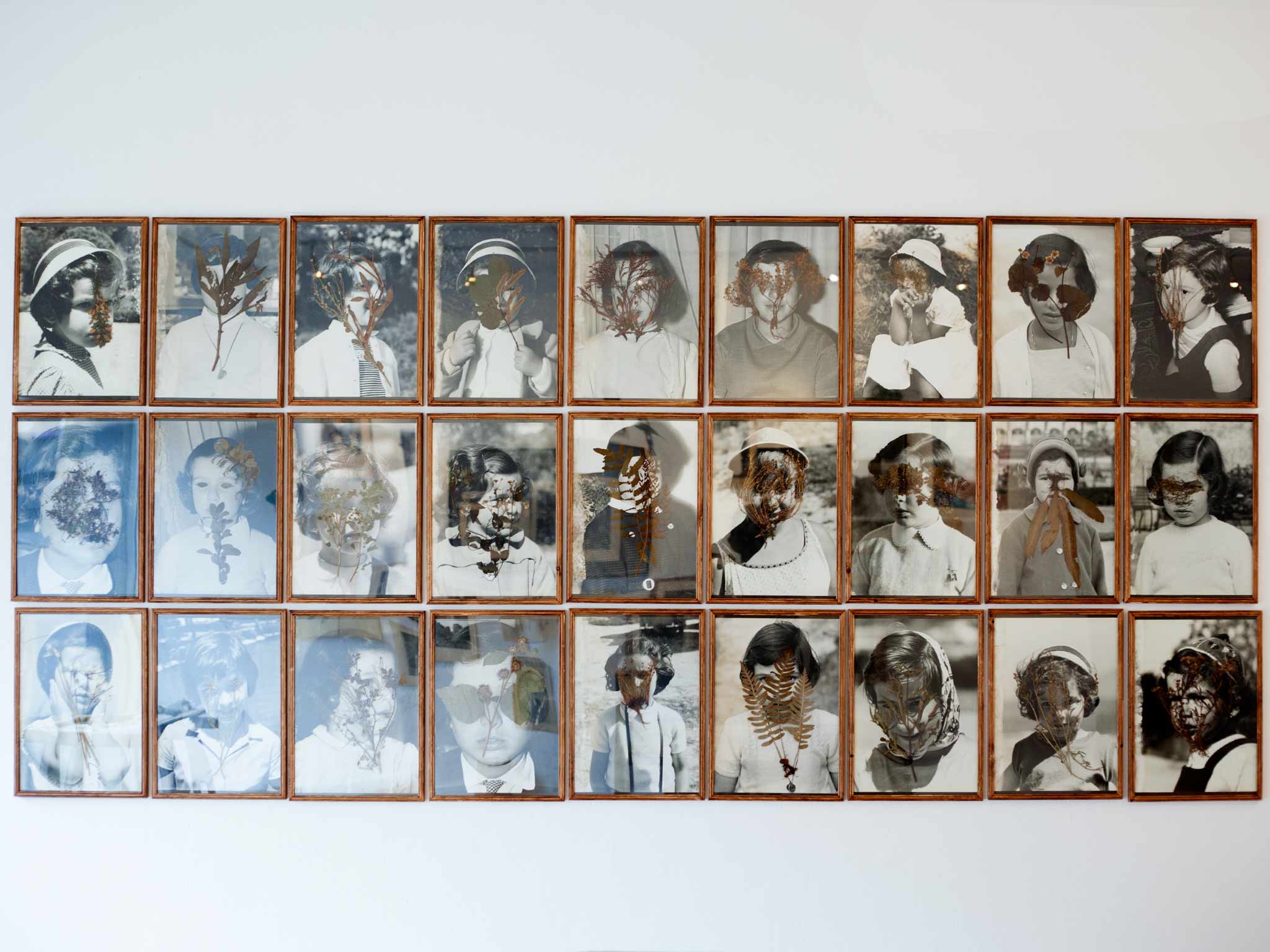

Next month an art gallery in Bermondsey is holding
a ‘reminiscence’, exhibiting rare archive
film and photography of Peek Freans, to jog the memories
of anyone living or working in the area. This week, Will
Pavia looks at the history of the vanished Biscuit Town.
Years after Peek Freans closed
down, you could still smell the biscuits.
Long after the last bourbon cream
left the ovens, the smell remained, stored in the brick
work of what became the Tower Bridge Business Complex
and surrounding streets.
The firm had gone the way of so
many great British manufacturing enterprises. Its closure
was first announced in 1987, by owners RJR Nabisco. Overheads
were too high, the biscuit market was flat, there were
transport problems. A thousand jobs would go. MP Simon
Hughes, then no’but lad, called it a ‘body
blow’ for Bermondsey.
What sealed the fate of the factory
fits the model of nice British company sunk on the craggy
rocks of Thatcher’s free market.
A firm by the name of Kohlberg
Kravis Roberts borrowed the money to buy RJR Nabisco,
then sold off the assets for a profit; precisely the sort
of manoeuvre, in other words, that nasty characters from
eighties films would pull off before they were reformed
by the love of a woman or eaten by sharks.
Peek Freans was bought by a French
firm, which then sold the premises.
The shell for a while lay vacant.
Then a tribe of smaller companies (creative businesses,
TV production companies, a newspaper called the Southwark
News) all these children of the new so-called knowledge
economy, moved in.
And just outside the business centre,
beside the boarded up New Concord pub, another new creative
business is attempting to recapture Peek Freans, its smells,
its sounds, its biscuits.
From June 2 the Coleman Project
Space is staging a ‘reminiscence’ week, exhibiting
pictures and films of Peek Freans and gathering together
memories of the factory from anyone who lived or worked
in the area.
The story of Peek Freans begins
in 1857 with a successful business man, one Mr Peek. Mr
Peek had a tea business. He also had two sons, who, to
his great disappointment, showed no interest in tea at
all.
Clearly they needed something to
do; he cast his tea-trading mind over the possibilities
and bingo! That was it! Biscuits.
He wrote to George Frean, a miller
and ship’s biscuit maker in the west country, who
had married one of Mr Peek’s nieces. Come to London,
he wrote. Manage my sons’ new biscuit factory. I’ll
finance it. We’ll make a packet.
Everyone was happy with this plan
except his two sons, who, spurning from the hand that
fed them, left their father and suffered the fate of all
who go against their parents. One went to the provinces
and died. The other joined the church.
In need of more management, Frean
wrote to a school friend, John Carr. Carr had been involved
in his brother’s biscuit factory, and disliked the
experience, but while he was considering the offer, Frean’s
letter tucked in his pocket, he was granted a sign.
Over breakfast a Quaker lady who
was staying with him and his wife, a propos of nothing
said: “You have a letter from London in your pocket
that will turn out for your good.”
So off he went, to manage Peek
and Frean’s bakery, then in Dockhead, and comprising
a disused sugar refinery and a steam engine. John Carr
would shape the fortune of their firm and pass on the
running of the biscuit factory to his children and grandchildren.
In 1865 Carr produced the Pearl
Biscuit. This was a great leap forward for biscuit making:
where biscuits had been rock hard, the Pearl was soft,
crisp and crumbly, and without “docker-holes”
– the pin holes punched in the biscuit to stop it
blowing up like a football in the oven.
To make the new biscuit, Carr wanted
bigger premises, and bought up ten acres of what were
then market gardens in the middle of Bermondsey. Friends
and relatives thought he was mad, and said so.
Carr knew better. The first major
order came in 1870, during the Franco-Prussian war. Paris
was under siege and Parisiens were, if you will excuse
the nasty pun, dying for a biscuit. Anticipating the end
of the siege the French Government ordered eleven million
biscuits. Peek Freans baked them, payment was delivered
through Rothschildes. Carr actually went to collect the
cash himself: Baron Rothschilde opened the door to him,
smiled and joked “Well, Peeky Weeky Freany”.
You probably had to be there.
The new factory really came on
song when the old Dockhead premises were destroyed by
fire. A spectacular fire that destroyed entire streets,
and brought the Prince of Wales out on a fire engine to
watch. Flour eggs and sugar reportedly cascaded from the
windows, covered the road to the level of the pavement
and was baked hard in parts by the heat of the flames.
Production was upped at the new factory, and the company’s
alchemists forged a huge range of new biccies. Chocolate
Table – the first chocolate coated biscuit, in 1899,
the Golden Puff in 1909, the first cream sandwich biscuit,
the Bourbon, in 1910, the Shortcake in 1912, Cheeselets
and Twiglets in the inter war years.
Visiting journalists gave glowing
accounts of the factory, that was becoming a mini-town,
with its own fire brigade, medics, dentists and post service.
“In the packing department,” wrote one, “
I found innumerable remarkably pretty girls in spotless
white overalls.”
What of the workers? Were they
happy? In the early days they worked 68 hour weeks, 6am
till 5:30 Monday to Friday and 6 till 2pm on Saturday.
Boys in the workforce were described as troublesome in
1864, girls introduced shortly afterwards, were “much
better behaved.”
In 1872 the management reduced the hours without reducing
the pay. This was hailed in the press as a model for other
factory managers, and the way to avoid strikes, that were
happening elsewhere.
The partners felt it was a good
thing too, provided the workers spend their extra hours
in virtuous pursuits, for “if their leisure was
used in frivolous occupancy, then the shortening of their
hours might prove a curse to them.”
In 1918 the directors set up a
tribunal to be elected by the workers, to report their
problems and requests. Through this body came such liberal
reforms as a week’s paid holiday – previously
only granted to employees that had served over thirty
years, a pension fund, and (after all those years packing
biscuits) tea breaks.
Through the twentieth century Peek
Freans put Bermondsey at the front of Britain’s
biscuit trade. Factories were set up in India, Australia
and Canada – the latter factory is approached on
the specially named Bermondsey Road.
Gordon Marshall, who joined the
firm at 14, had a hand in the making of cakes for the
Queen’s wedding in 1947, and for that of Charles
and Diana in 1981. He was one of the last of a generation
in Bermondsey who could say their lives had been looked
after by the biscuit trade.
For on Wednesday 26 May 1989, after
126 years in the business, Peek Freans closed. “No
one eats biscuits anymore,” said the general manager.
But Peek Freans innovative biscuits are still baked under
different companies, in different countries.