Herbário Metabólico / Poções
(plantas, imagem e ecologias de cura)
Metabolic Herbarium / Potions
(plants, image and ecologies of care)
— metabolic herbarium / plant–body encounters / herbal medicine practices / cellular regeneration / algae and medicinal ecologies / image-making with plants / phytograms and solar exposure / collective image archive / preparation of infusions and elixirs / embodied healing processes / ritualised making / cross-cultural plant knowledge
Metabolism
Plants
Healing
Herbalism
Seaweeds
Immunity
Cells
Phytograms
Infusions
Ritual
Listening
Care
Ecologies
Embodiment
Relations
Regeneration
Oficina-laboratório onde corpo e planta se encontram em processos de cuidado e transformação metabólica. Através de práticas artísticas e herbalistas, exploramos o papel de ervas medicinais e algas na saúde celular, na criação de imagens e na partilha de saberes entre diferentes tradições culturais.
WORKSHOP
Entre o corpo humano e o corpo vegetal existe um campo metabólico partilhado. O herbário metabólico emerge desse campo — não como arquivo fixo, mas como um sistema vivo onde plantas, imagem e práticas de cuidado entram em relação.
Esta oficina não propõe apenas um encontro entre arte contemporânea e herbalismo, mas a criação de um espaço de escuta entre espécies. Parte de uma experiência pessoal de regeneração, mas não se encerra nela. O corpo é aqui entendido como território em transformação, em continuidade com outros sistemas vivos.
As plantas e algas trabalhadas — phytolacca (phytolacca decandra), thuja (thuja occidentalis), erva-de-guiné (petiveria alliacea), sutherlandia (sutherlandia frutescens), folhas de graviola (annona muricata), pau d’arco (tabebuia impetiginosa), raiz de dente-de-leão (taraxacum officinale), chá verde (camellia sinensis), passiflora (passiflora incarnata), musgo-marinho-irlandês (chondrus crispus) e bodelha (fucus vesiculosus) — não são apresentadas como matéria neutra, mas como agentes num campo de transformação metabólica.
A oficina articula práticas de imagem e de preparação vegetal como processos interdependentes.
Num primeiro momento, trabalhamos com fitogramas e impressões solares, permitindo que as plantas atuem diretamente sobre a superfície. As imagens resultantes não funcionam como representação, mas como registo de contacto — traços de uma relação em curso. Estas imagens tornam-se páginas de um herbário coletivo, entendido como campo em transformação.
Num segundo momento, abrimos espaço para a circulação de saberes associados a estas plantas, cruzando diferentes tradições herbalistas da Europa, Índia, África e Caraíbas. Não como sistemas fechados, mas como práticas que se deslocam, se contaminam e se reconfiguram.
Por fim, preparamos infusões e elixires, ativando as plantas através do gesto, da respiração e da escuta. O conhecimento deixa de ser apenas discursivo e torna-se incorporado.
A oficina é concebida como um rito de encontro onde o vegetal não é apenas matéria de representação, mas parceiro ativo nos processos de cuidado, imaginação e criação.
CONTEXTO
Workshop: Herbário Metabólico / Poções
(plantas, imagem e ecologias de cura)
Conceção e facilitação: paula roush
Comissionado por: HERBFEST 2026
Este ano o tema é “O Solo é Mãe, as Plantas são Família.”
Programa completo está disponível aqui
Local: Montado Freixo do Meio
7050-705 Foros de Vale Figueira,
Montemor-o-Novo, Portugal
Datas HerbFest: 1, 2 e 3 de maio de 2026
Data workshop Herbario Metabolico: Sabado 2 de maio 15:00-17:30
A workshop-laboratory where body and plant meet through processes of care and metabolic transformation. Through artistic and herbal practices, we explore the role of medicinal herbs and seaweeds in cellular health, image-making, and the sharing of knowledge across different cultural traditions.
— a text unfolding from this workshop is available here (substack, bilingual)
→ metabolic herbarium: plant–body relations, image making and ecologies of care [link]
WORKSHOP
Between the human body and the plant body there exists a shared metabolic field. The metabolic herbarium emerges from this field — not as a fixed archive, but as a living system where plants, image, and practices of care enter into relation.
This workshop does not simply propose an encounter between contemporary art and herbalism, but the creation of a space for interspecies listening. It begins from a personal experience of regeneration, but does not remain confined to it. The body is understood here as a territory in transformation, in continuity with other living systems.
The plants and seaweeds engaged — phytolacca (phytolacca decandra), thuja (thuja occidentalis), guinea hen weed (petiveria alliacea), sutherlandia (sutherlandia frutescens), soursop leaves (annona muricata), pau d’arco (tabebuia impetiginosa), dandelion root (taraxacum officinale), green tea (camellia sinensis), passionflower (passiflora incarnata), Irish sea moss (chondrus crispus), and bladderwrack (fucus vesiculosus) — are not presented as neutral matter, but as agents within a field of metabolic transformation.
The workshop brings together image-making and plant preparation as interdependent processes.
In a first moment, we work with phytograms and solar prints, allowing the plants to act directly upon the surface. The resulting images do not function as representation, but as records of contact — traces of a relation in process. These images become pages of a collective herbarium, understood as a field in transformation.
In a second moment, we open a space for the circulation of knowledge associated with these plants, drawing on different herbal traditions from Europe, India, Africa, and the Caribbean. Not as closed systems, but as practices that move, intersect, and reconfigure.
Finally, we prepare infusions and elixirs, activating the plants through gesture, breath, and attentive listening. Knowledge shifts here from the discursive to the embodied.
The workshop is conceived as a ritual of encounter in which the vegetal is not merely a material for representation, but an active partner in processes of care, imagination, and creation.
CONTEXT
Workshop: Metabolic Herbarium / Potions
(plants, image and ecologies of care)
Concept and facilitation: paula roush
Commissioned by: HERBFEST 2026
This year’s theme is “Soil is Mother, Plants are Family.”
Programme: The full programme is available here
Location: Montado Freixo do Meio
7050-705 Foros de Vale Figueira,
Montemor-o-Novo, Portugal
Dates Herbfest: 1, 2 and 3 May 2026
Date workshop Metabolic Herbarium: Saturday May 2 15:00-17:30
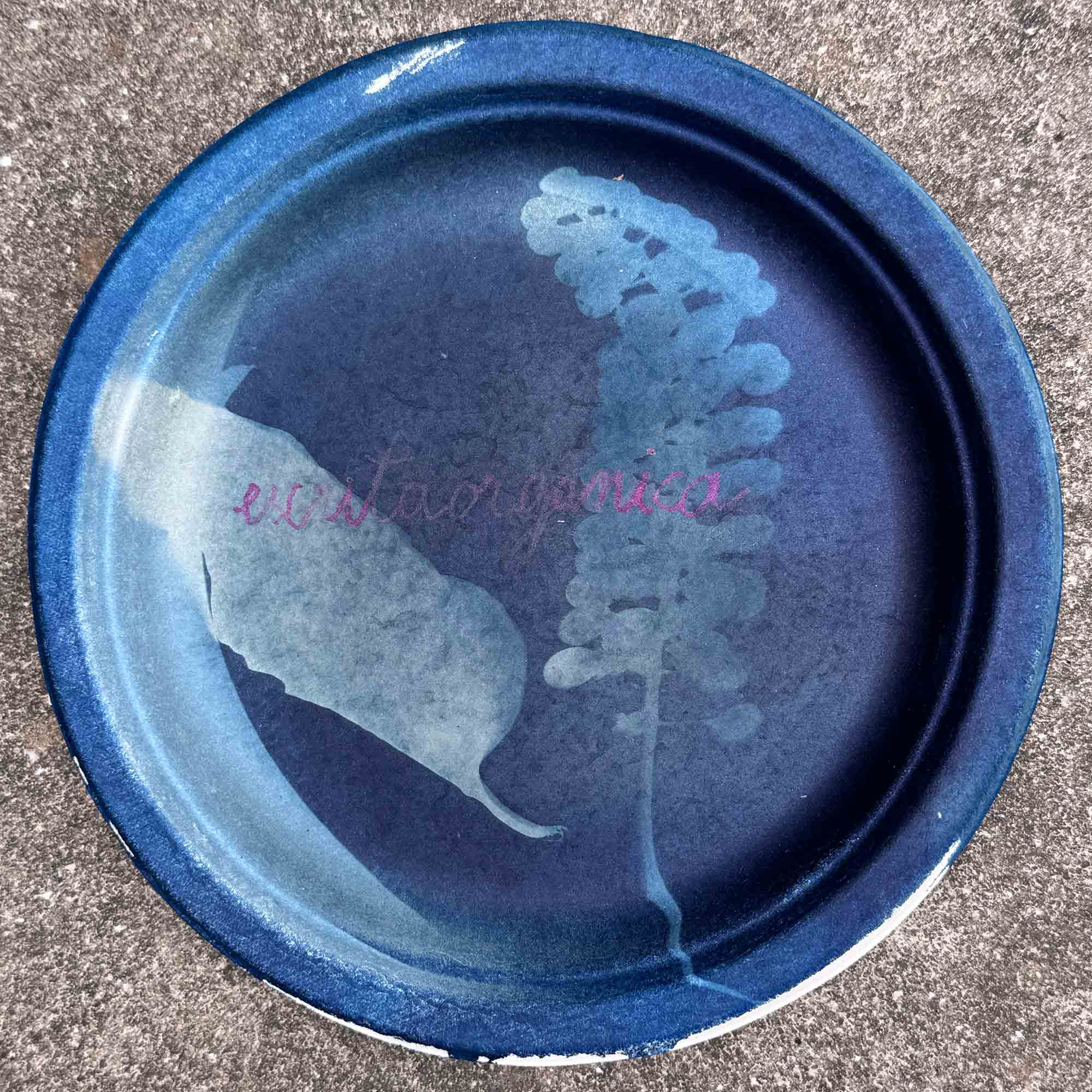
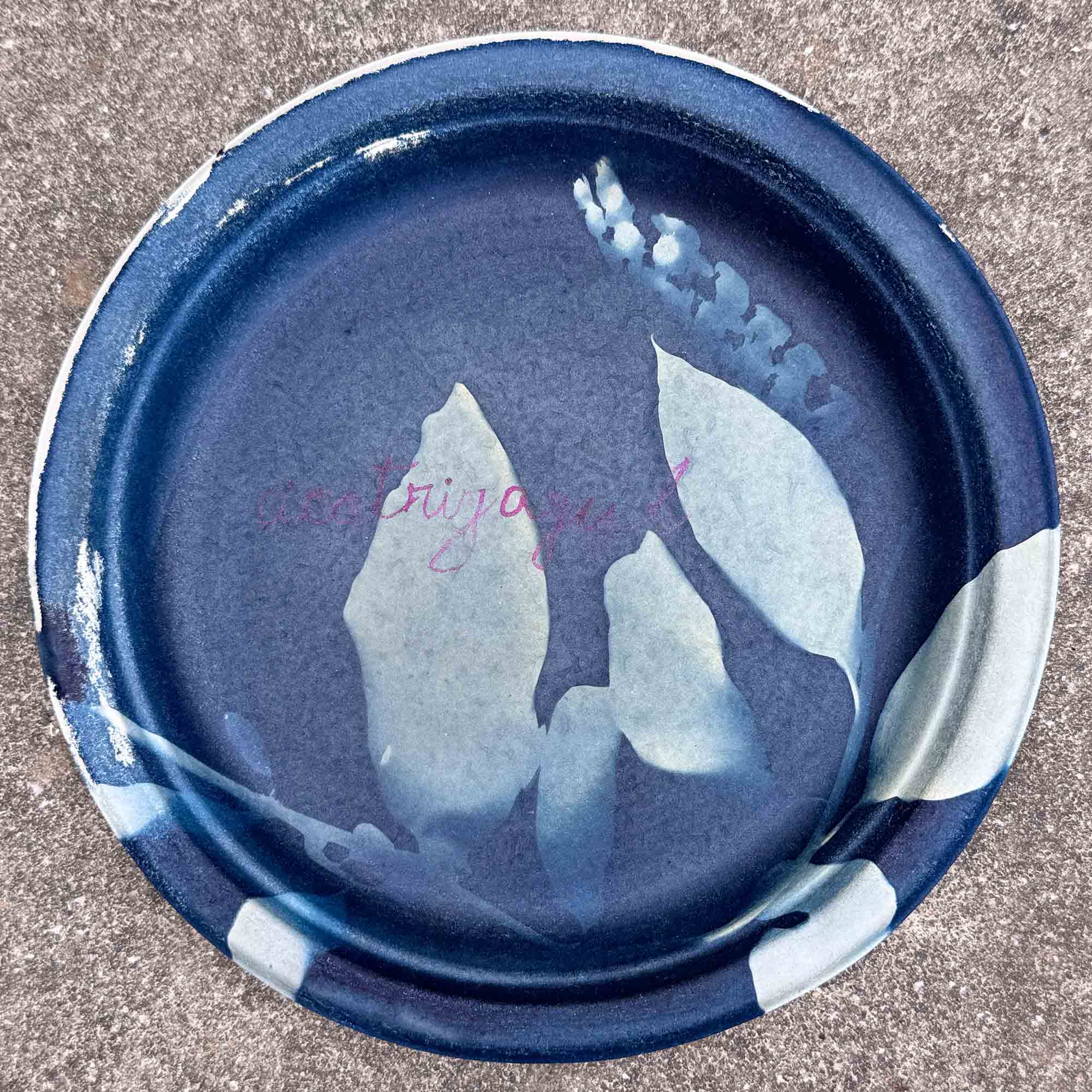
Pratos de Papel: Cianotipia, Tintureira e Superfícies Provisórias
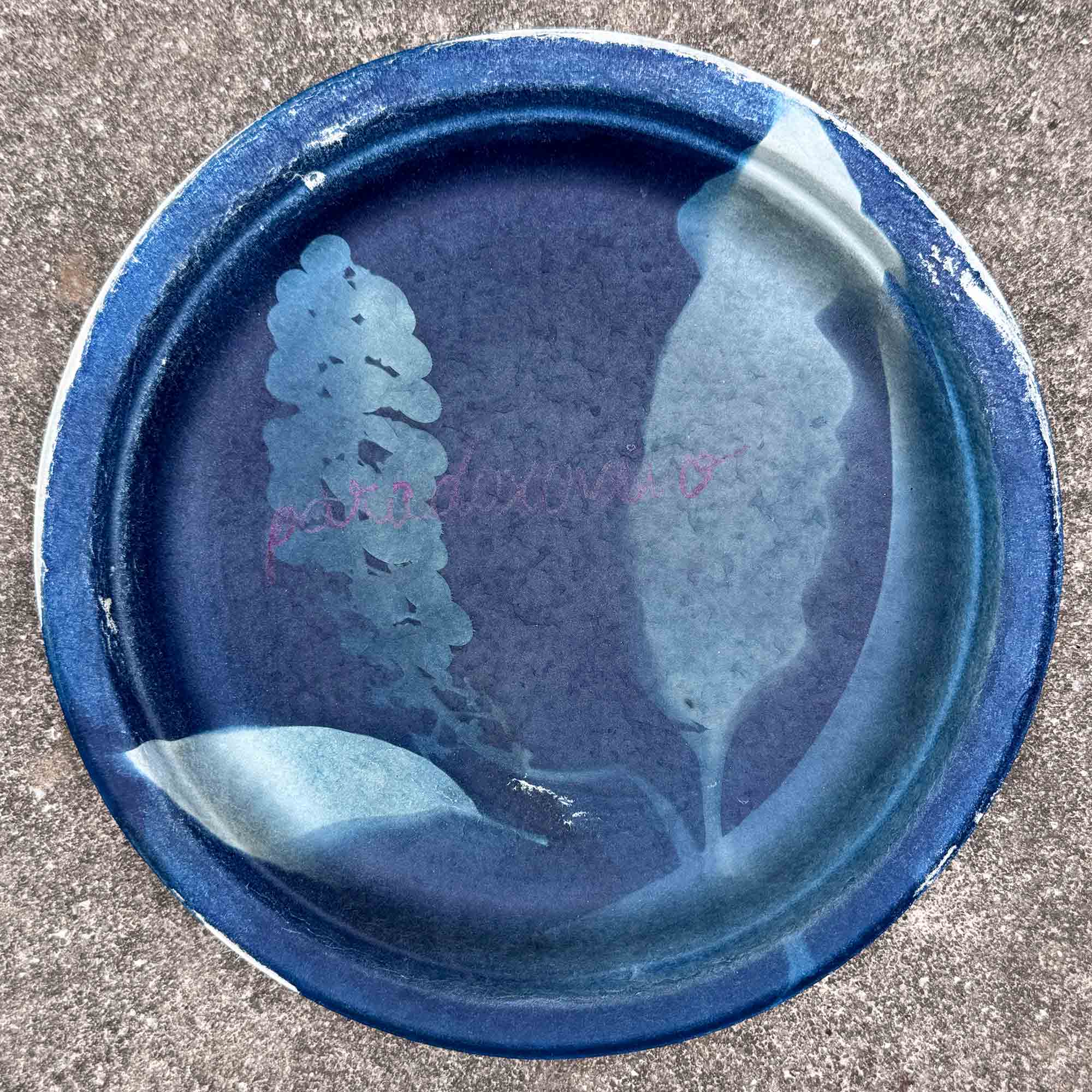
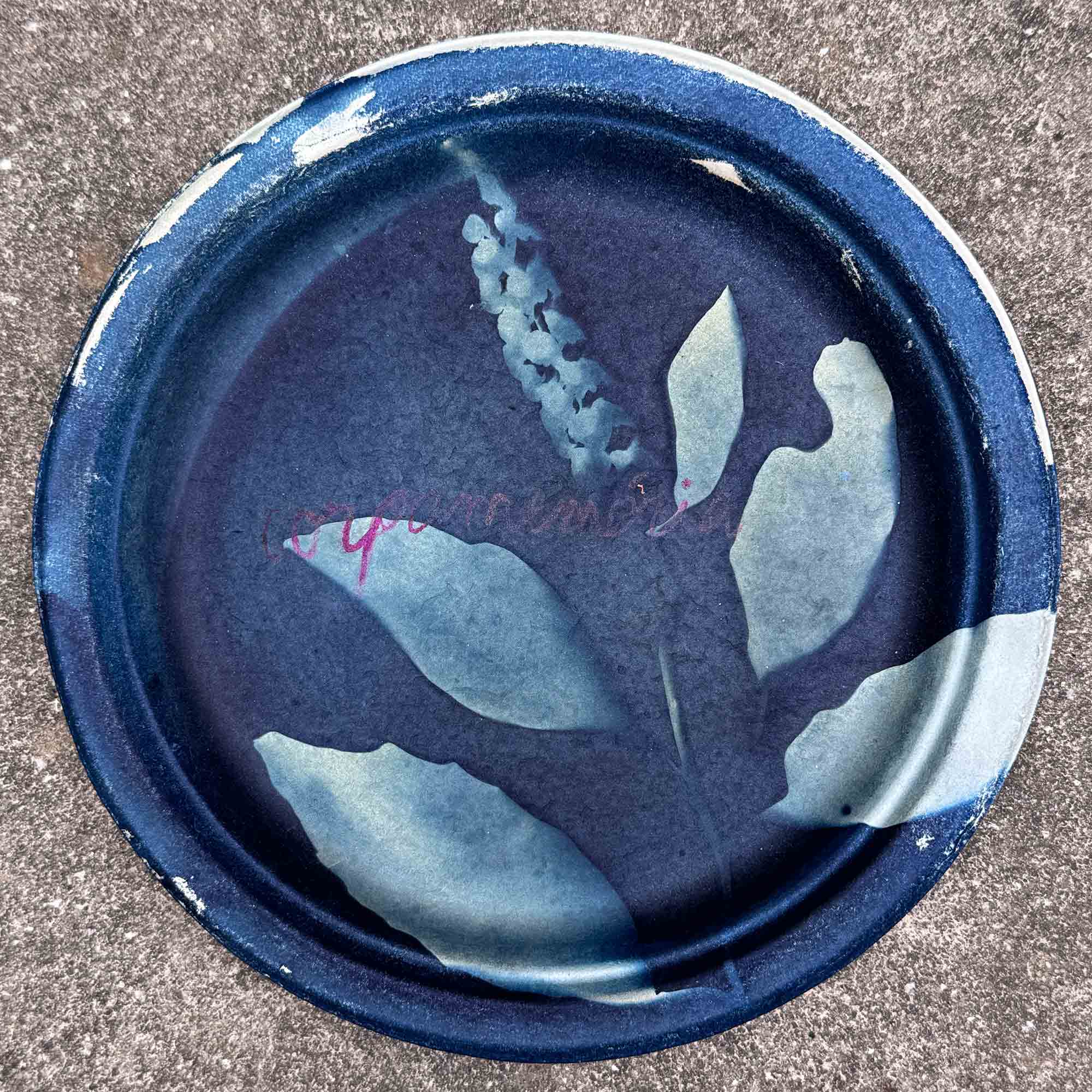
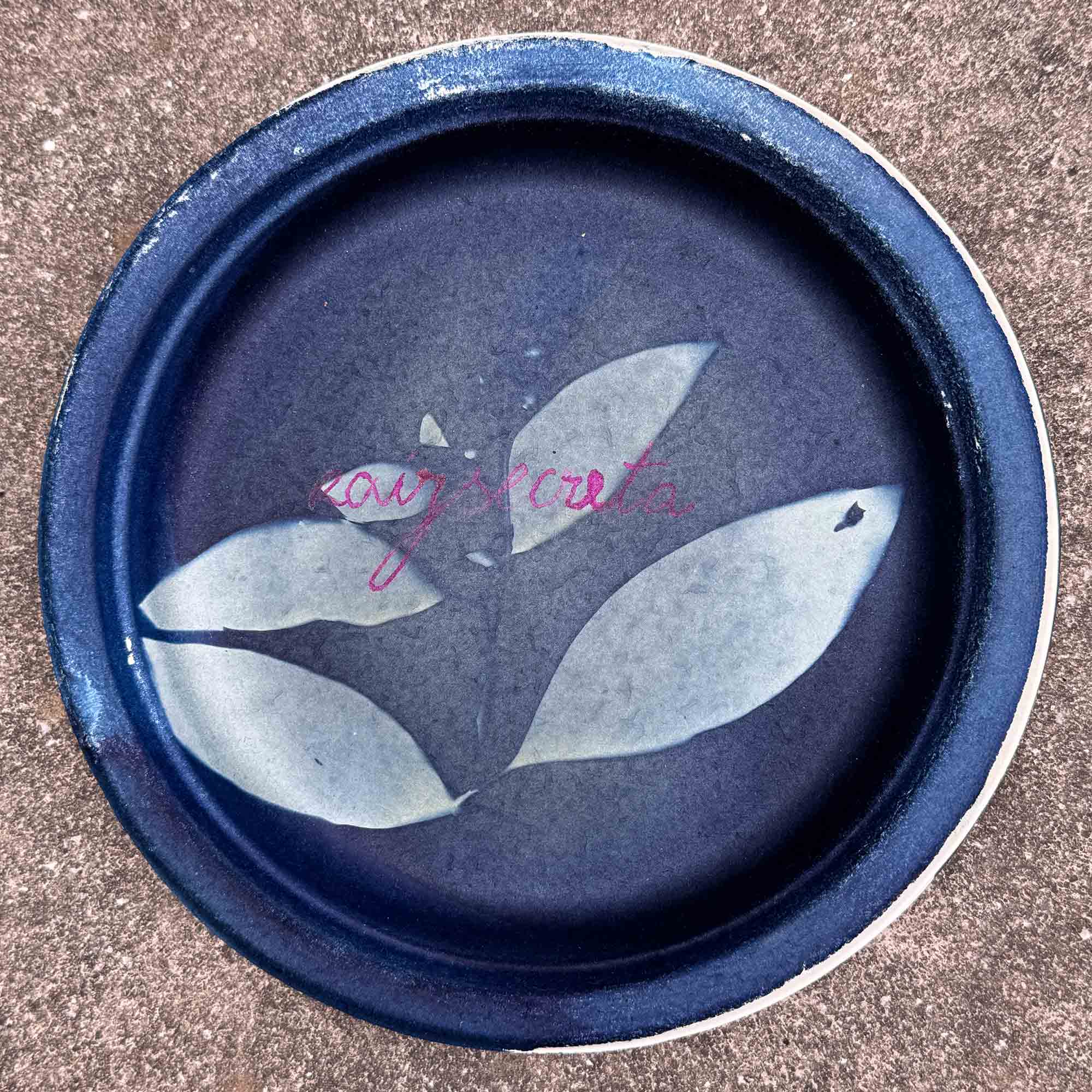
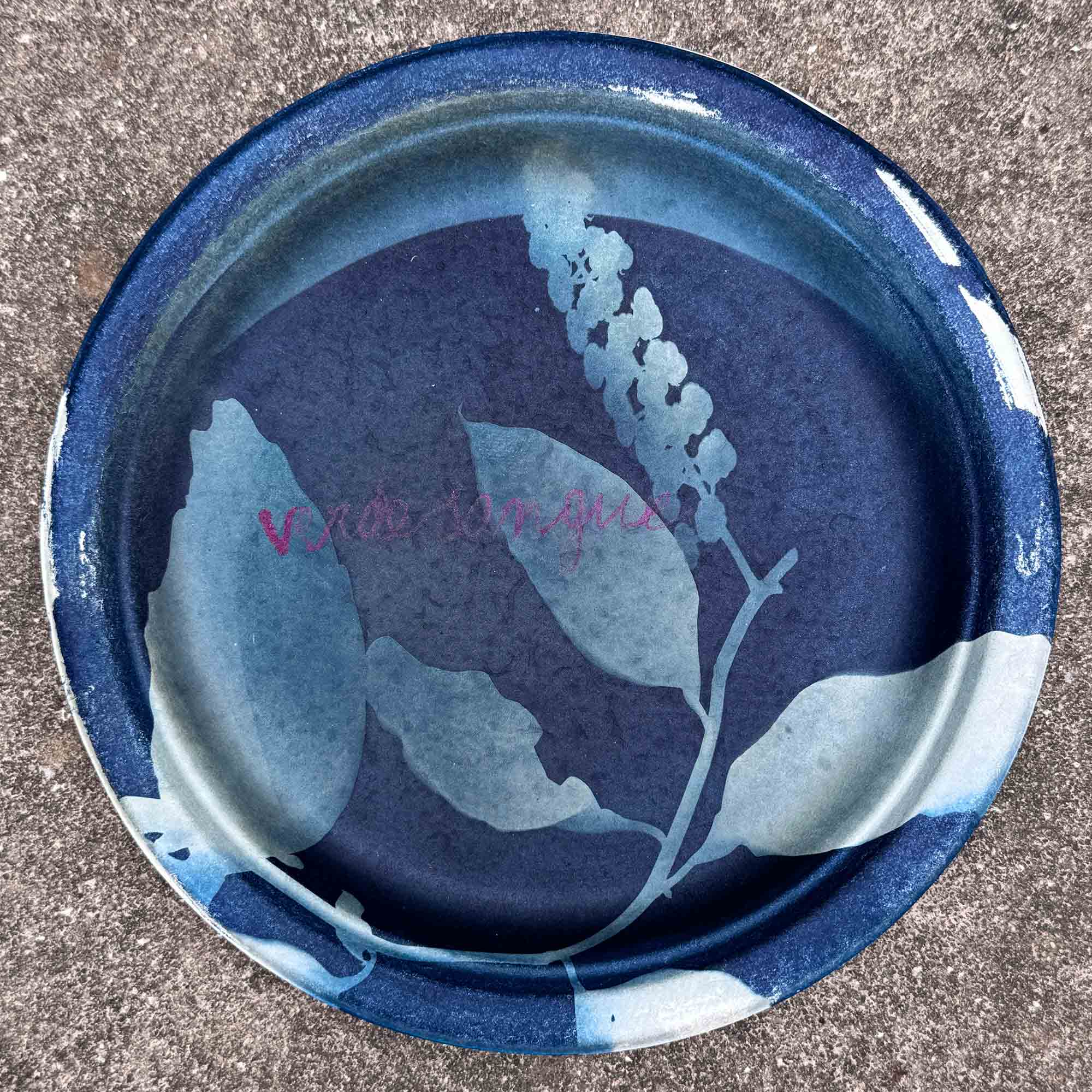
Cianotipias em pratos de papel descartáveis, com inscrições manuscritas realizadas com polpa de tintureira (Phytolacca). Leves e não arquivísticos, estes suportes deslocam o trabalho da permanência para o processo. Os pratos recebem simultaneamente a planta e o seu corante, guardando vestígios de contacto onde imagem e escrita emergem do mesmo gesto material. Entre veneno e remédio, sombra e luz, a superfície torna-se um lugar de inscrição — não uma representação estável, mas um registo de encontro. A forma circular evoca contenção e oferenda, mantendo-se aberta ao uso, ao manuseamento e ao eventual desaparecimento: um encontro breve entre luz, planta e corpo.
Paper Plates: Cyanotype, Inkberry, and Provisional Surfaces
Cyanotypes on disposable paper plates, with handwritten inscriptions made using inkberry (Phytolacca) pulp. Lightweight and non-archival, these surfaces shift the work away from permanence toward process. The plates receive both the plant and its dye, holding traces of contact where image and writing emerge from the same material gesture. Between poison and remedy, shadow and light, the surface becomes a site of inscription — not a stable representation, but a record of encounter. The circular form echoes containment and offering, while remaining open to handling, use, and eventual disappearance: a brief meeting of light, plant, and body.
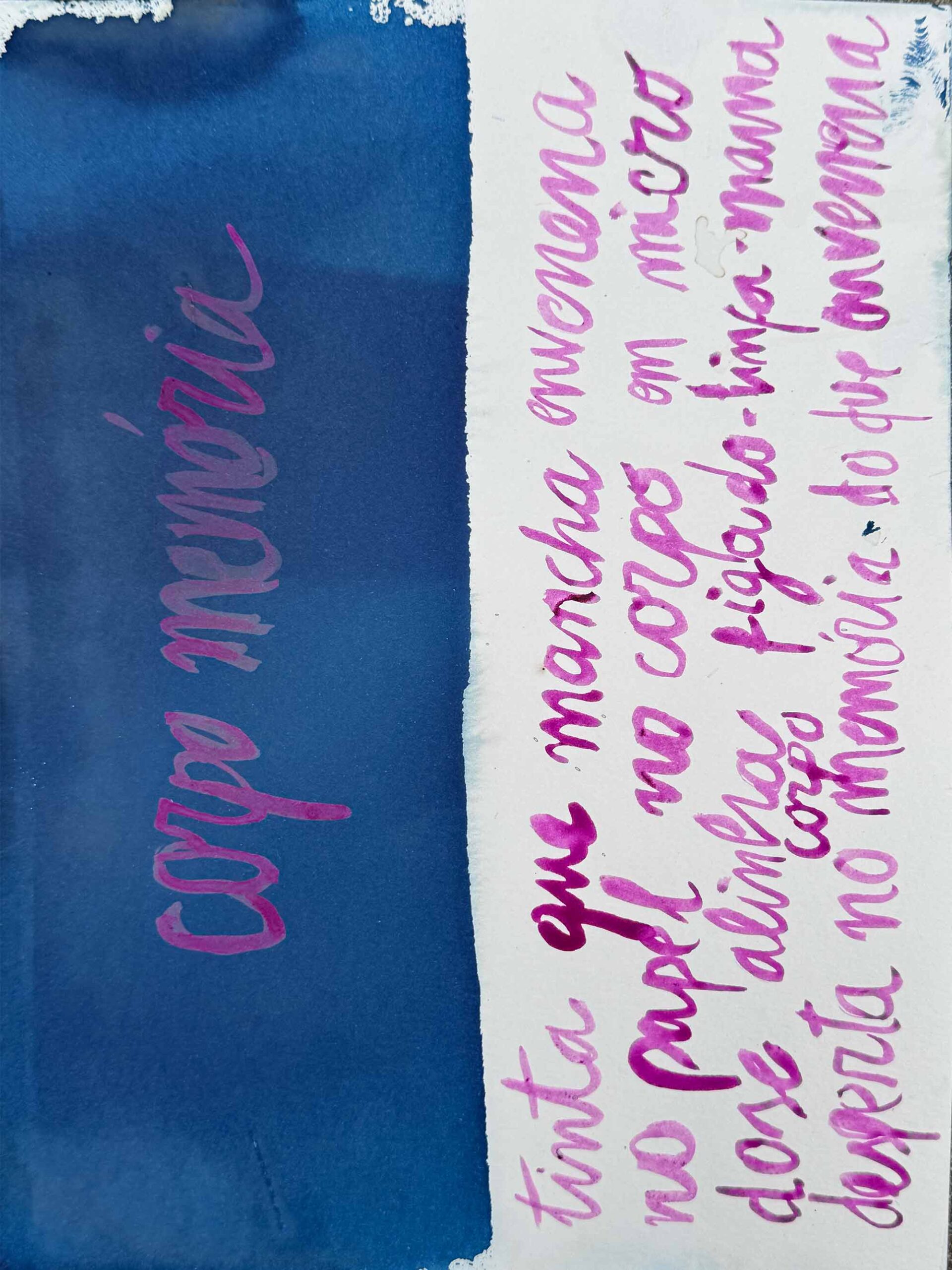
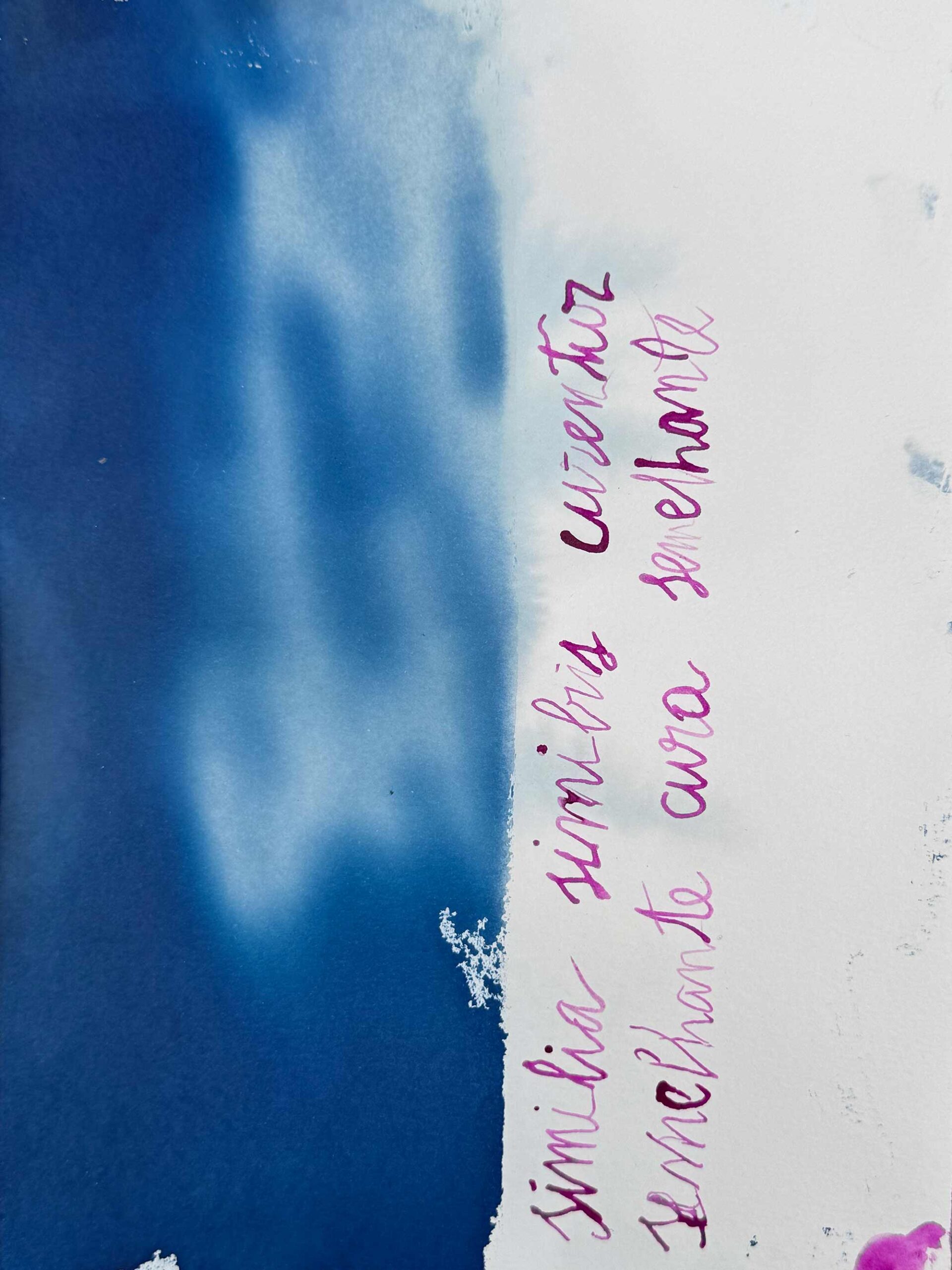
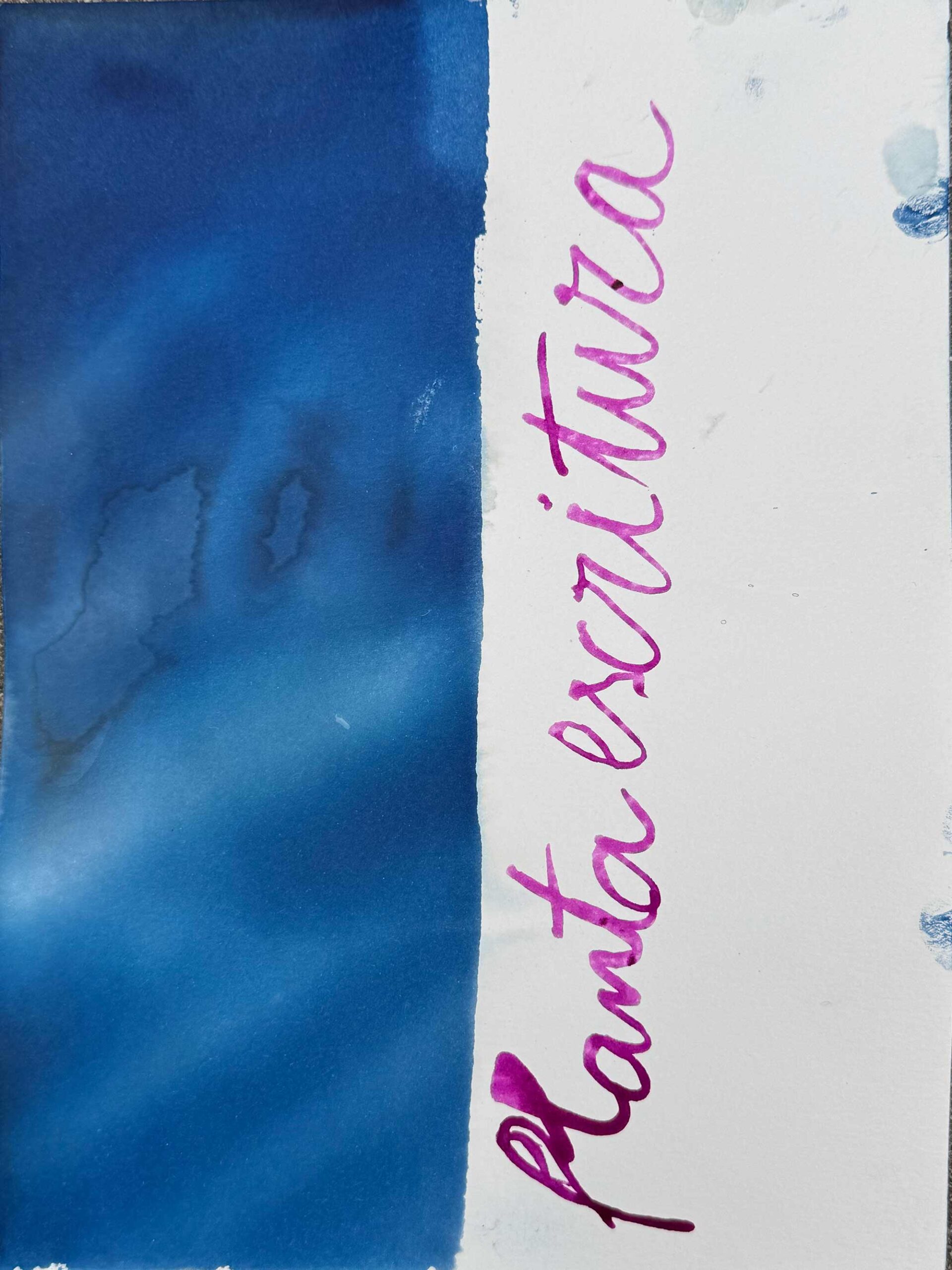
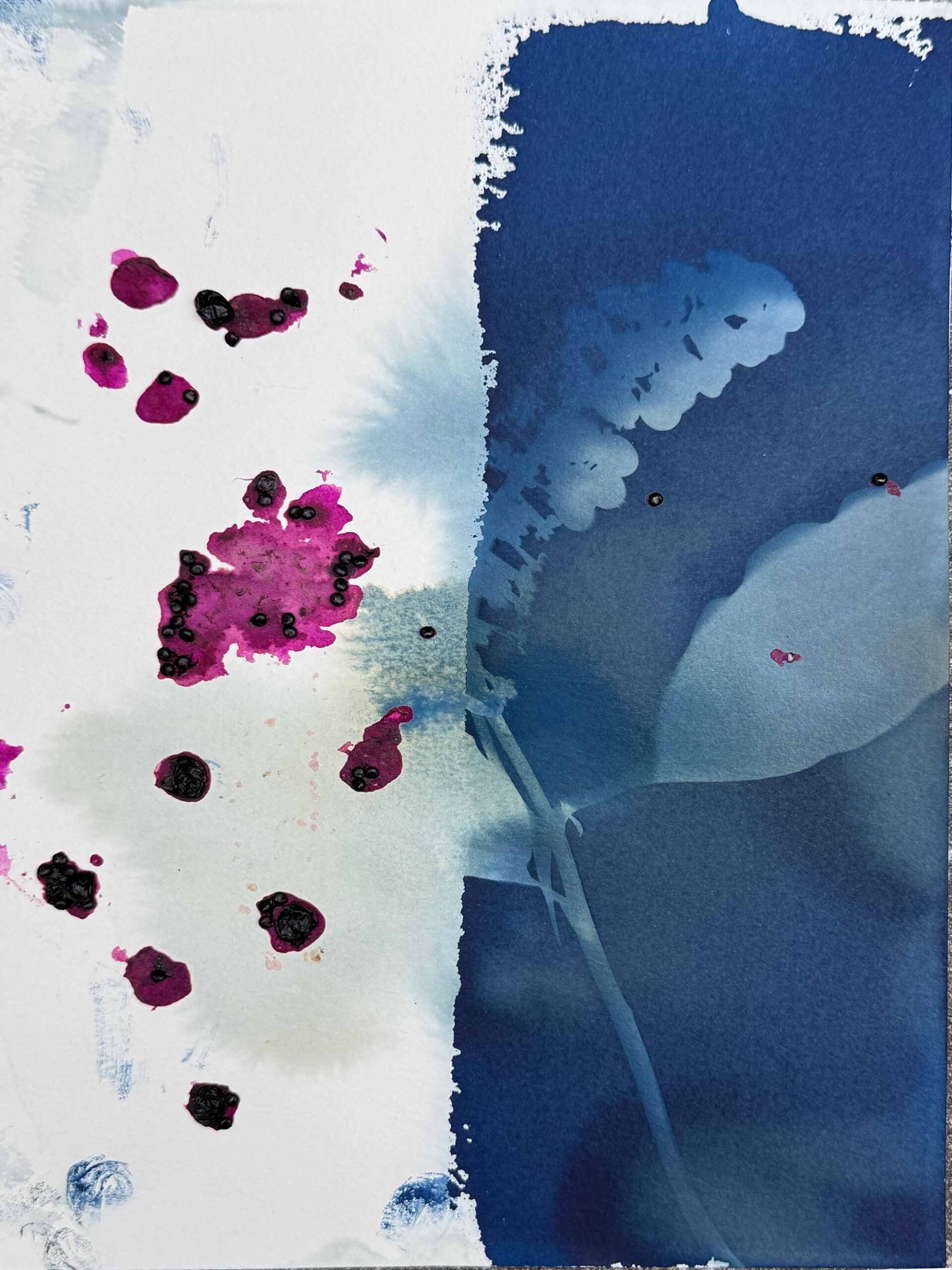
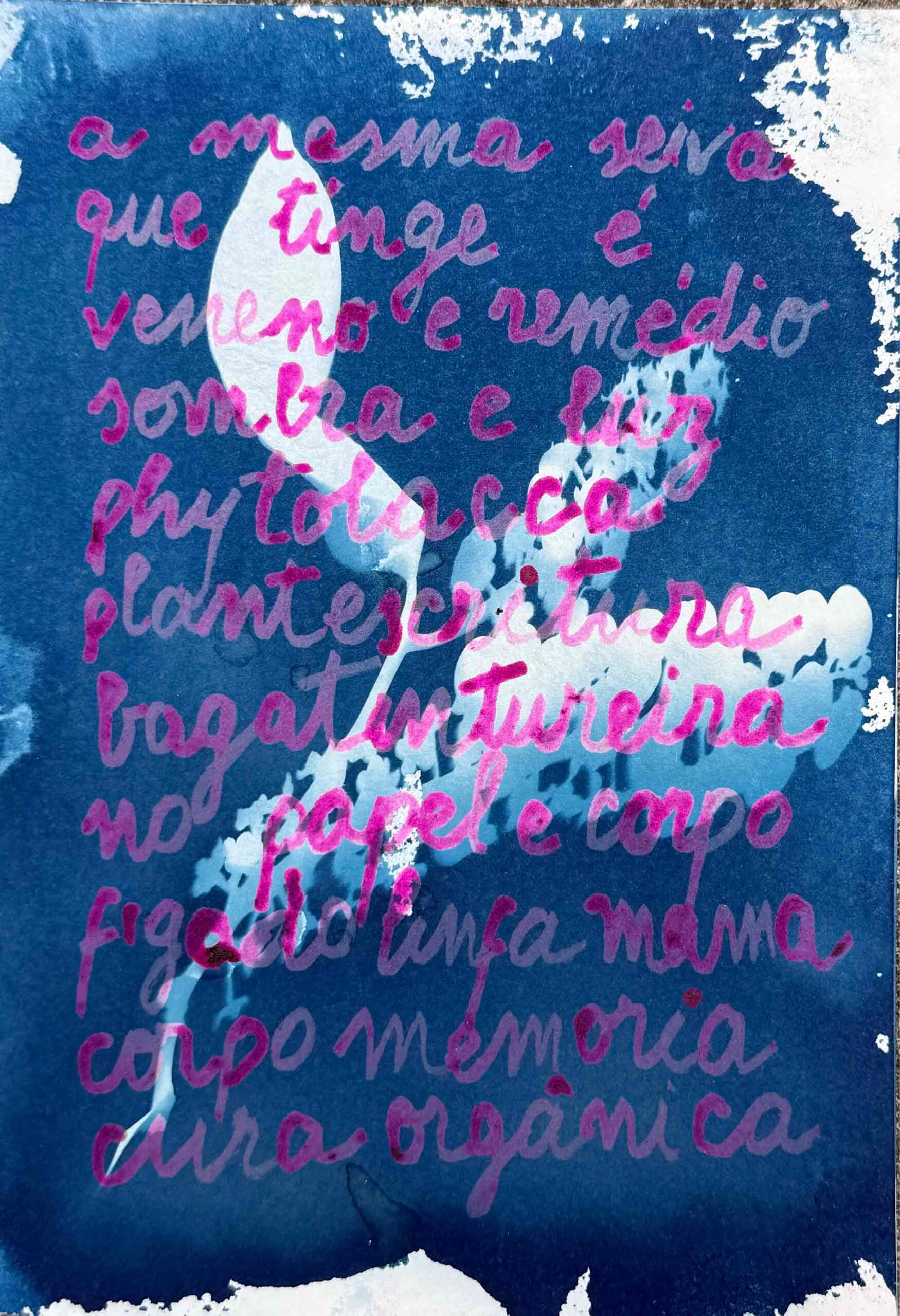
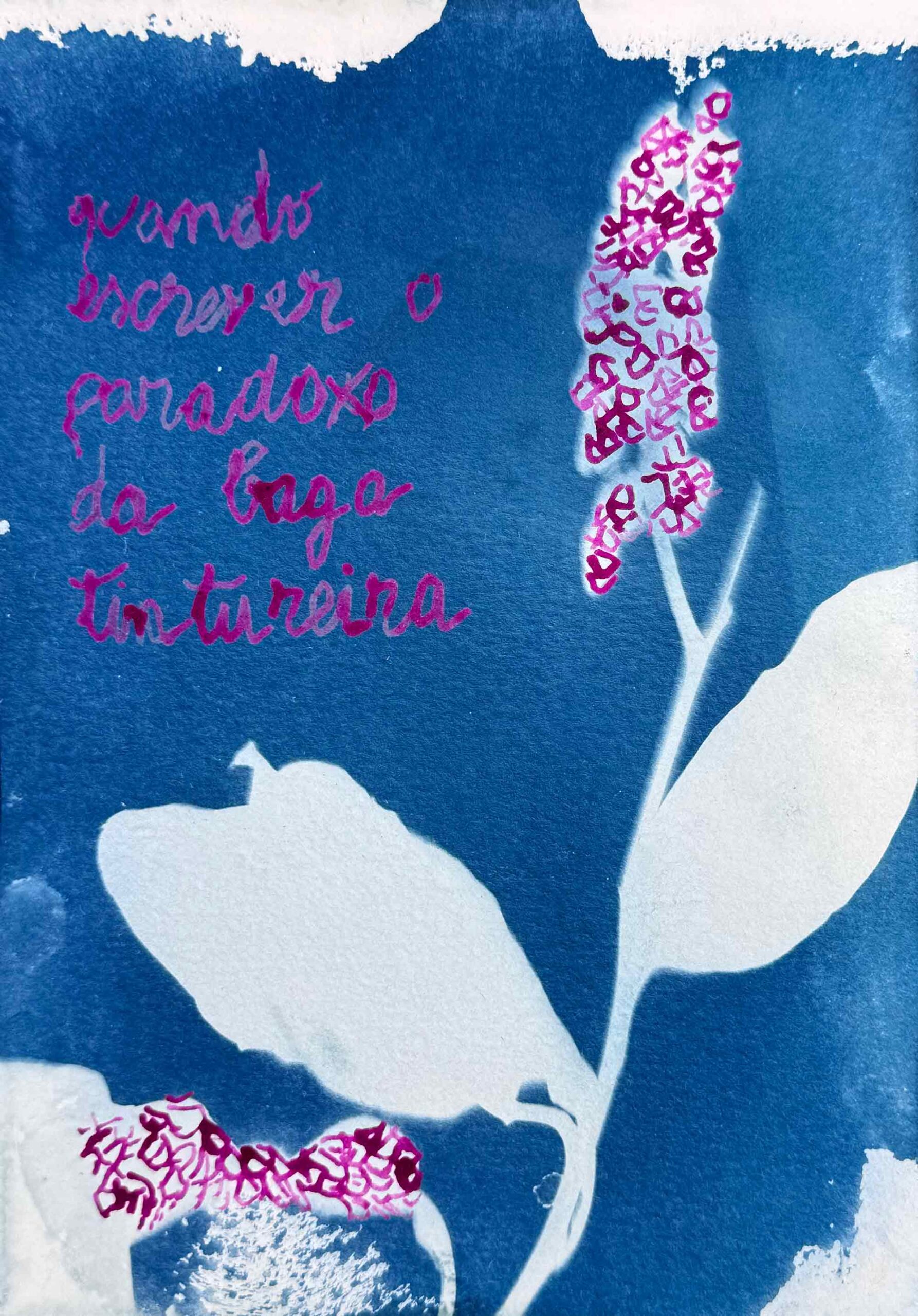
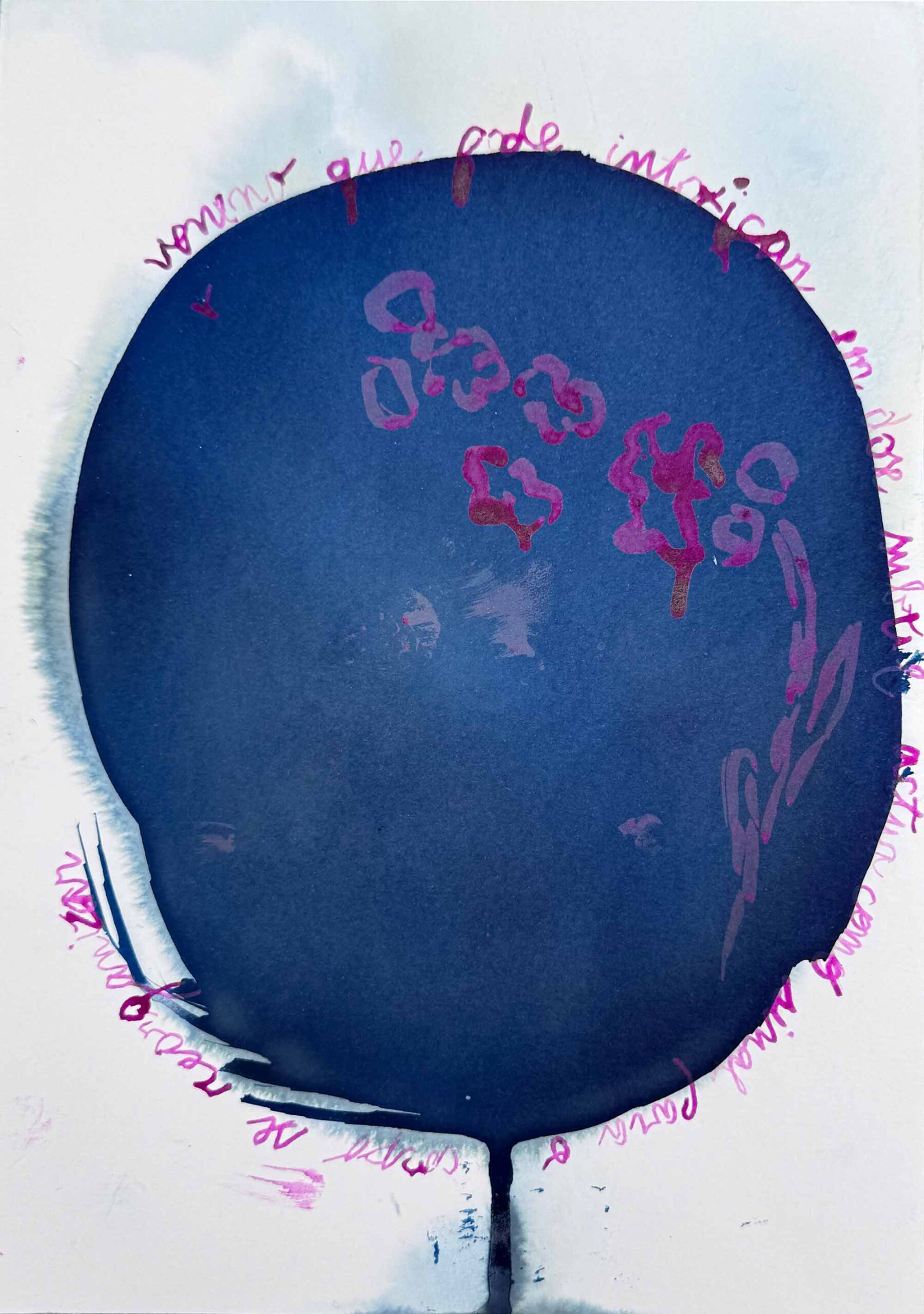
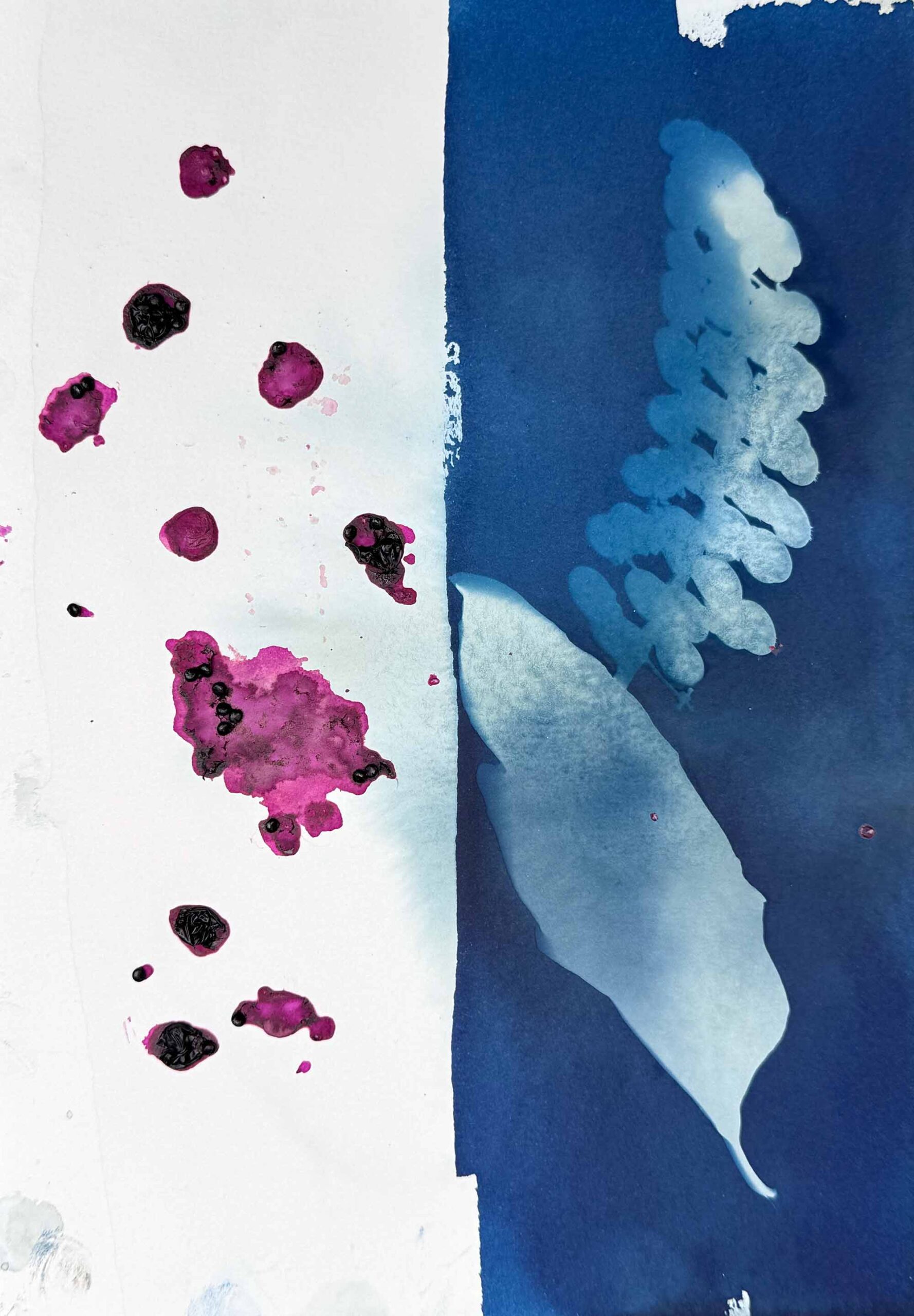
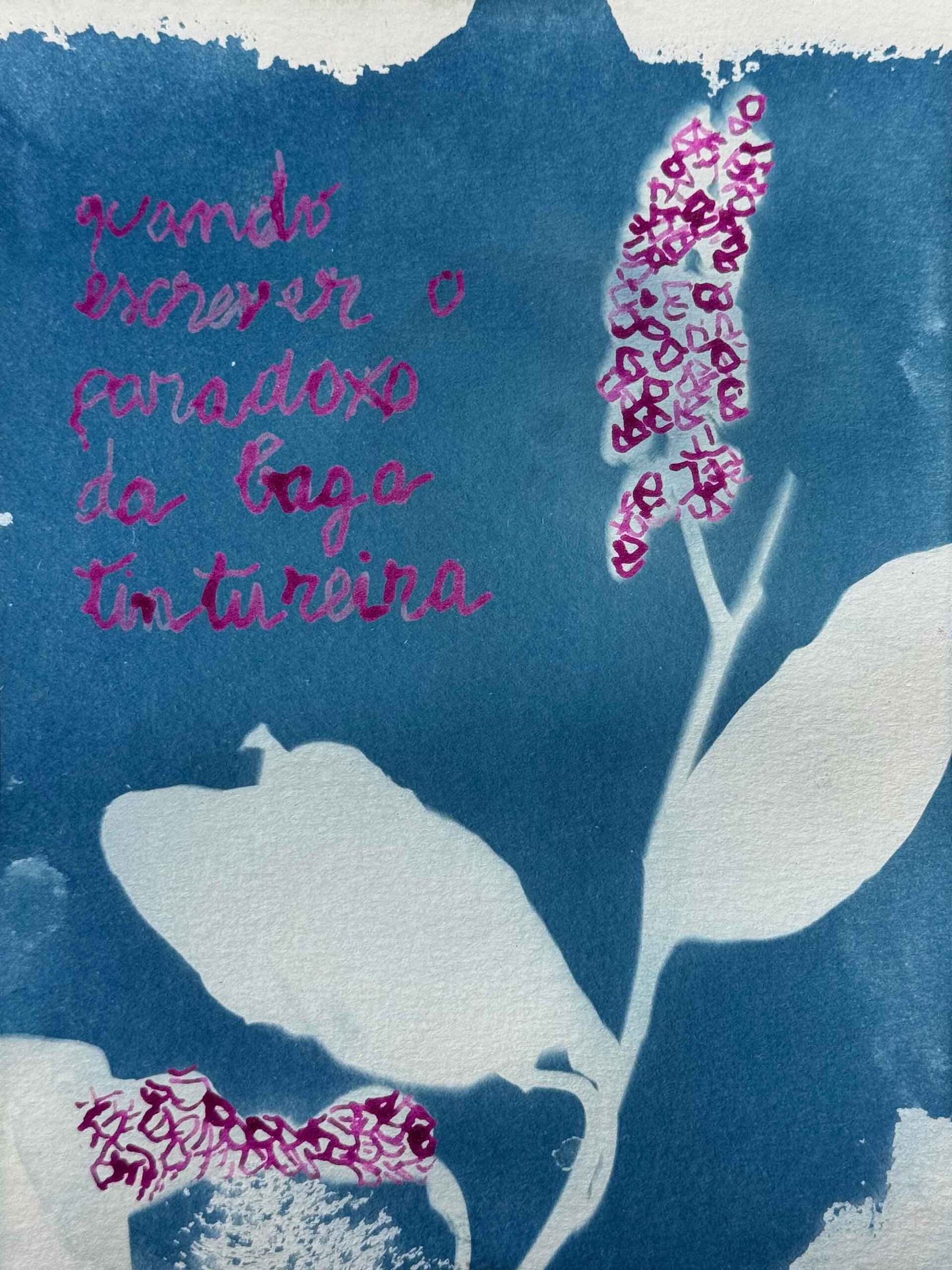
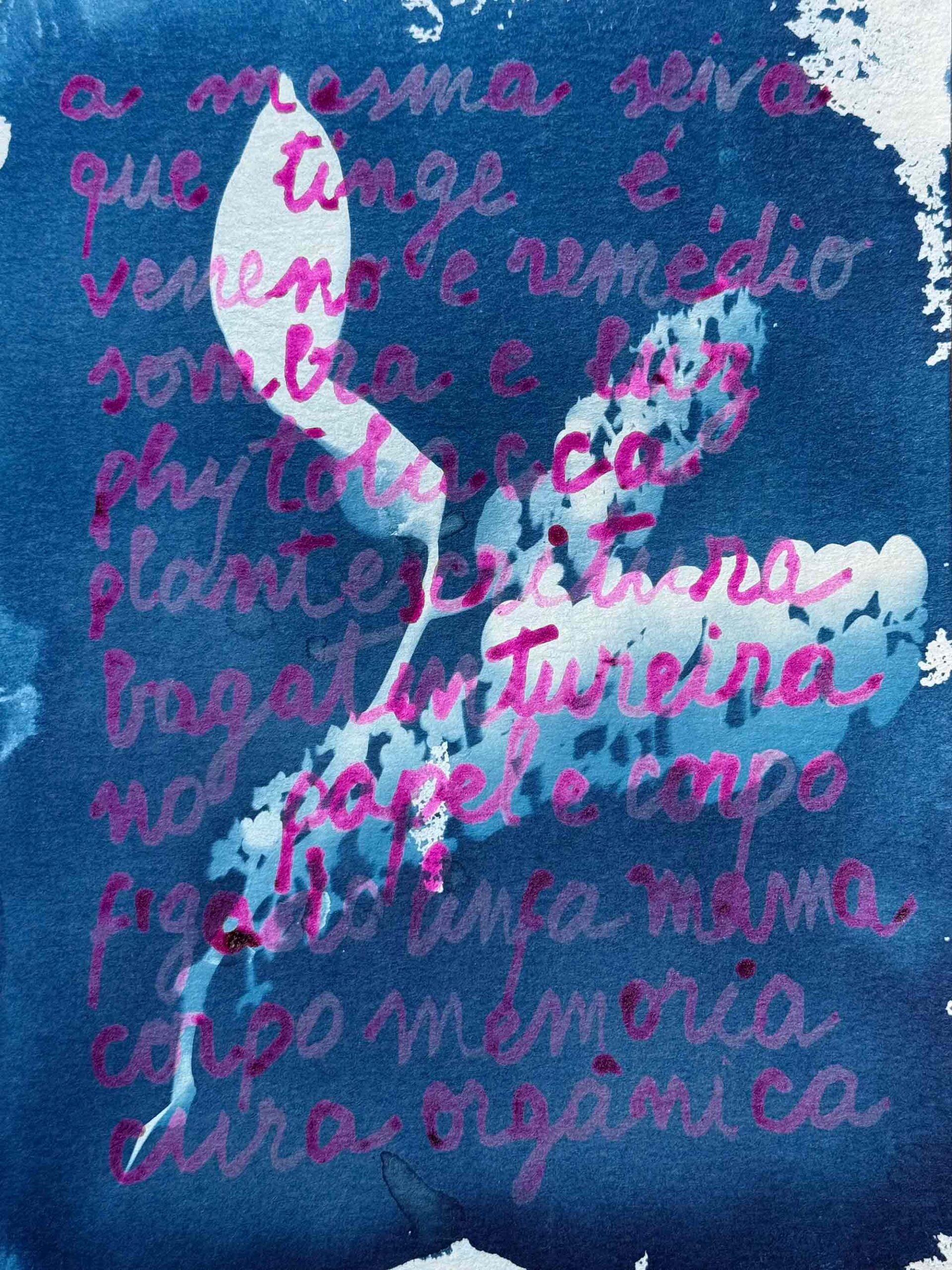
Escrever com tintureira: inscrição, paradoxo e corpo Cianotipias com escrita manual realizada com polpa de tintureira (Phytolacca). A planta inscreve-se no papel como linguagem e substância, onde a frase emerge da própria matéria que mancha. Entre veneno e remédio, sombra e luz, a escrita torna-se gesto incorporado — uma tentativa de dizer o paradoxo da baga através da sua própria cor. A superfície torna-se campo de tradução: planta, palavra, corpo.
Writing with Inkberry: Inscription, Paradox, and Body Cyanotypes with handwritten text made using inkberry (Phytolacca) pulp. The plant inscribes itself onto the paper as both language and substance, where the phrase emerges from the very material that stains. Between poison and remedy, shadow and light, writing becomes an embodied gesture — an attempt to articulate the paradox of the berry through its own color. The surface becomes a field of translation: plant, word, body.