paula roush / msdm publications · 2020–2026

O.C.E.A.N.
LIBRARY

of confidential and privileged information
archive → bookwork → library → corpus → computational projection

A library made from a leak

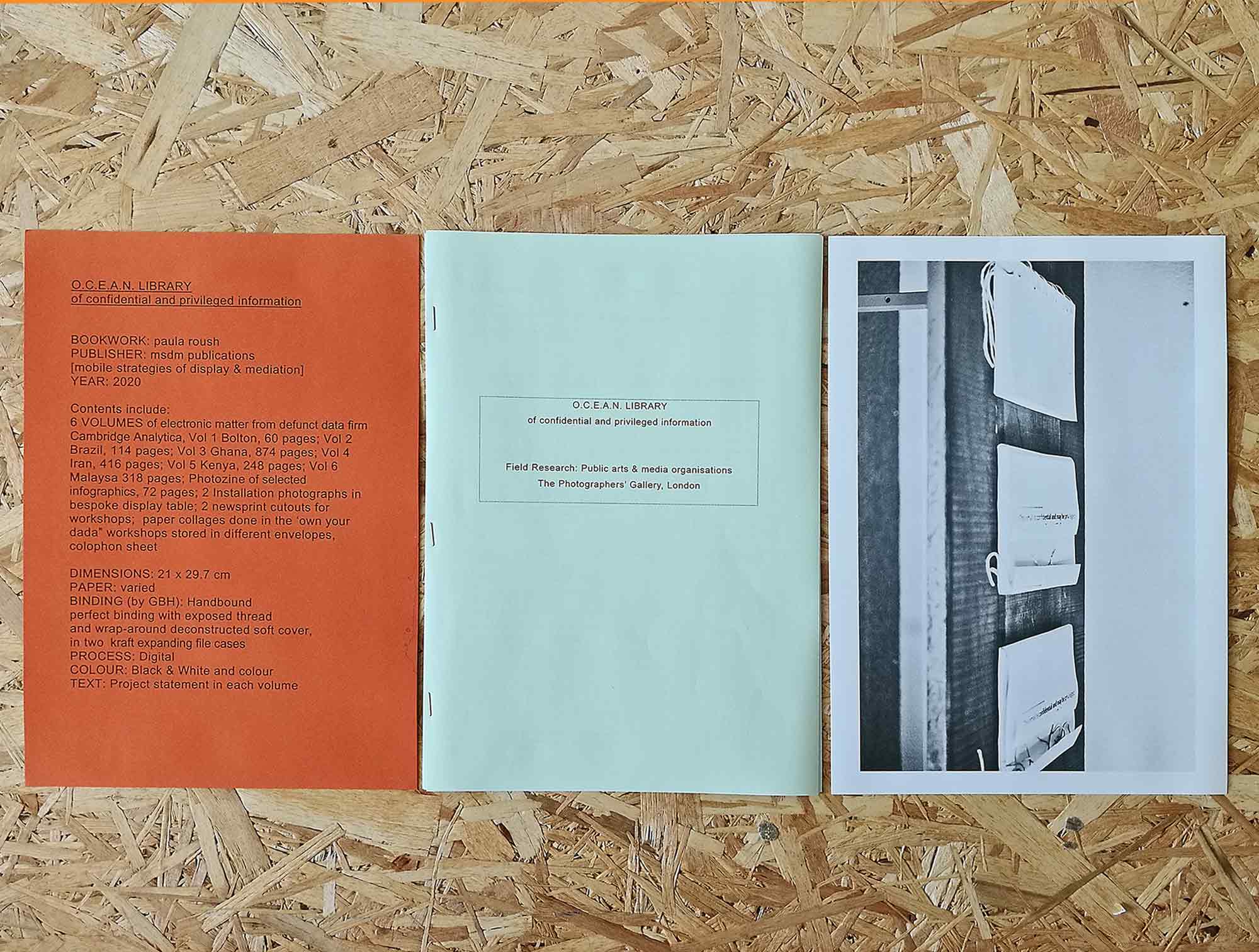
O.C.E.A.N. LIBRARY began in 2020 during the public release of internal Cambridge Analytica / SCL material. Rather than treating the leak only as information to be consulted on a screen, paula roush downloaded, organised, printed and bound the documents, preserving the country-based structure in which they were released.

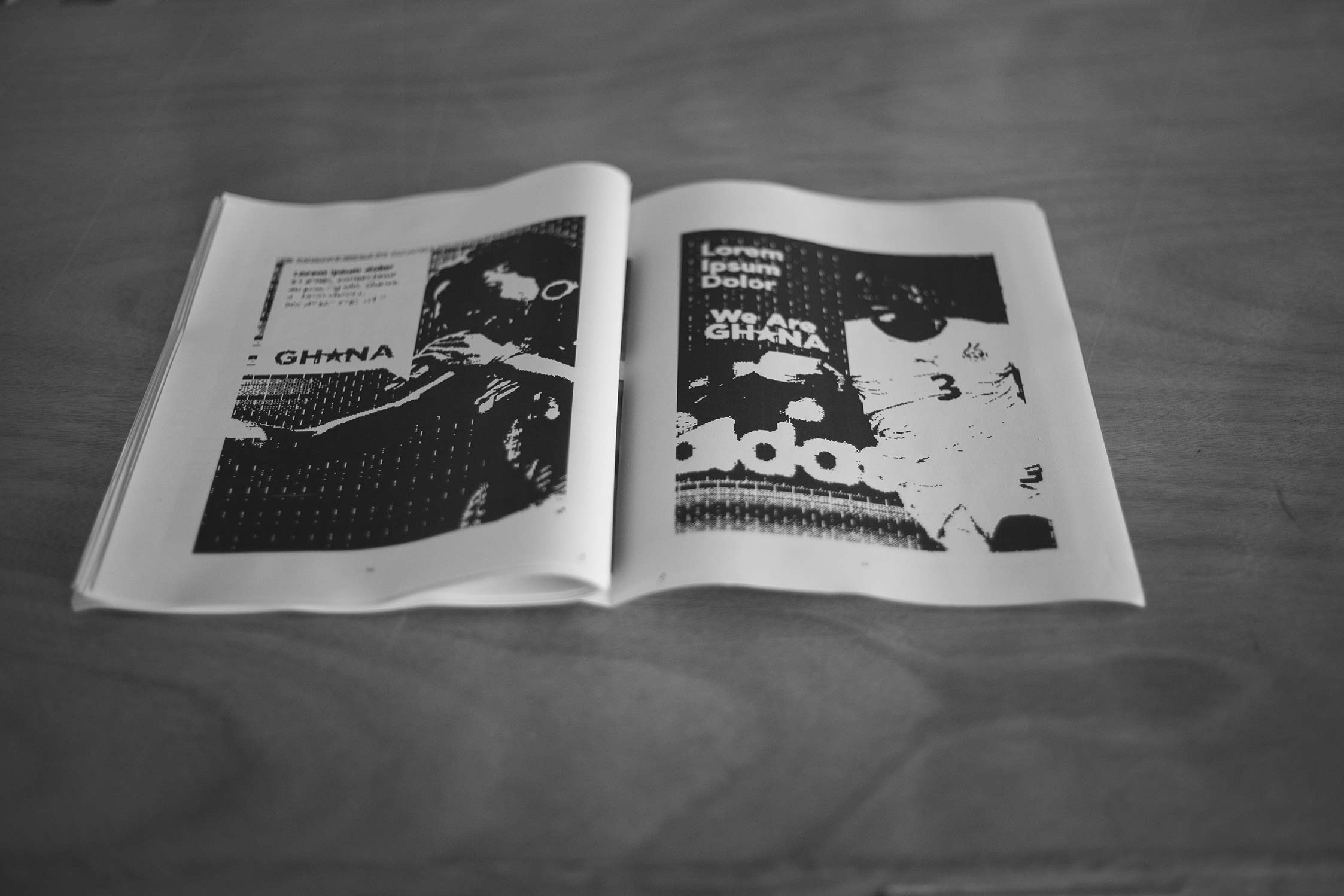
The physical library comprises six volumes — Bolton, Brazil, Ghana, Iran, Kenya and Malaysia — together with a photozine, workshop matter, field-research material, poster, colophon and two expanding file cases.

The passage from electronic file to printed matter gives the archive weight, thickness, scale and a bodily presence:

file → leak → printed document → book → library
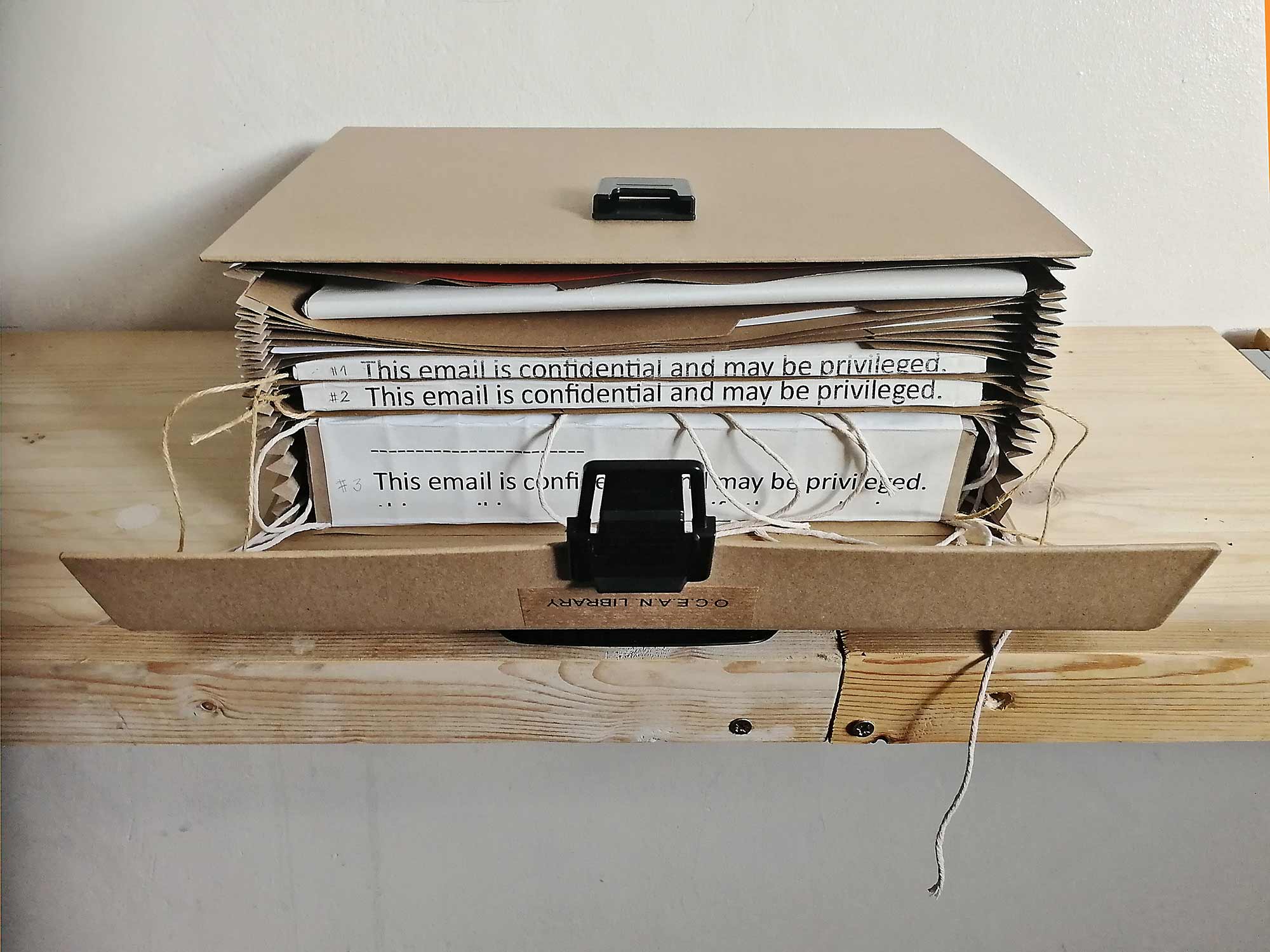
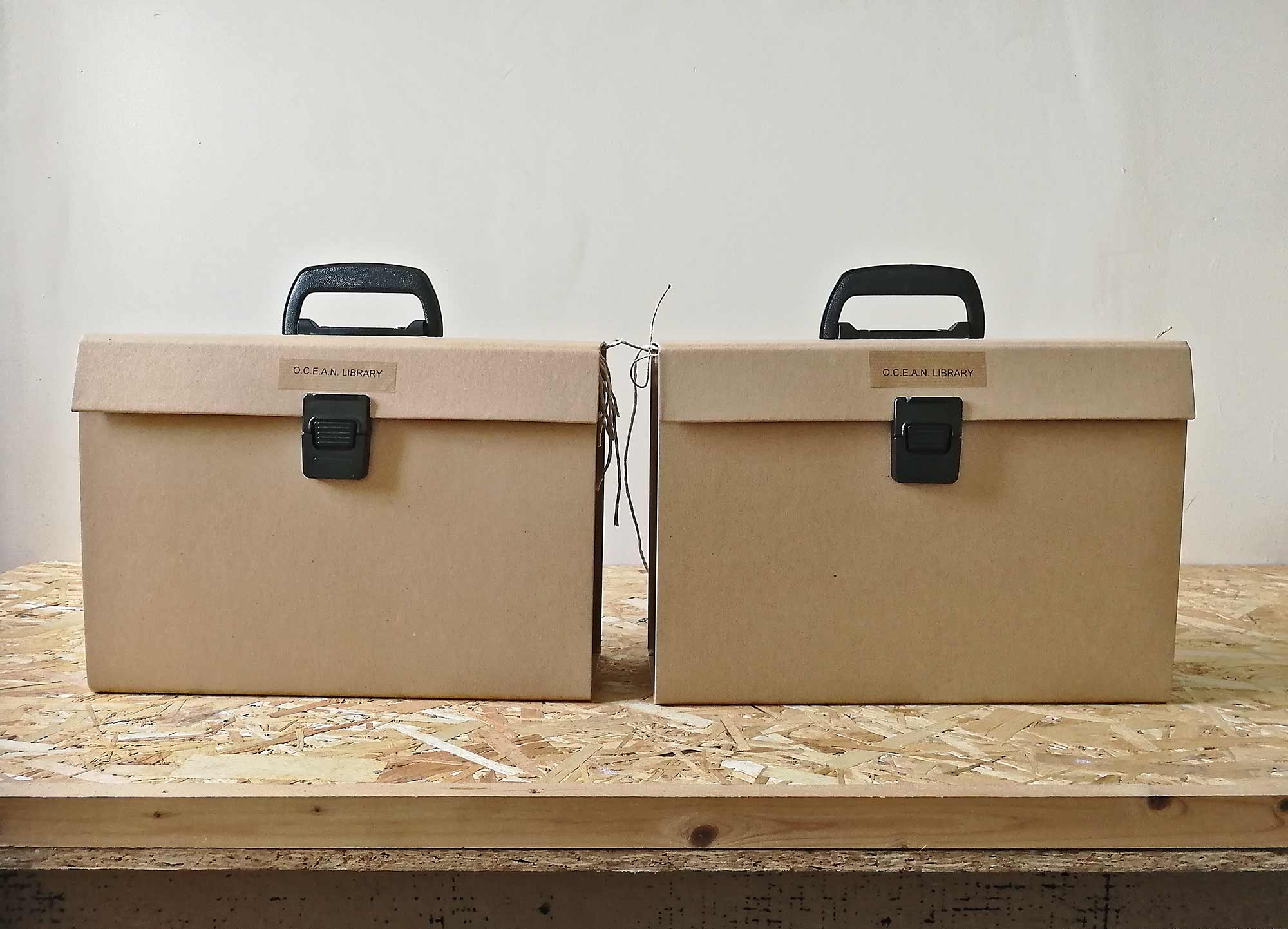
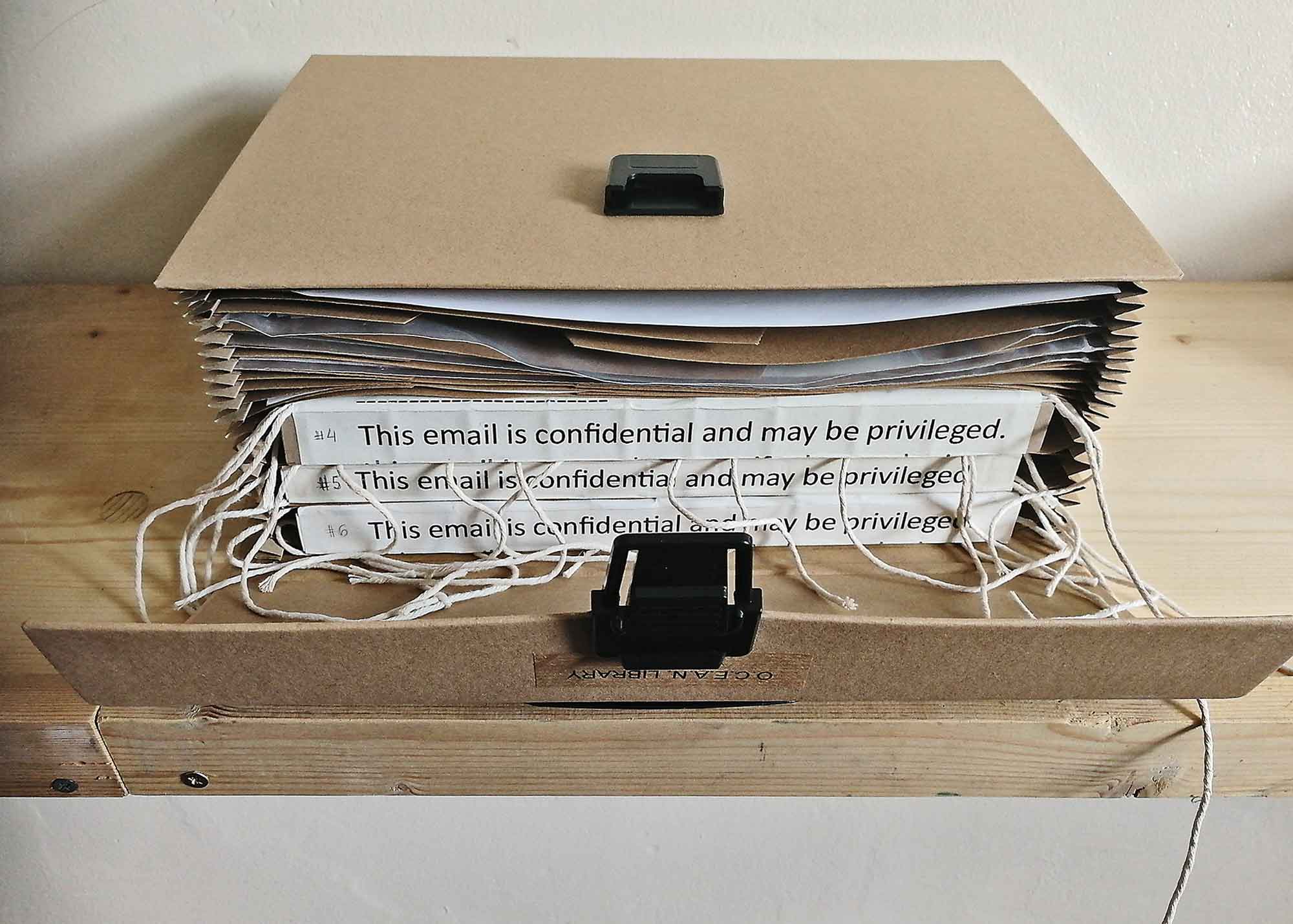
O.C.E.A.N. Library expanding file case with bound volumes
O.C.E.A.N. LIBRARY, expanding file case and volumes. Installation view, msdm House–Studio–Gallery, London.
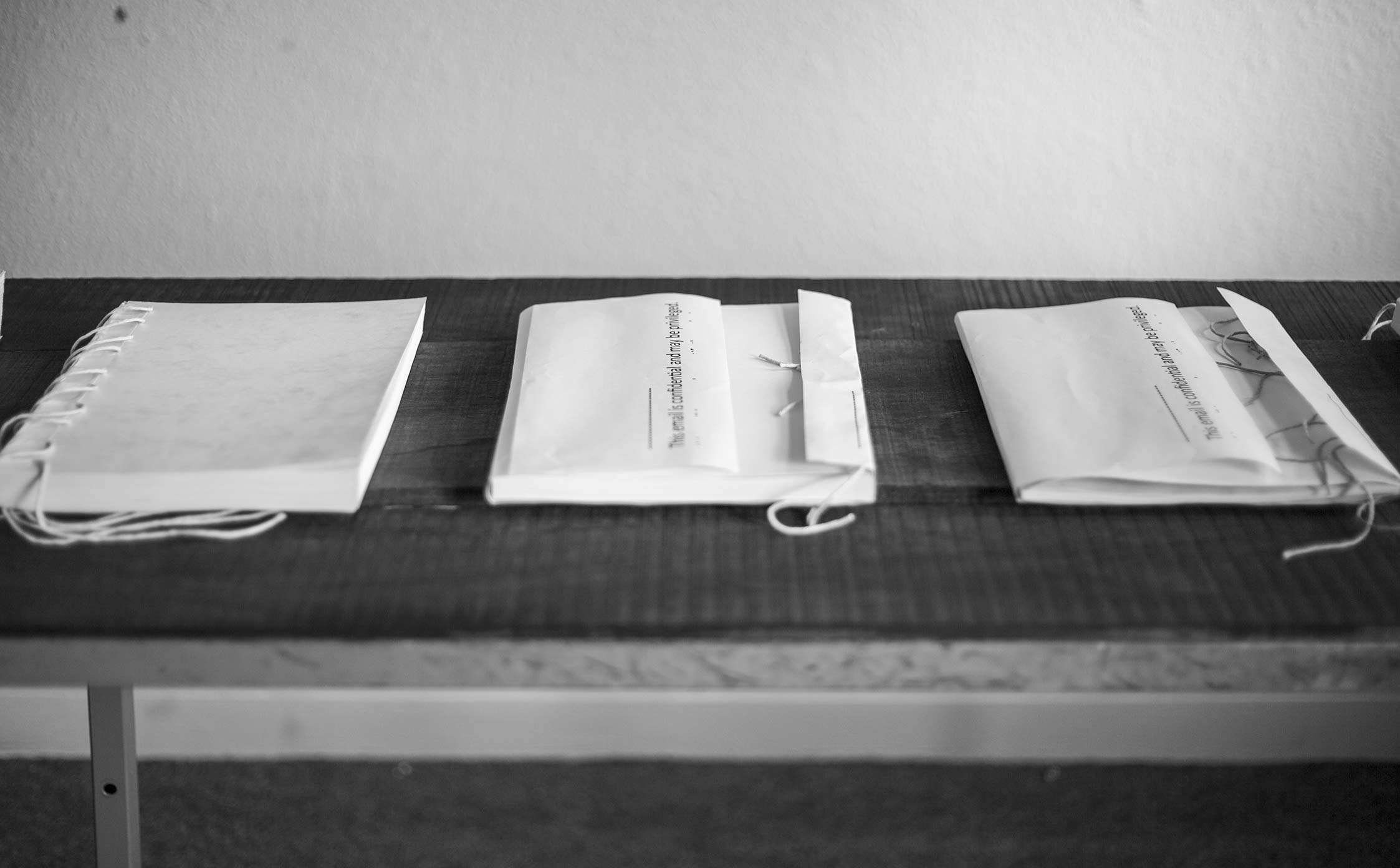
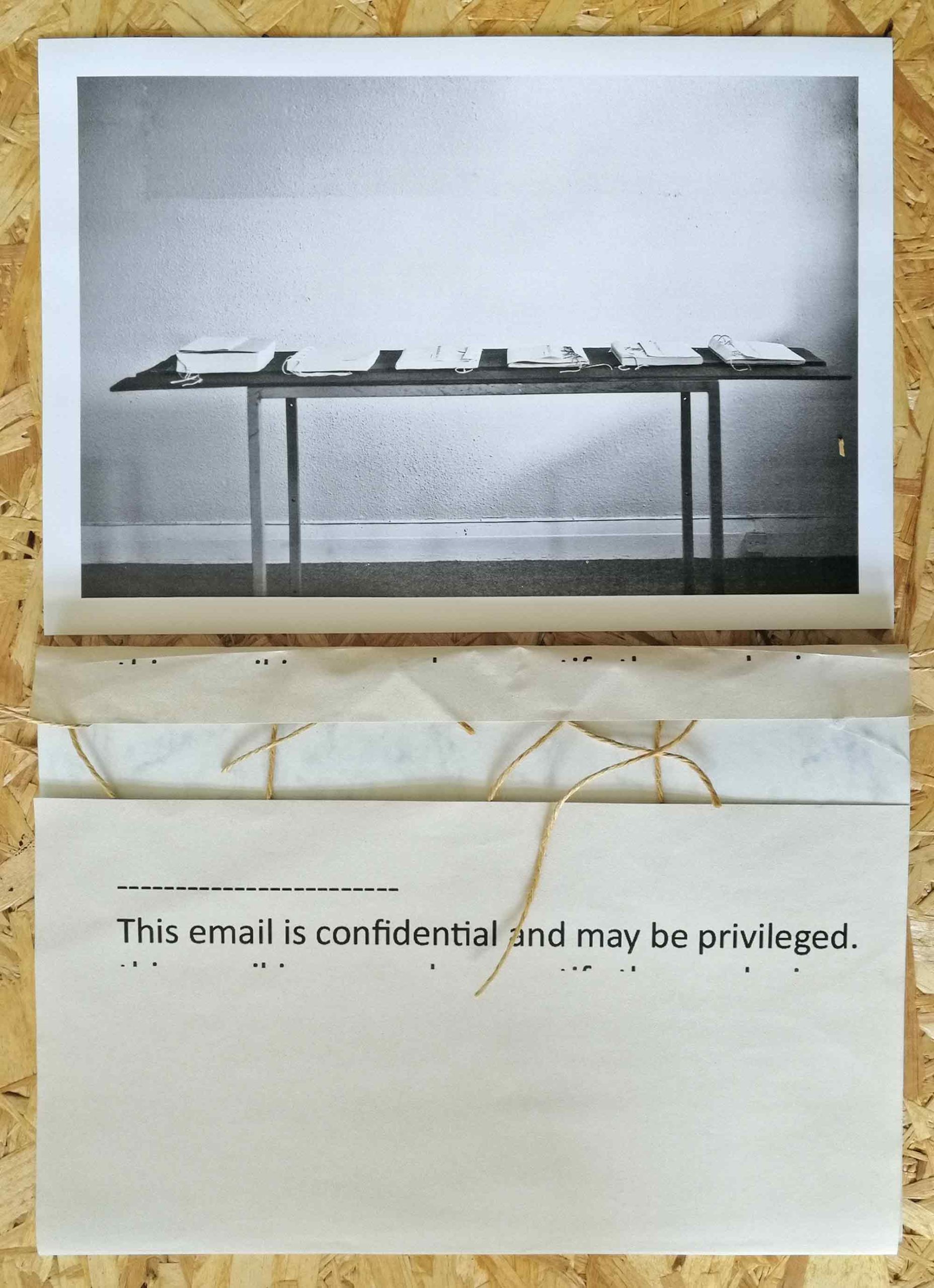
O.C.E.A.N. Library books installed on bespoke table
Six-volume bookwork installed on the bespoke display table, msdm House–Studio–Gallery, London.
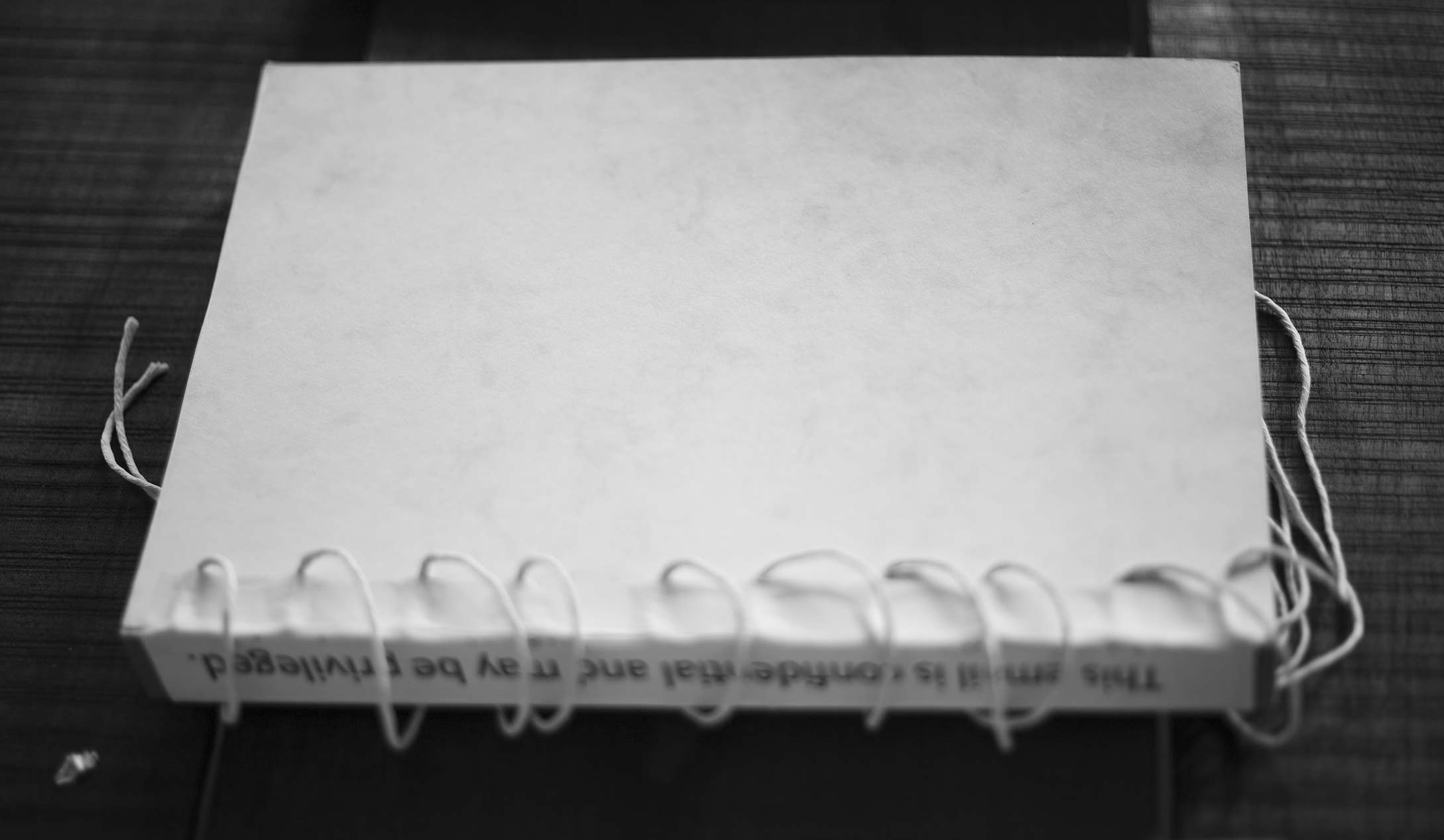
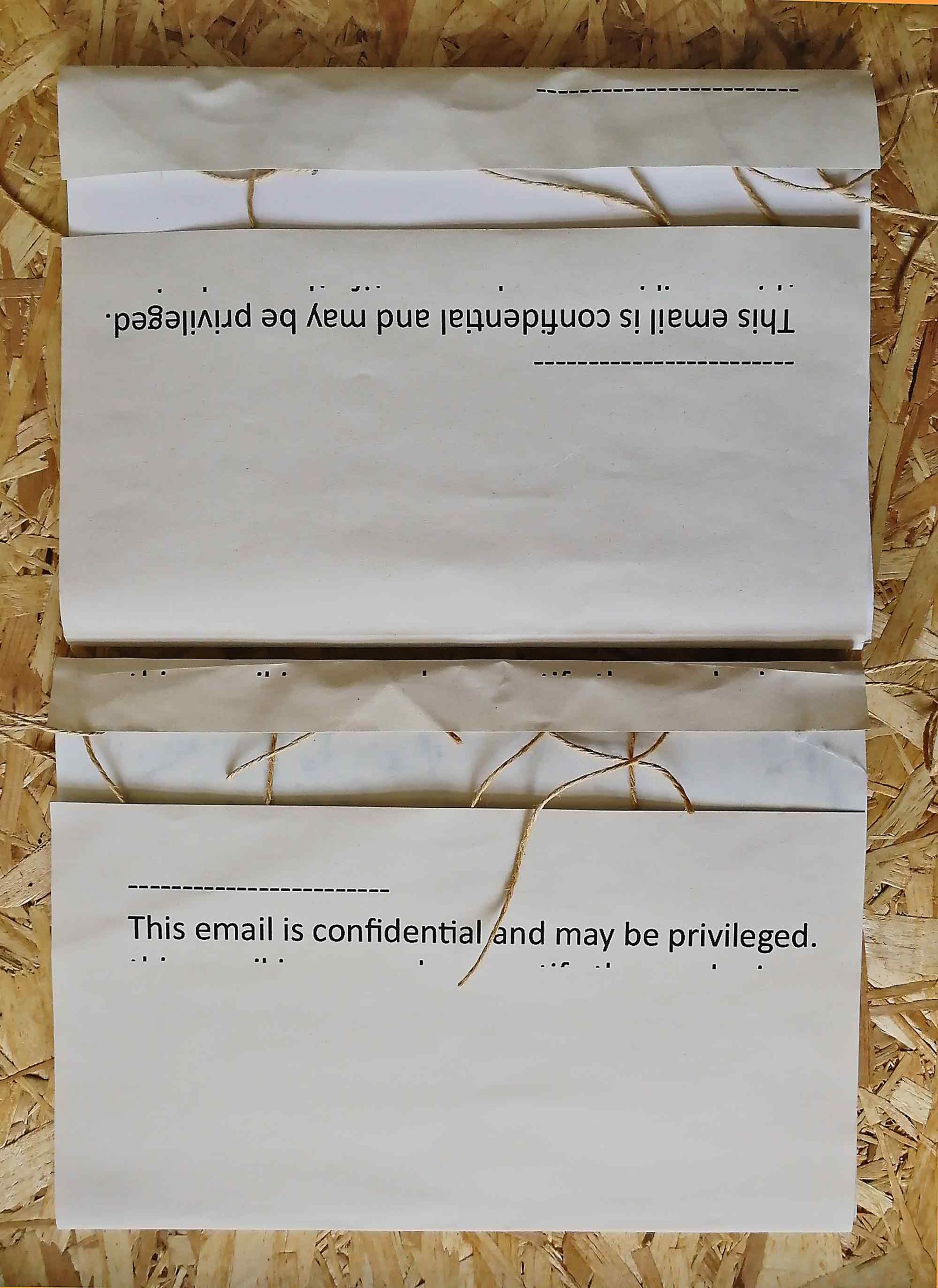
O.C.E.A.N. Library exposed binding
Handbound volume: exposed thread and deconstructed soft cover.
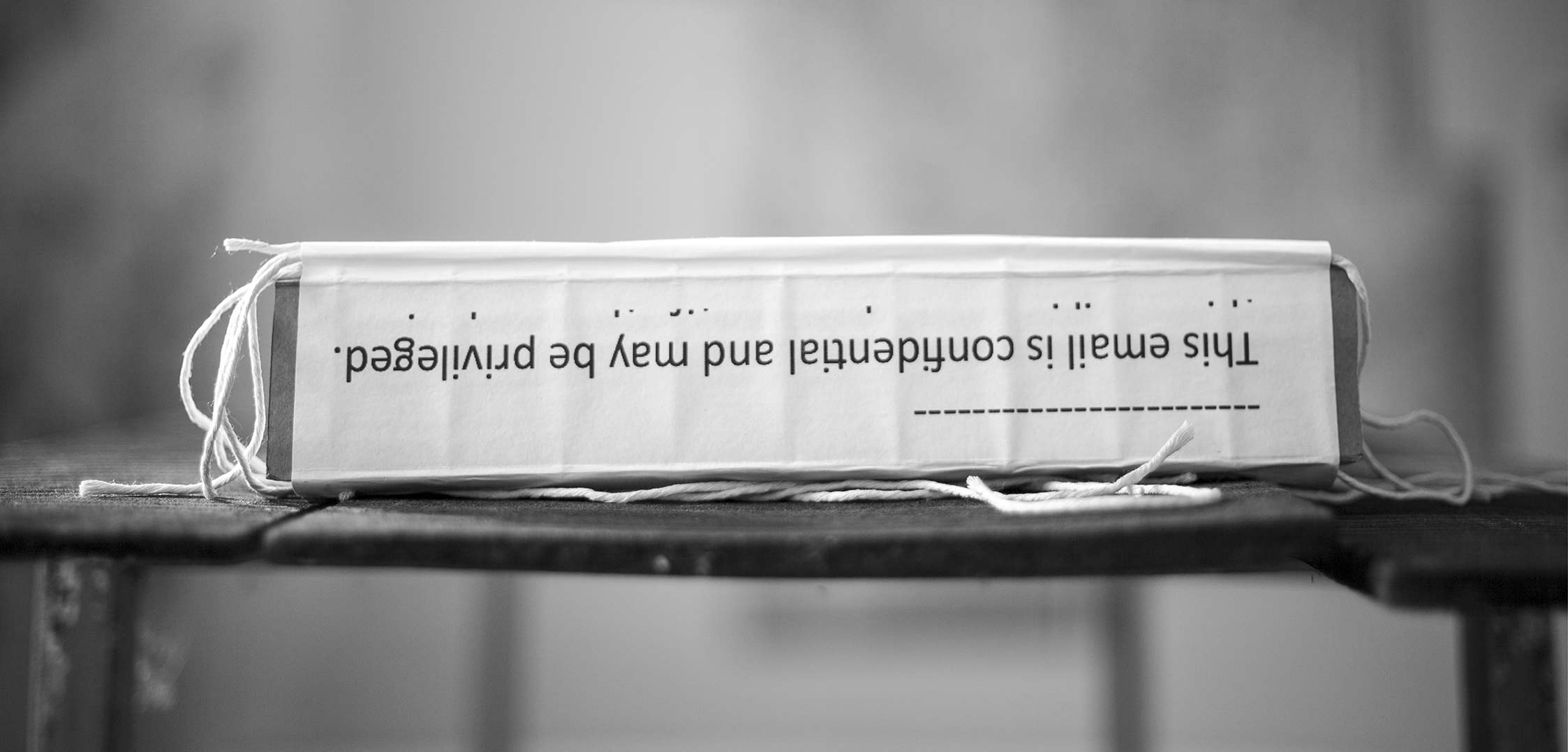
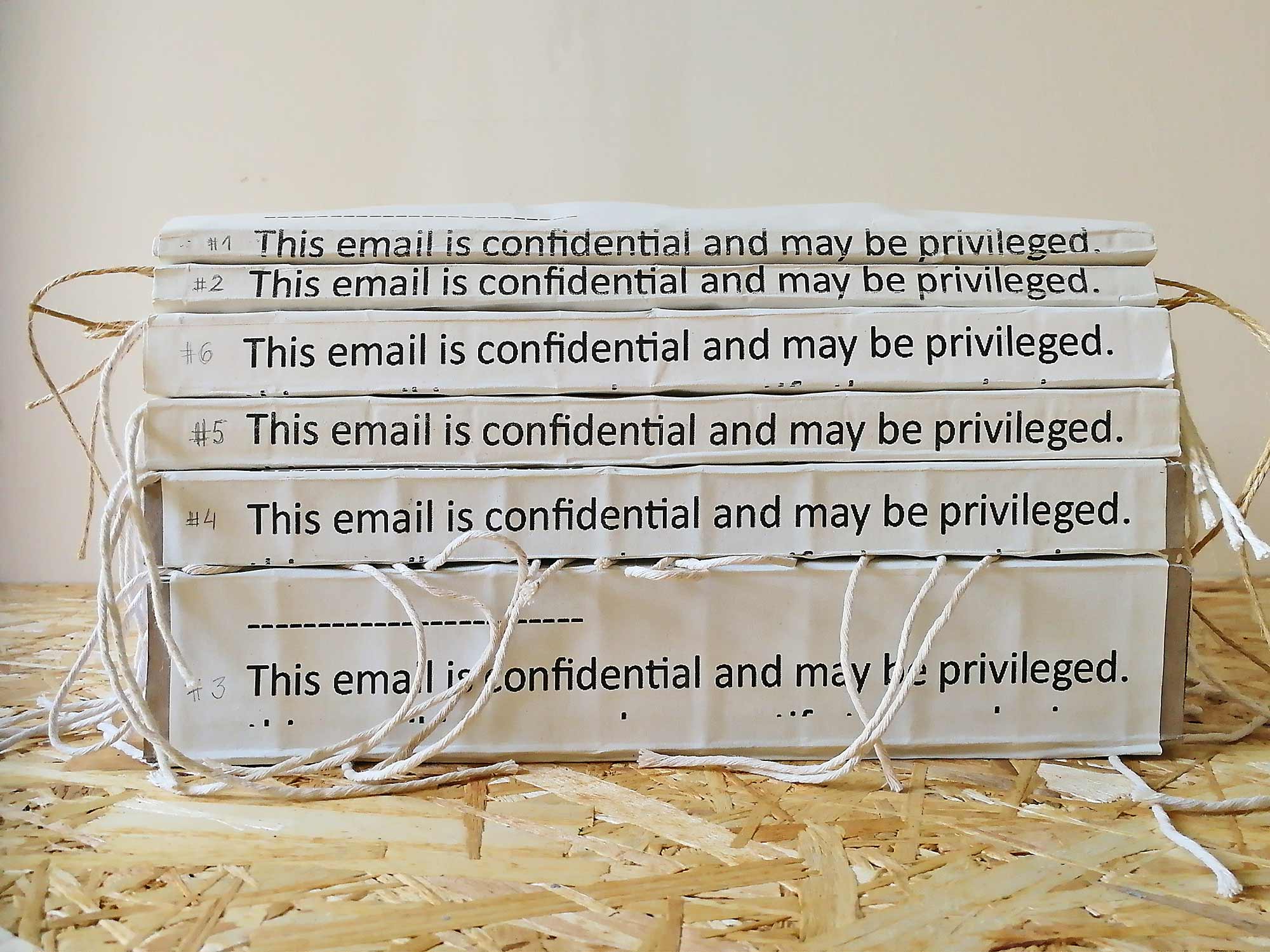
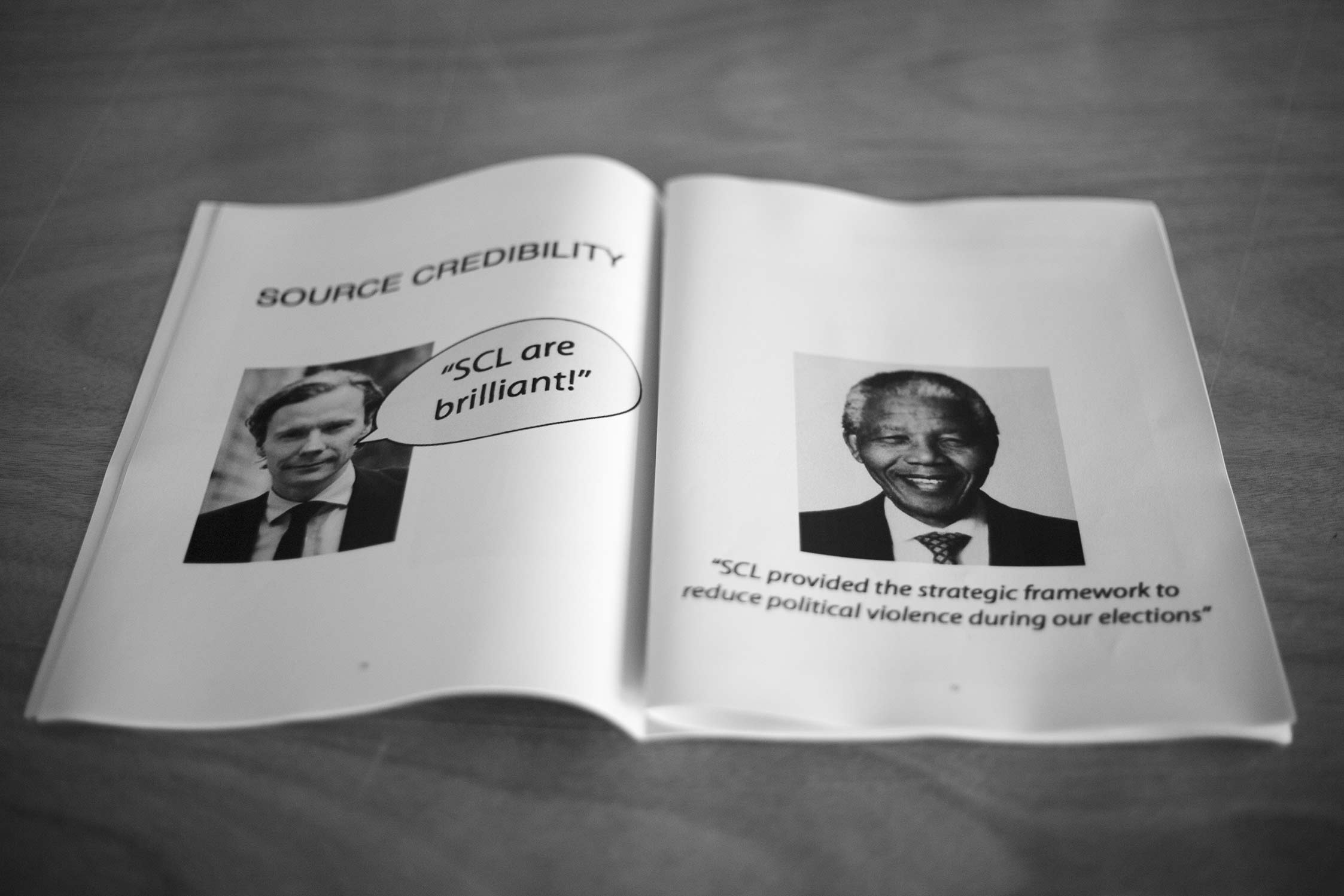
O.C.E.A.N. Library book detail
Book detail. The wrapper carries the recurring source phrase “This email is confidential and may be privileged.”
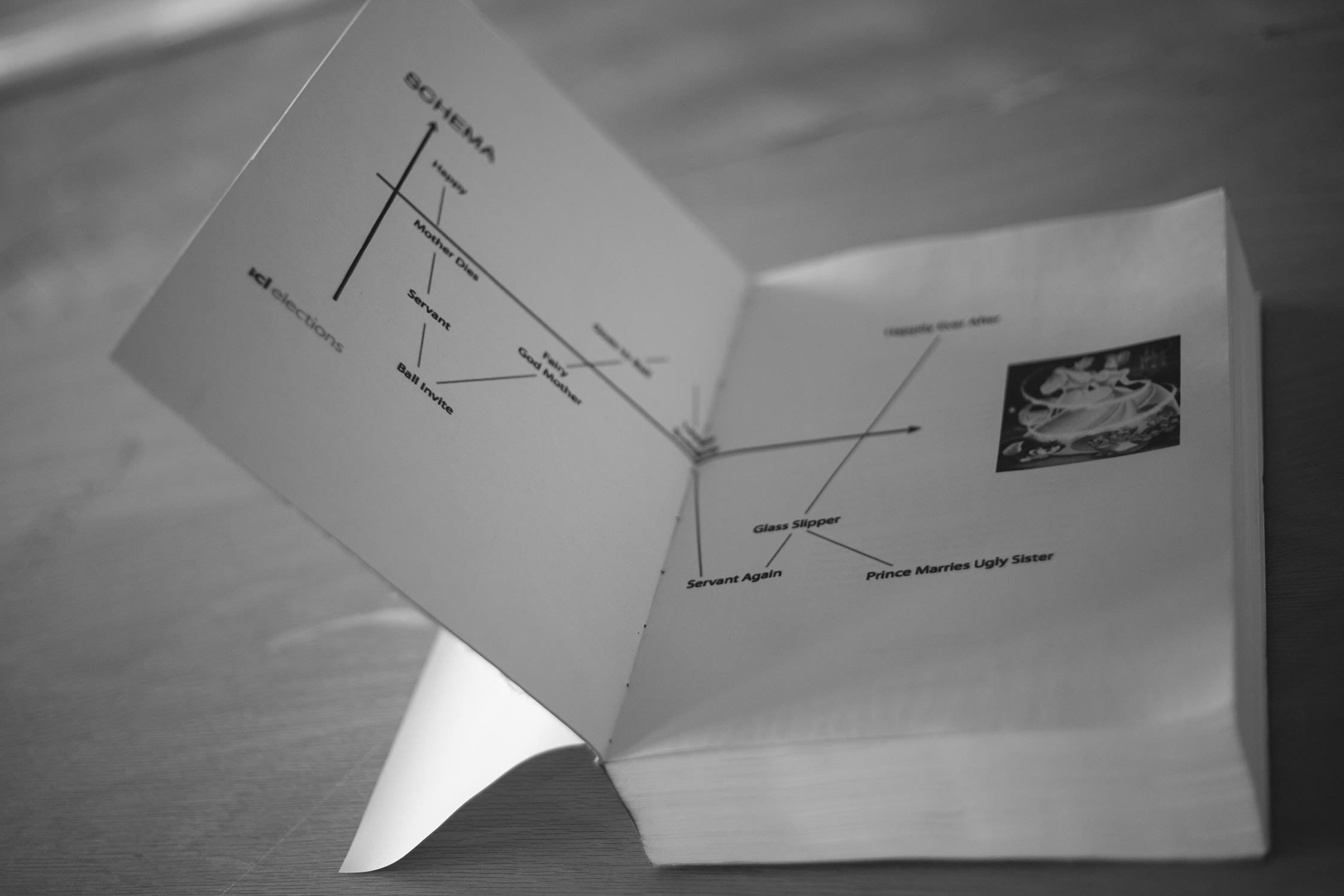
Cinderella narrative schematic in O.C.E.A.N. Library
Cinderella narrative schematic incorporated into the 2020 edition.

Cinderella was already inside the archive

Among the documents was a storytelling schematic based on Cinderella. Its significance was not simply the unexpected presence of a fairy tale within a political consultancy archive, but the proposition that narrative form itself could operate as a technology: ordering information, establishing cause and consequence, identifying a problem, introducing intervention and directing attention towards a resolution.

In 2020 this diagram was incorporated materially into the six-volume edition. In the 2026 reactivation it returns as operational structure and textual matter.

The story from which a persuasive model had been abstracted returns inside the machine.

Material archive

Six O.C.E.A.N. Library volumes
Six volumes.
Two O.C.E.A.N. Library expanding file cases
Two expanding file cases.
O.C.E.A.N. Library file case open
File case with bound material.
O.C.E.A.N. Library printed matter
Printed matter stored within the library.
Installation photograph inside O.C.E.A.N. Library
Installation photograph and wrapped material.

Photozine, field research, workshops

O.C.E.A.N. Library photozine
Photozine of selected infographics.
O.C.E.A.N. Library photozine
Photozine spread.
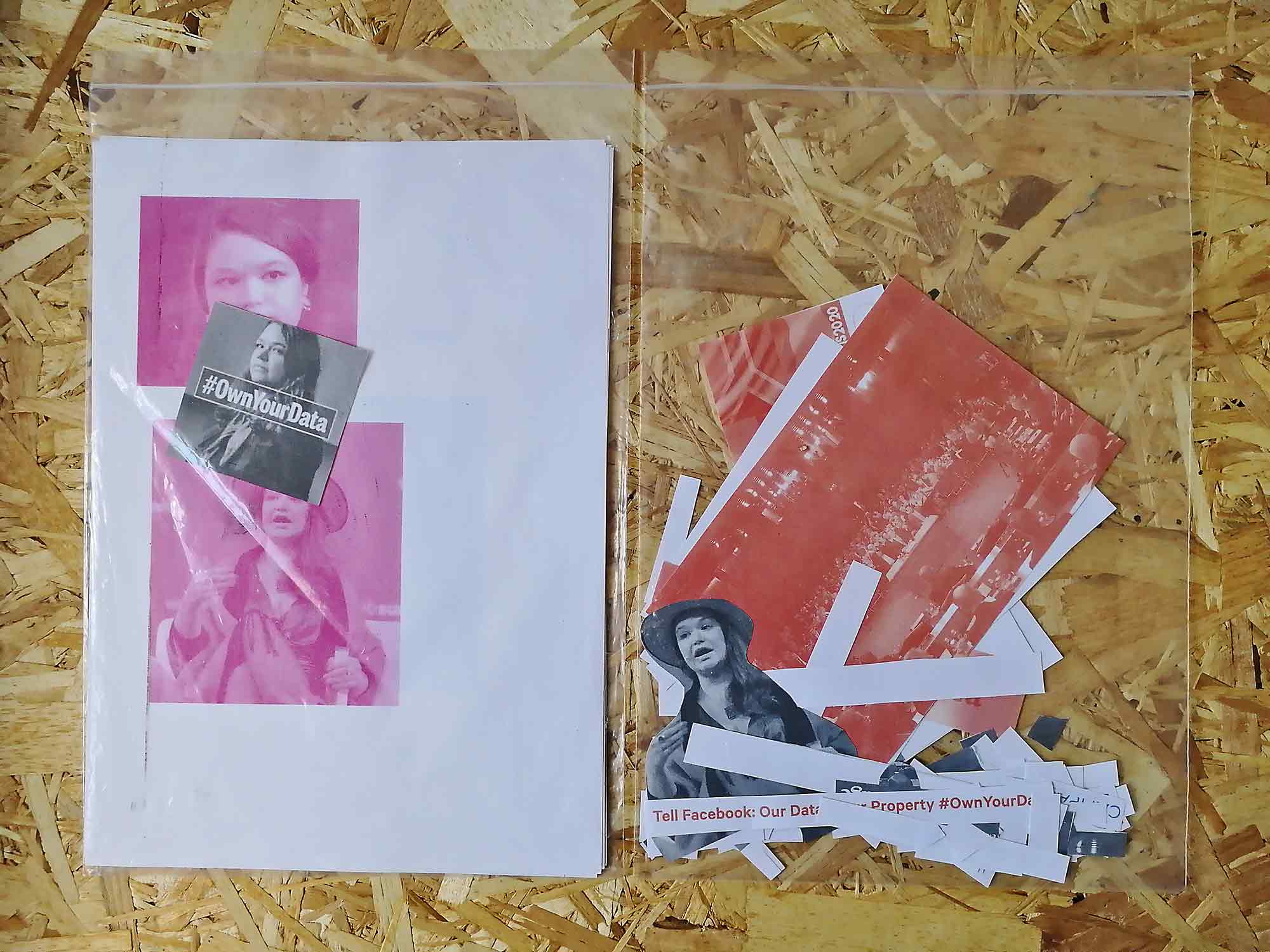
Own Your Data workshop material
Workshop and #OwnYourData material.
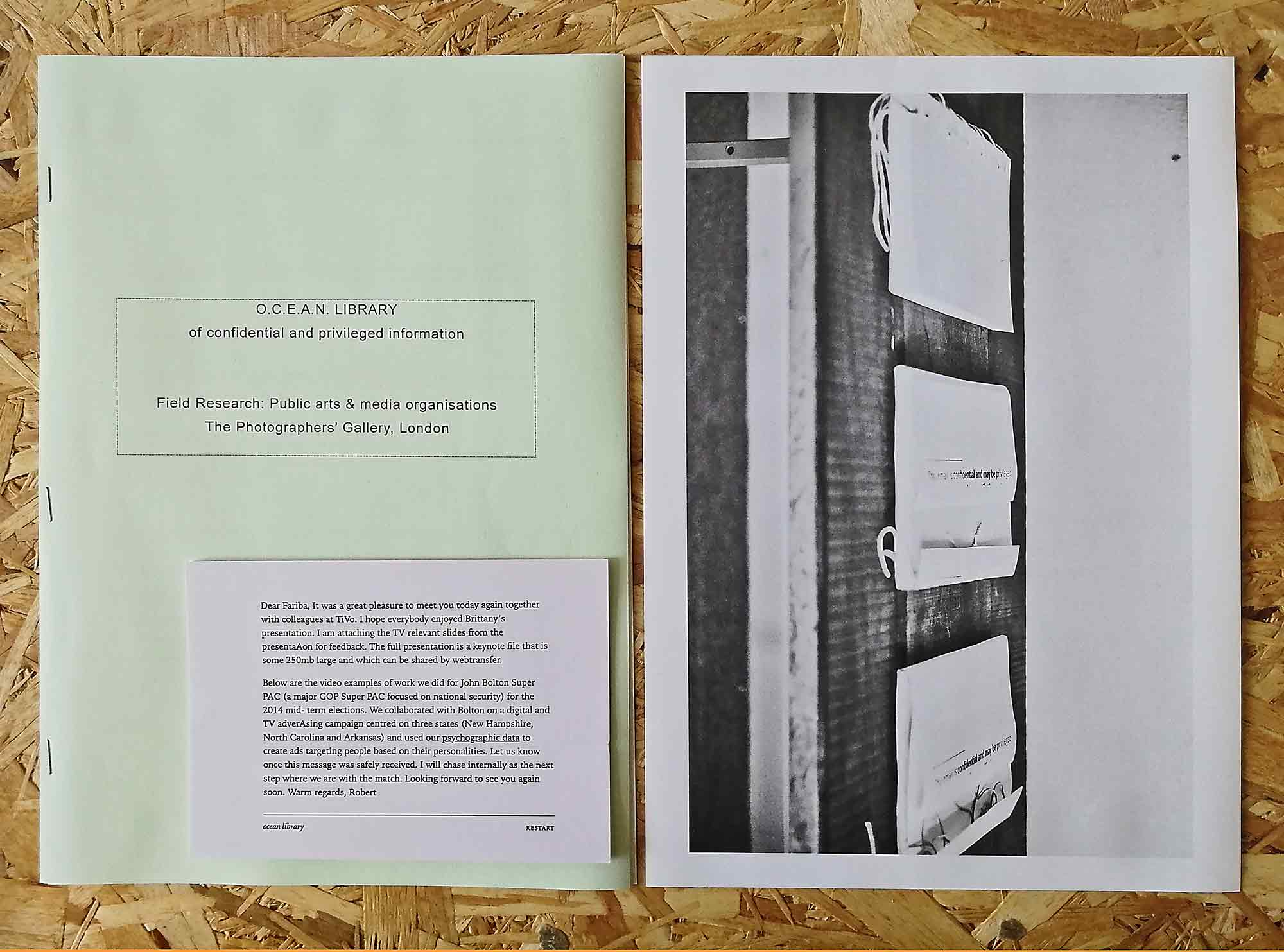
Field research booklet
Field research booklet.
Field research booklet detail
Field research material.

Bookwork / installation, 2020

artist
paula roush
publisher
msdm publications [mobile strategies of display & mediation]
volumes
Bolton 60 pp; Brazil 114 pp; Ghana 874 pp; Iran 416 pp; Kenya 248 pp; Malaysia 318 pp
photozine
72 pages
binding
handbound; perfect binding with exposed thread and wrap-around deconstructed softcover
dimensions
21 × 29.7 cm
installation
bespoke table, metal base and mahogany top; two expanding file cases
additional matter
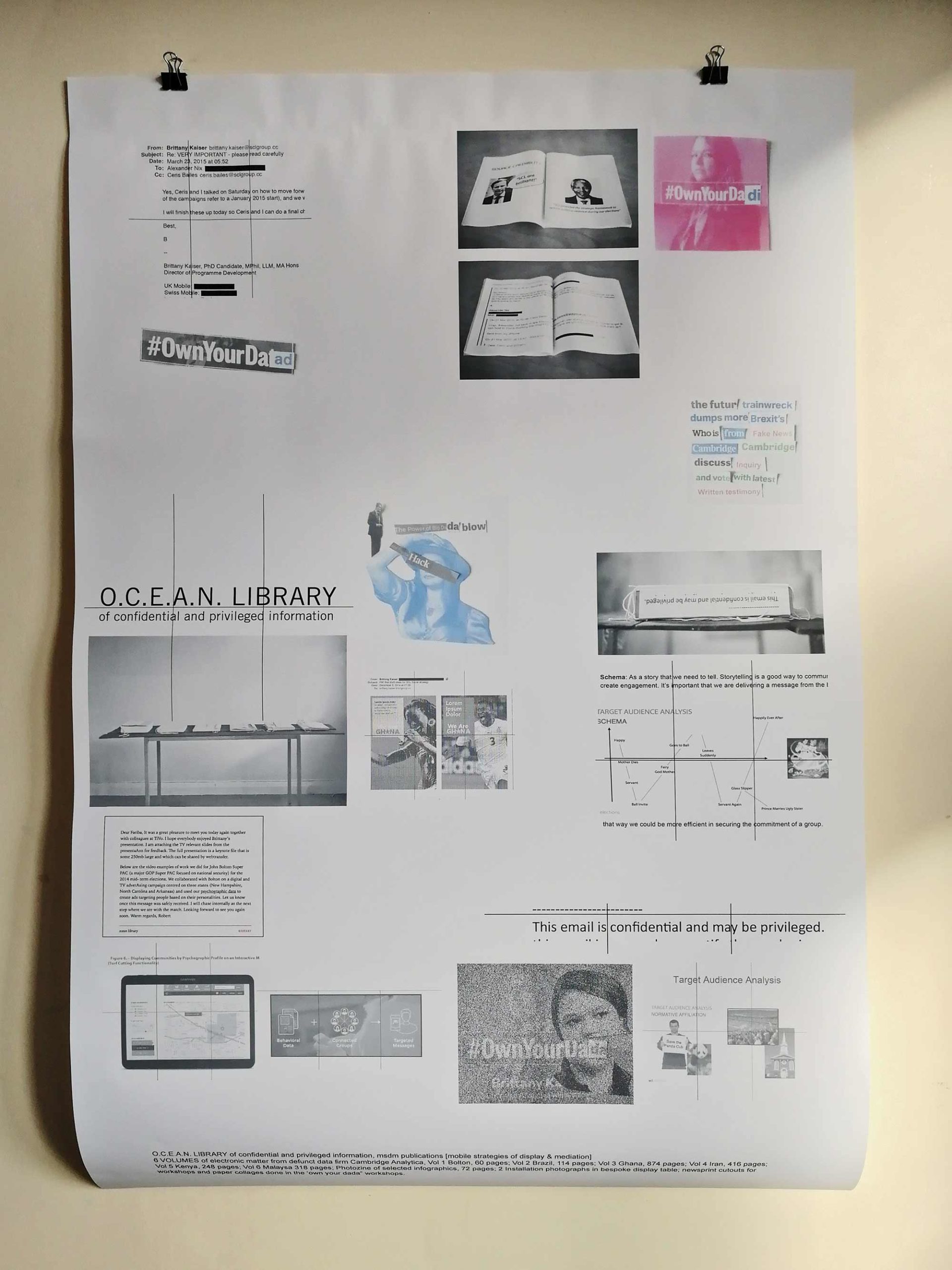
installation photographs, workshop cutouts and collages, field-research booklet, 90 × 60 cm inkjet poster, colophon
O.C.E.A.N. Library poster
O.C.E.A.N. LIBRARY poster, 90 × 60 cm.
reactivation · 2026

Cinderella for LLM / live computational edition

The documents of the six volumes become a computational corpus and are brought into contact with two Portuguese transmissions of Cinderella. The engine works only with existing source language and composes hybrid micro-stories across four successive screens.

Each story follows a reduced narrative arc — FALL → ACTION → REVERSAL → TRANSFORMATION. A single passage appears on each screen, drawn either from the Cambridge Analytica/SCL archive or from Cinderella. Every four-screen story contains both source worlds, but their order is not fixed; the montage unfolds in time and in the viewer’s memory.

Visible metadata accompanies each passage — story, screen, stage, source kind, provenance, sequence and timestamp — making the machine’s narrative classification and documentary operation part of the projection itself.

The exhibition system is local and offline. It does not depend on an API or Internet connection.

“O espectador encontra não uma narrativa acabada, mas uma máquina a tentar narrar.”

enter live projector →

Installation / technical requirements

Library: one table for the six volumes, associated publications and material, including the two expanding file cases.

Projection: one clear wall for the computational text projection.

Poster: 90 × 60 cm, ideally on a second wall; if a second wall is not available, it can remain folded on the library table.

Projection equipment: Mac or PC with a contemporary browser; projector or display at Full HD (1920 × 1080) or higher; HDMI connection and compatible adapter if required; HDMI cable; continuous power for computer and projector/display.

The exhibition version runs locally and offline. The installation computer should remain awake during exhibition hours, with automatic sleep and screen saver disabled, and the projector page running full-screen in the browser.

2020 → 2026

file → leak → print → book → library → corpus → narrative model → code → projection

The reactivation does not replace the earlier archive. It makes the existing matter circulate through another state. Paper retains the memory of the file; the corpus retains the memory of the books and the leak; Cinderella retains the memory of the tale and of its conversion into narrative technique; the projection makes their resulting relations temporary again.