Livro de artista (lugar e veículo): o campo comum entre arte e educação
Livro de artista as a common field between art and education
Joana Nascimento on msdm, collaborative publishing and Liquid memories
Joana Cristina Coelho Nascimento, Livro de artista (lugar e veículo): o campo comum entre arte e educação [Artist’s Book (Place and Vehicle): The Common Field Between Art and Education], PhD thesis in Art Education, Faculty of Fine Arts, University of Porto, 2024. Supervisors: Gabriela V. Pinheiro and Isabel Baraona.
The full text of the dissertation can be accessed or downloaded via the Open Repository of the University of Porto at the UP Repositório Aberto handle
In her doctoral thesis Livro de artista (lugar e veículo): o campo comum entre arte e educação (University of Porto, 2024), artist and researcher Joana Nascimento examines msdm as a model of expanded publishing practice in which publications, exhibitions and workshops operate as interconnected forms of artistic and pedagogical research.
Nascimento discusses paula roush’s Dobraaobra, Faz tu mesma a obra (2016), as well as the collaborative processes developed through Entre Arquivo e Publicação: Um Workshop Líquido and Liquid Workshop — Live Publishing Lab Online, and the resulting publication Liquid memories ~ to read with water (2022). Her analysis situates the artist’s book not simply as an object but as a relational space: a site where reading, making, editing, mediation and collaboration become inseparable.
Through the msdm archive and its publishing practices, Nascimento also identifies a model in which the conventional roles of artist, editor, curator, producer, educator and publisher become deliberately porous. Publishing emerges as a common field — a method for activating archives, constructing collective authorship and producing encounters between artistic and educational practices.
Four levels of reading msdm
Nascimento’s thesis engages with msdm and its publications at several interconnected levels. Rather than treating msdm simply as a publisher or Liquid memories as an isolated publication, her research situates them within a wider ecology of artistic practice, publishing, pedagogy, collaboration and archival activation.
1. msdm within the field of contemporary artists’ publishing
First, Nascimento situates msdm practice within the contemporary field of the artist’s book and expanded publishing. She describes msdm work as exploring flexible strategies for the display and mediation of books through publications, exhibitions and collaborative workshops, while presenting msdm studio as a house–studio–gallery.
This positioning is significant because msdm does not appear simply as a publishing imprint. It is understood as an expanded artistic structure in which publishing becomes entangled with exhibition-making, research, education and collective processes. The book operates across these different contexts rather than belonging exclusively to any one of them.
In this sense, Nascimento’s reading recognises publishing itself as an artistic methodology: a way of organising relations between images, texts, objects, spaces and people.
2. Dobraaobra, Faz tu mesma a obra: the book activated by the reader
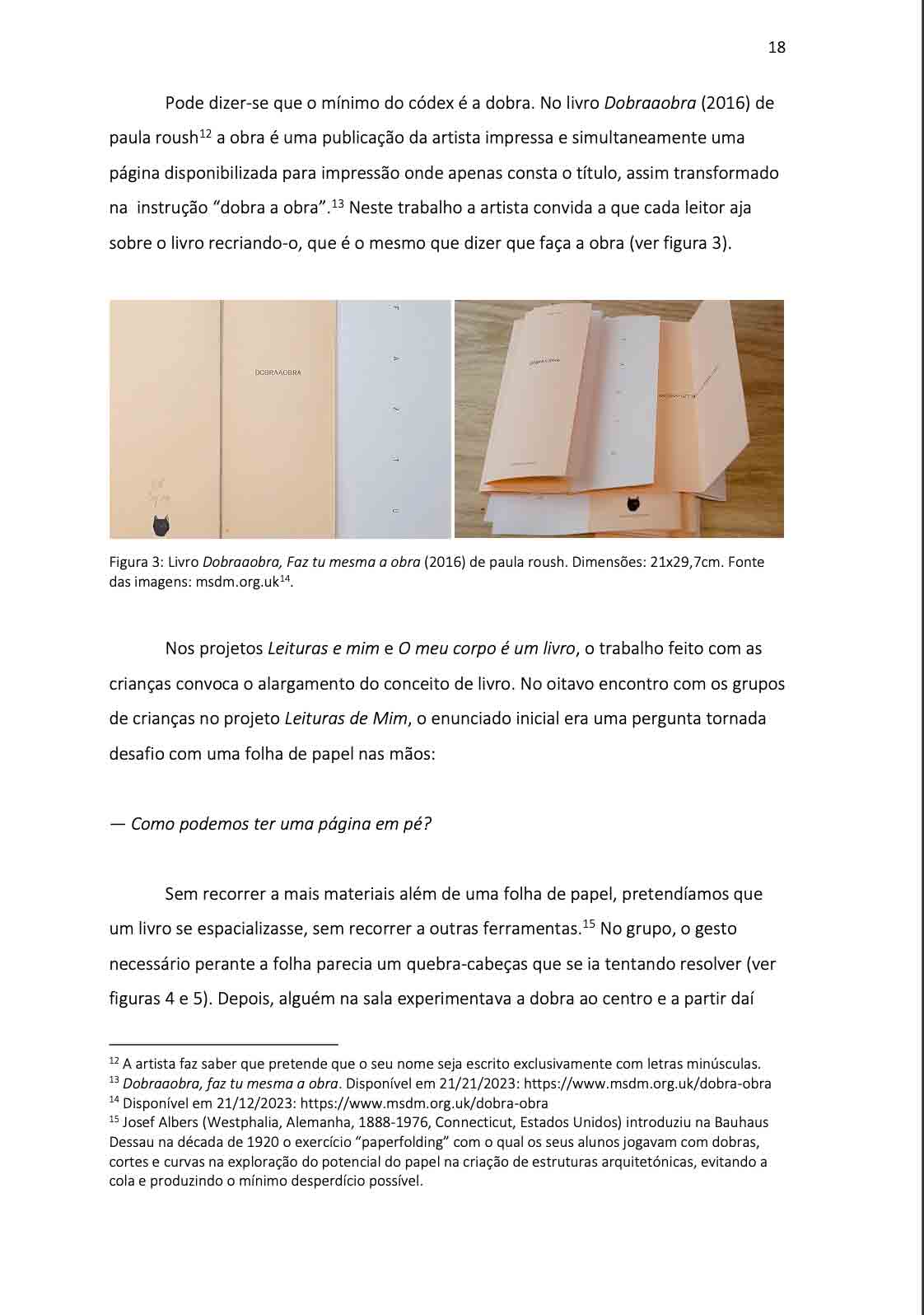
A second level of analysis focuses specifically on Dobraaobra, Faz tu mesma a obra (2016).
Nascimento uses the work to think about one of the most elementary material gestures through which the codex comes into being: the fold. In Dobraaobra, the printed sheet simultaneously becomes publication, instruction and artwork. The title itself — dobra a obra, fold the work — asks the reader to intervene materially in the publication.
The book is therefore not presented as a completed object to be passively received. Its form depends upon an action performed by the person encountering it. Reading becomes inseparable from handling, folding and making.
This apparently simple gesture opens onto a larger question running through Nascimento’s thesis: what happens when the artist’s book is understood not only as a place for artistic work but as a device capable of producing participation, agency and encounter?
3. Liquid memories: publishing as a common field between art and education
The most extensive engagement with msdm appears in Chapter V, “O campo comum entre arte e educação: oficinas como lugares de encontros” — The common field between art and education: workshops as places of encounter.
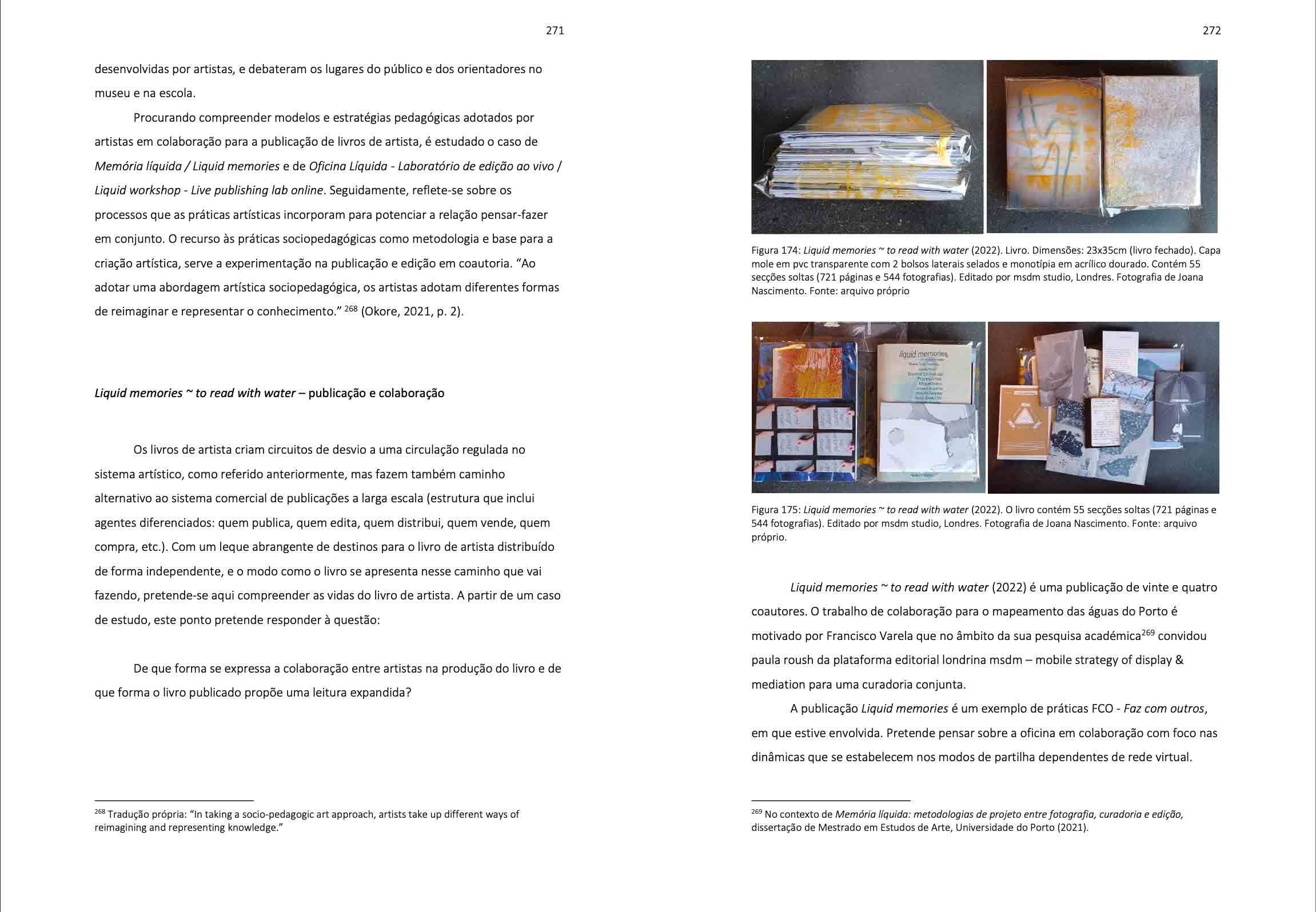
Here, Liquid memories ~ to read with water becomes a case study through which Nascimento examines publication, collaboration, pedagogy and expanded forms of reading.
The thesis asks:
“De que forma se expressa a colaboração entre artistas na produção do livro e de que forma o livro publicado propõe uma leitura expandida?”
Or, in English:
“How is collaboration between artists expressed in the production of the book, and how does the published book propose an expanded form of reading?”
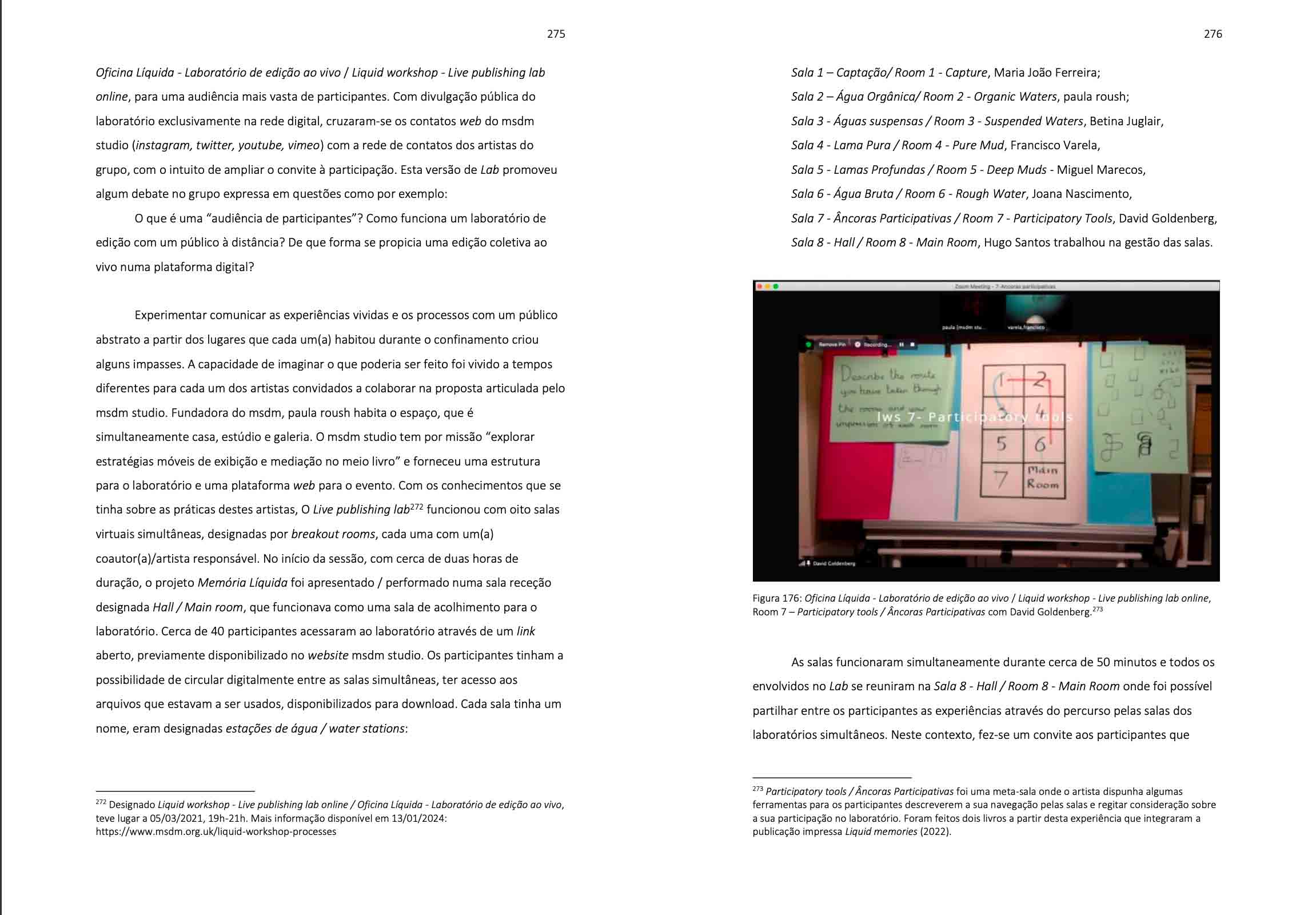
Nascimento reconstructs the process that begins with Entre Arquivo e Publicação: Um Workshop Líquido, facilitated through msdm studio, continues through Liquid Workshop / Oficina Líquida — Live Publishing Lab Online, and eventually materialises in the collective publication Liquid memories ~ to read with water.
What becomes important here is not only the resulting book but the process through which the book comes into existence. Workshops, conversations, archives, images, editorial decisions and collaborative exchanges become part of the publication itself.
Nascimento reads these practices as sociopedagogical methodologies in which thinking and making occur together. Publishing is consequently understood not as the final stage of an artistic process but as a space in which knowledge is collectively produced.
The workshop becomes a site of encounter; the publication becomes both the material trace of those encounters and a device capable of generating further ones.
4. msdm as a publishing structure: archive, exhibition, workshop
There is a fourth layer to Nascimento’s analysis: her examination of msdm itself as an organisational and artistic structure.
She describes msdm as an independent organisation concerned with publishing as artistic practice, experimental editorial design and the book as exhibition space, identifying three interconnected areas of activity: publications, exhibitions and workshops.
This reading is particularly important because it recognises that these are not separate branches of activity. Publications can originate in workshops; workshops can activate archives; archives can generate exhibitions; exhibitions can become publications. Each form can migrate into another.
The archive therefore does not function simply as a repository for preserving what has already happened. It becomes operative material.
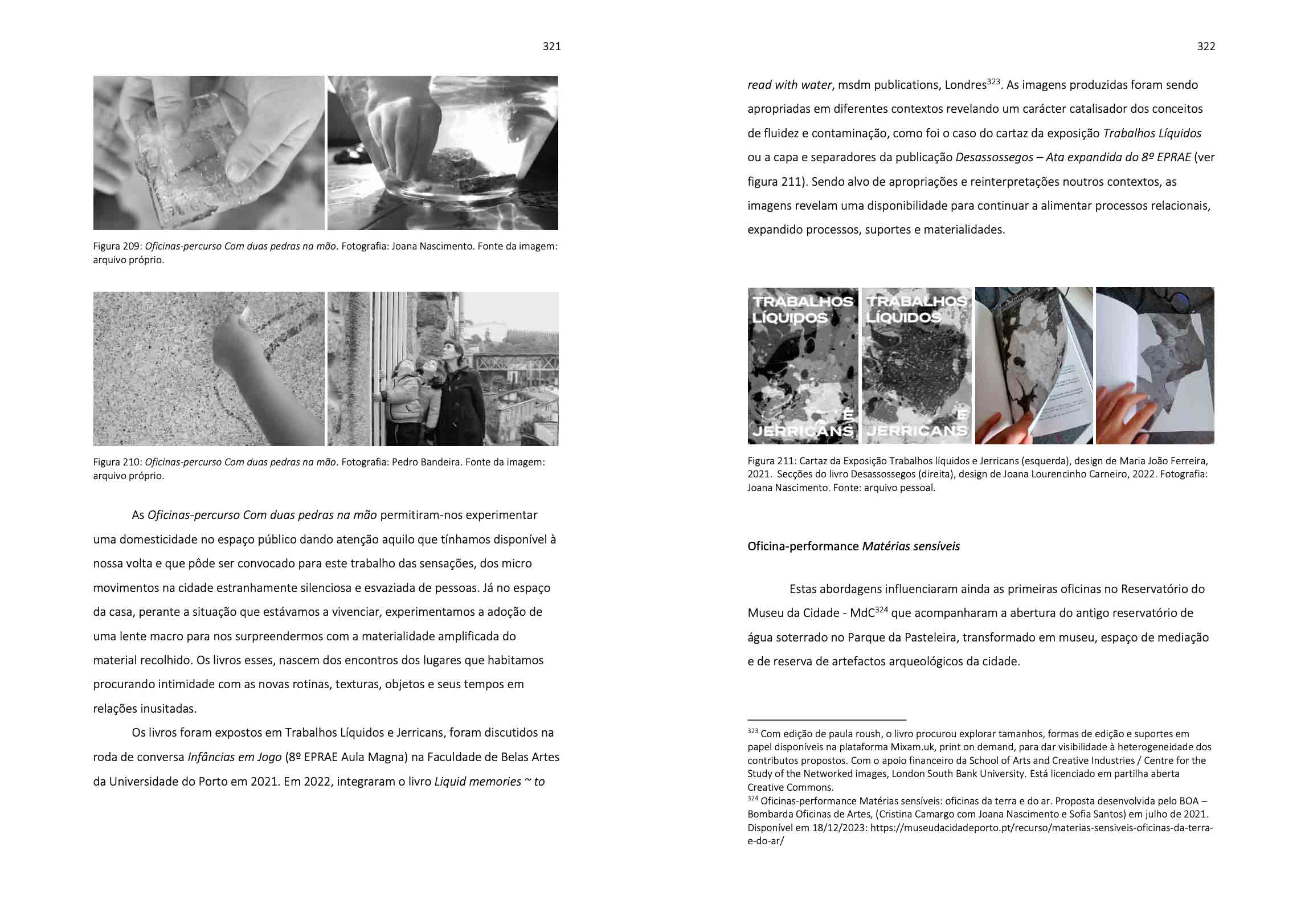
Nascimento discusses, for example, the use of orphan photographs in the Orphan Editions, personal photographic archives, exhibitions and workshops, connecting these activities to collaborative processes of appropriation, reinterpretation and reactivation. Images circulate between contexts and acquire new relations, meanings and forms of authorship.
Her analysis also identifies another structural characteristic of msdm: the destabilisation of conventional divisions of editorial labour.
Across these different publishing contexts, established distinctions between artist, editor, producer, curator, printer, tutor, organiser and manager become blurred. Rather than occupying fixed professional positions, these roles circulate through the practice and are recombined according to the conditions of each project.
Seen through Nascimento’s research, msdm can therefore be understood less as a conventional publishing house than as an infrastructure for publishing as artistic research: a mobile structure through which books, archives, exhibitions, workshops and collaborative relations continually produce one another.
FROM THE THESIS
1. paula roush / msdm — publishing, exhibition and mediation
PORTUGUÊS
“A artista paula roush (Lisboa, Portugal, 1967) dedica-se a explorar estratégias flexíveis de exibição e mediação do livro por via de publicações, exposições e oficinas colaborativas. Fundou o msdm studio - mobile strategies of display & mediation que funciona como casa-atelier-galeria da artista e educadora, em Londres.”
ENGLISH
“The artist paula roush (Lisbon, Portugal, 1967) explores flexible strategies for the display and mediation of the book through publications, exhibitions and collaborative workshops. She founded msdm studio – mobile strategies of display & mediation, which operates as the artist and educator’s house–studio–gallery in London.”
— Joana Nascimento, Livro de artista (lugar e veículo): o campo comum entre arte e educação, p. 59.
2. Dobraaobra — the reader makes the work
PORTUGUÊS
“Pode dizer-se que o mínimo do códex é a dobra. No livro Dobraaobra (2016) de paula roush a obra é uma publicação da artista impressa e simultaneamente uma página disponibilizada para impressão onde apenas consta o título, assim transformado na instrução ‘dobra a obra’. Neste trabalho a artista convida a que cada leitor aja sobre o livro recriando-o, que é o mesmo que dizer que faça a obra.”
ENGLISH
“It can be said that the minimum of the codex is the fold. In paula roush’s book Dobraaobra (2016), the work exists both as a printed artist’s publication and as a page made available for printing on which only the title appears, thus transformed into the instruction ‘fold the work’. In this work, the artist invites each reader to act upon the book by recreating it, which is another way of saying: to make the work.”
— Joana Nascimento, Livro de artista (lugar e veículo): o campo comum entre arte e educação.
3. Liquid memories — collaboration and expanded reading
PORTUGUÊS
“A partir de um caso de estudo, este ponto pretende responder à questão: De que forma se expressa a colaboração entre artistas na produção do livro e de que forma o livro publicado propõe uma leitura expandida?”
ENGLISH
“Taking a case study as its point of departure, this section seeks to address the following question: How is collaboration between artists expressed in the production of the book, and how does the published book propose an expanded form of reading?”
— Joana Nascimento, Livro de artista (lugar e veículo): o campo comum entre arte e educação.
PORTUGUÊS
“A publicação Liquid memories é um exemplo de práticas FCO - Faz com outros, em que estive envolvida. Pretende pensar sobre a oficina em colaboração com foco nas dinâmicas que se estabelecem nos modos de partilha dependentes de rede virtual.”
ENGLISH
“The publication Liquid memories is an example of FCO – Faz com outros [Make With Others] practices in which I was involved. It considers the collaborative workshop by focusing on the dynamics established through modes of sharing dependent on a virtual network.”
4. The workshop as a temporary community and common field
PORTUGUÊS
“É precisamente sobre a forma como se criou uma comunidade temporária em torno dos livros, das fotografias, dos processos de edição com vista a uma publicação em coautoria neste projeto que se pretende refletir. Por um lado, os artistas interessados na partilha e debate das suas práticas, estabeleceram regularmente práticas colaborativas reivindicando um espaço dinâmico e realizando um campo comum para as suas experiências, processos inventivos na criação dos seus livros.”
ENGLISH
“It is precisely the way in which a temporary community was created around books, photographs and editorial processes leading towards a co-authored publication that this project seeks to reflect upon. The artists, interested in sharing and discussing their practices, established regular collaborative practices, claiming a dynamic space and creating a common field for their experiences and inventive processes in the making of their books.”
— Joana Nascimento, Livro de artista (lugar e veículo): o campo comum entre arte e educação.
5. The publication as an open relational structure
PORTUGUÊS
“Em termos editoriais o livro procura refletir sobre a intenção de deixar em aberto a possibilidade para mediar novas relações, sendo que cada contribuição pode separar-se e reorganizar-se com as outras secções conforme se pretenda. O objeto, envolvido por uma bolsa transparente, que se assemelha a uma capa com abas interiores, é uma edição msdm que agrega as propostas com diferentes níveis de processos partilhados em grupo. Na sua heterogeneidade, interior e exterior, capa e miolo confundem-se.”
ENGLISH
“In editorial terms, the book seeks to reflect an intention to leave open the possibility of mediating new relationships, allowing each contribution to be separated and reorganised with the other sections as desired. Enclosed in a transparent sleeve resembling a cover with inner flaps, the object is an msdm edition that brings together proposals involving different levels of shared group processes. In its heterogeneity, inside and outside, cover and contents become intertwined.”