liquid memories
~ to read with water

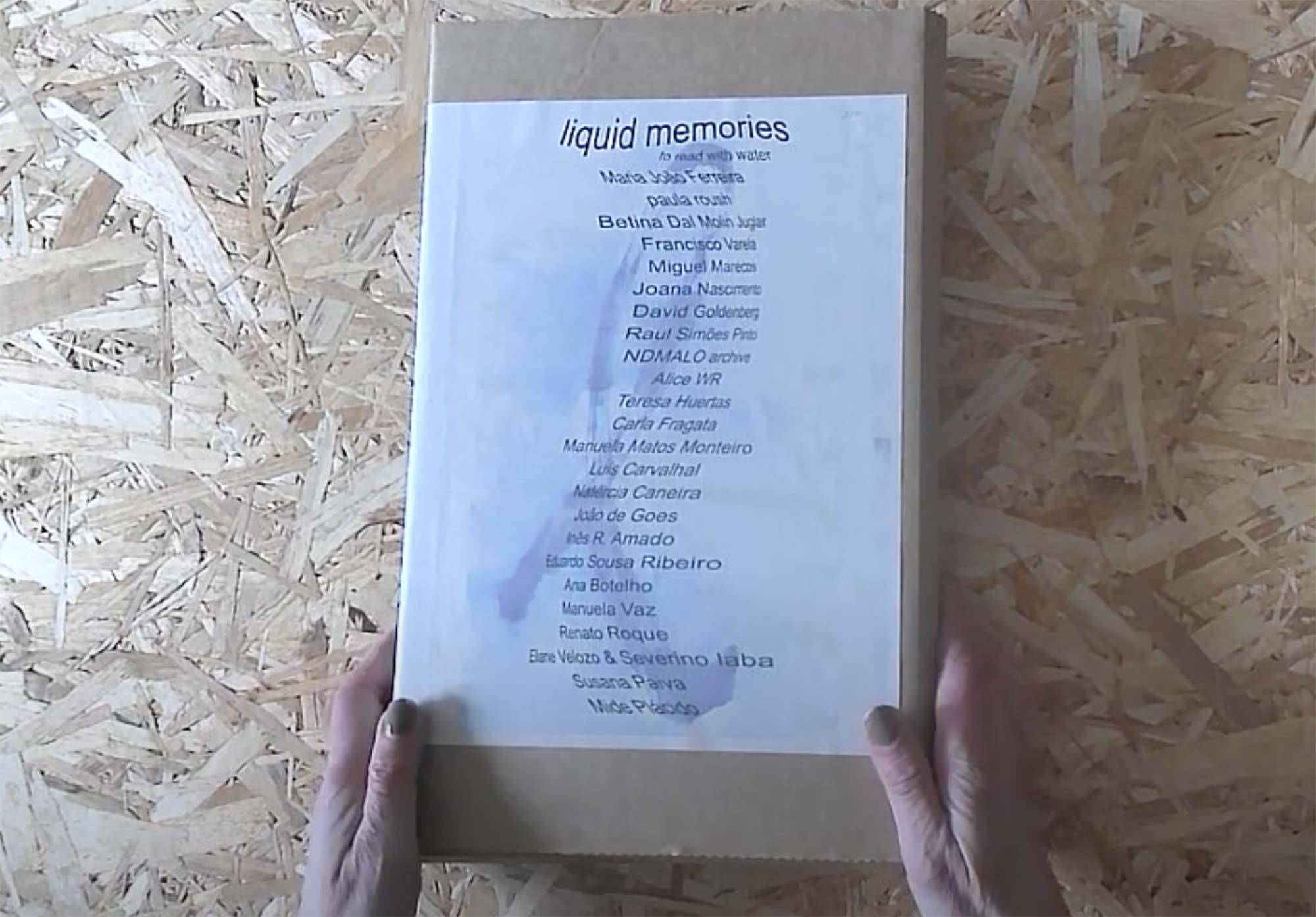
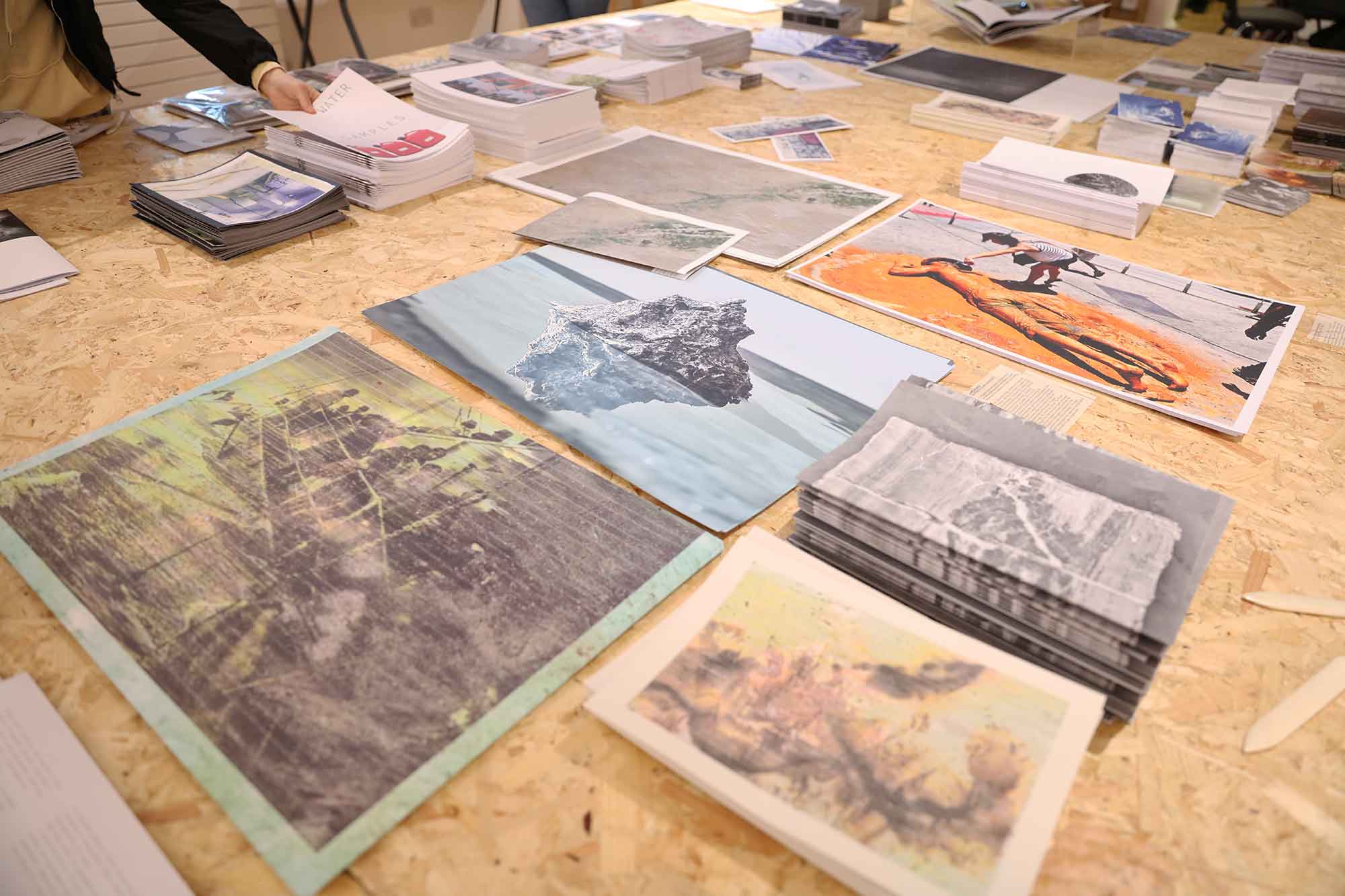
liquid memories ~to read with water is a collective photobook work, an assemblage of experimental photo-texts that respond to the challenge of photographing/remembering with water. A publication in 55 unbound sections.

WATER STATIONS

WATER STORIES

← WATER STATIONS
Maria João Ferreira

CAPTURE

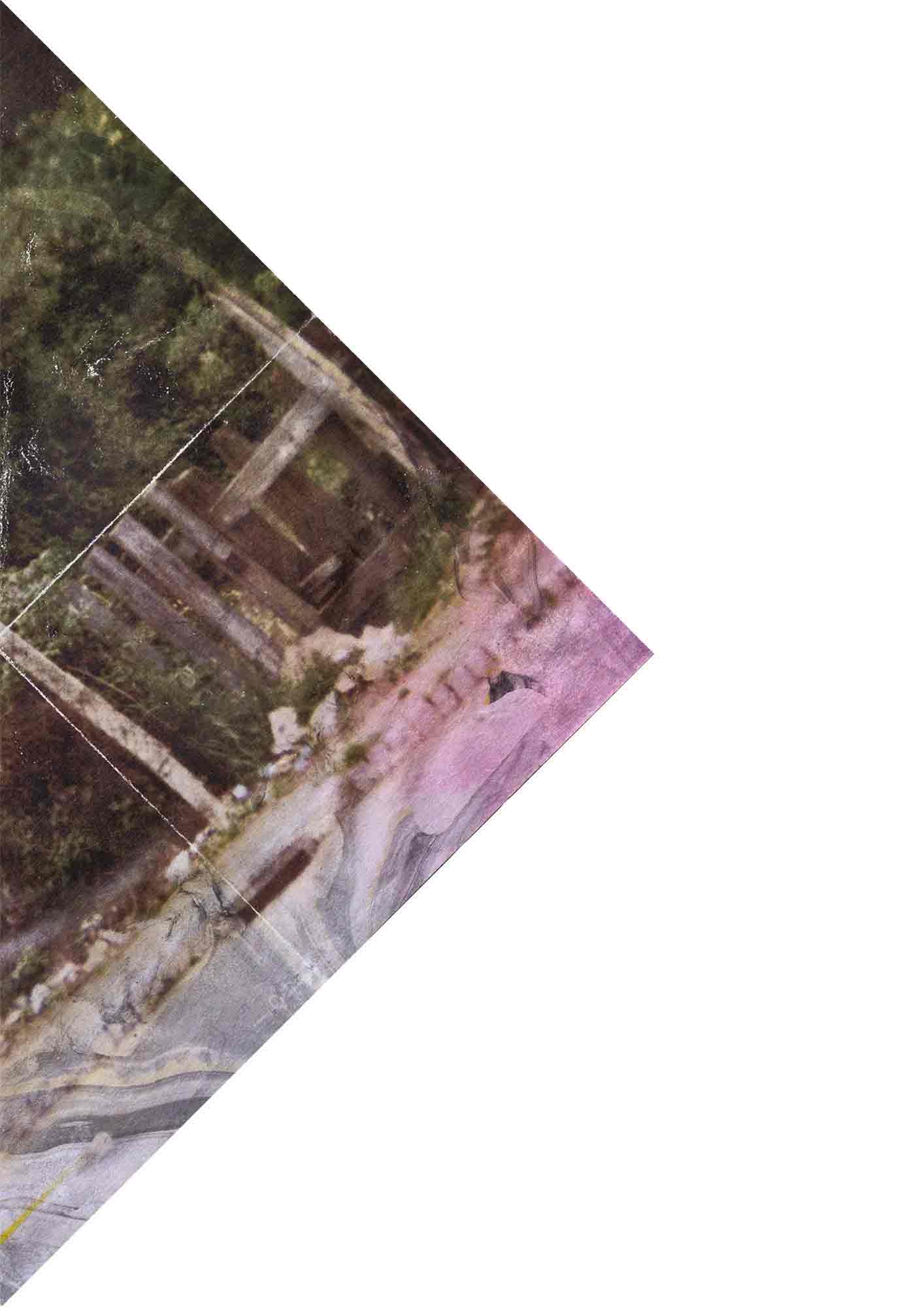
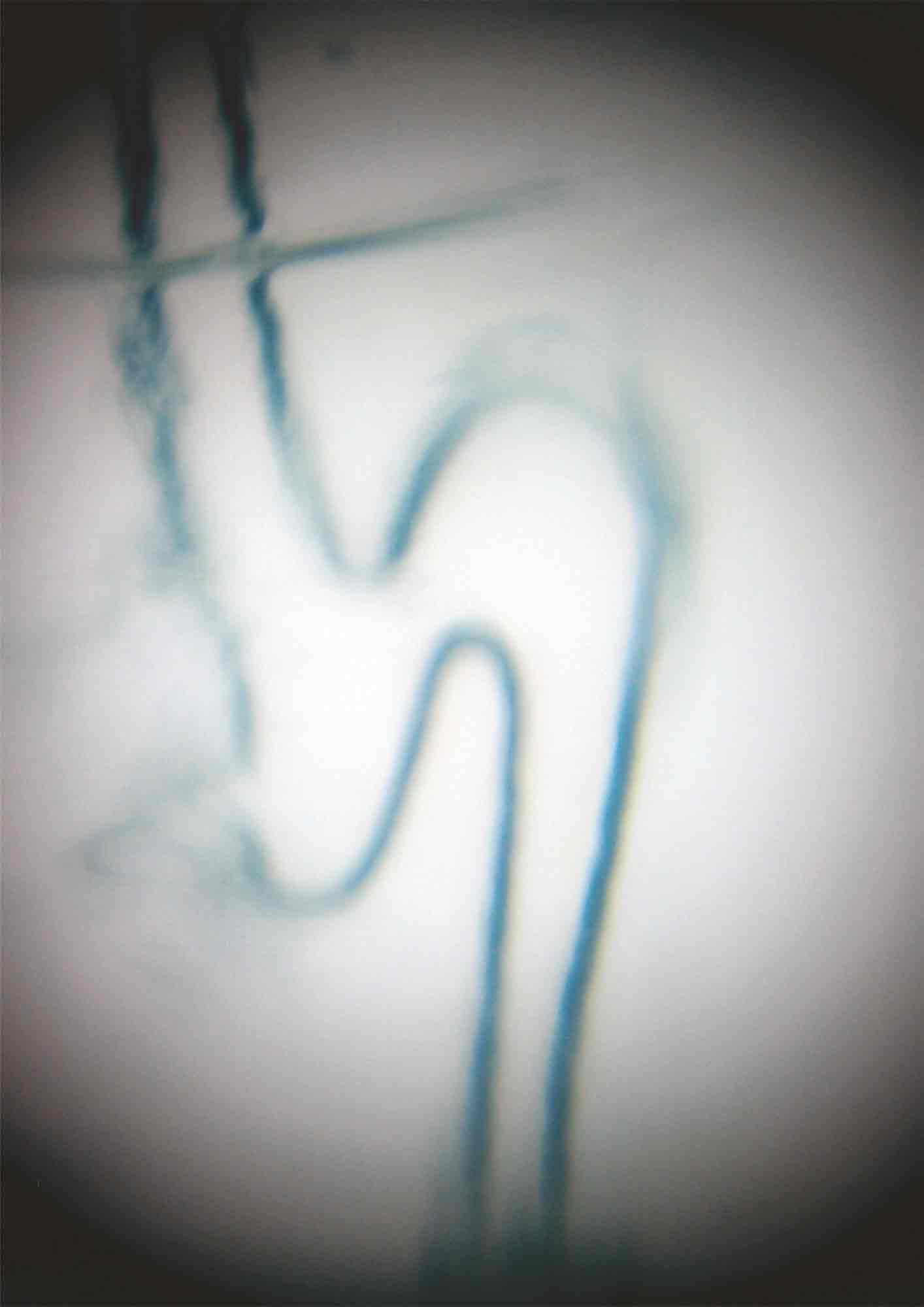
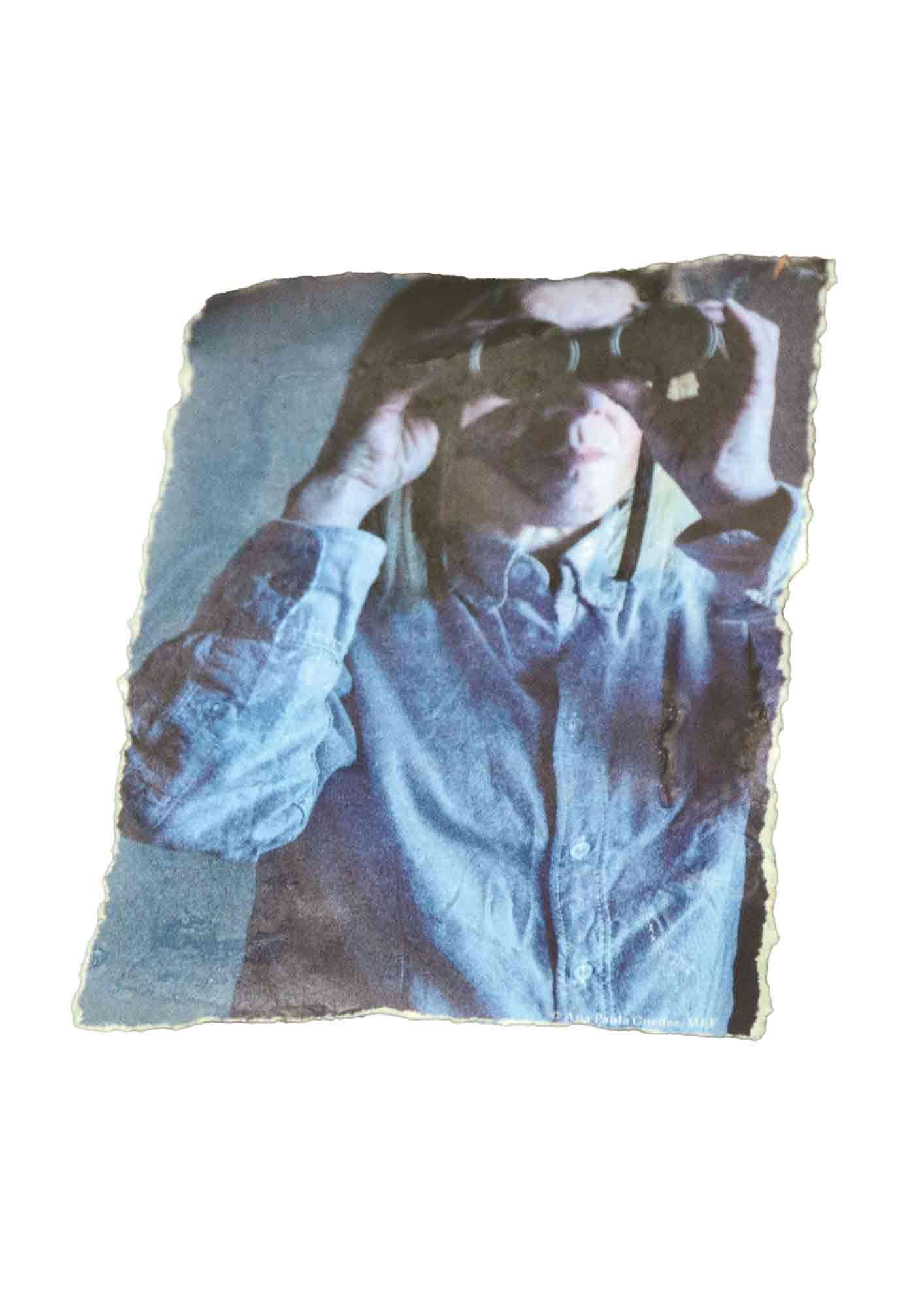
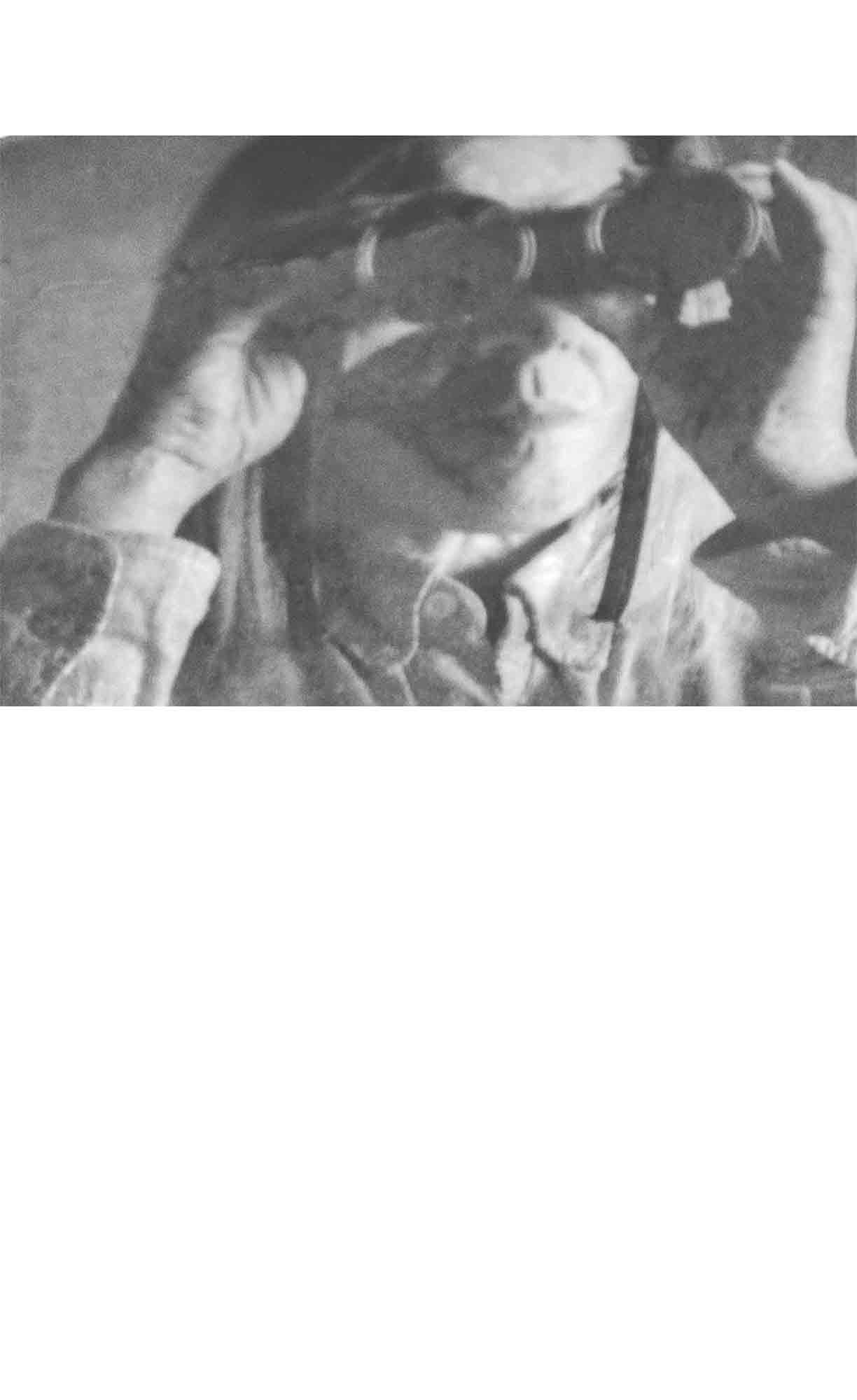
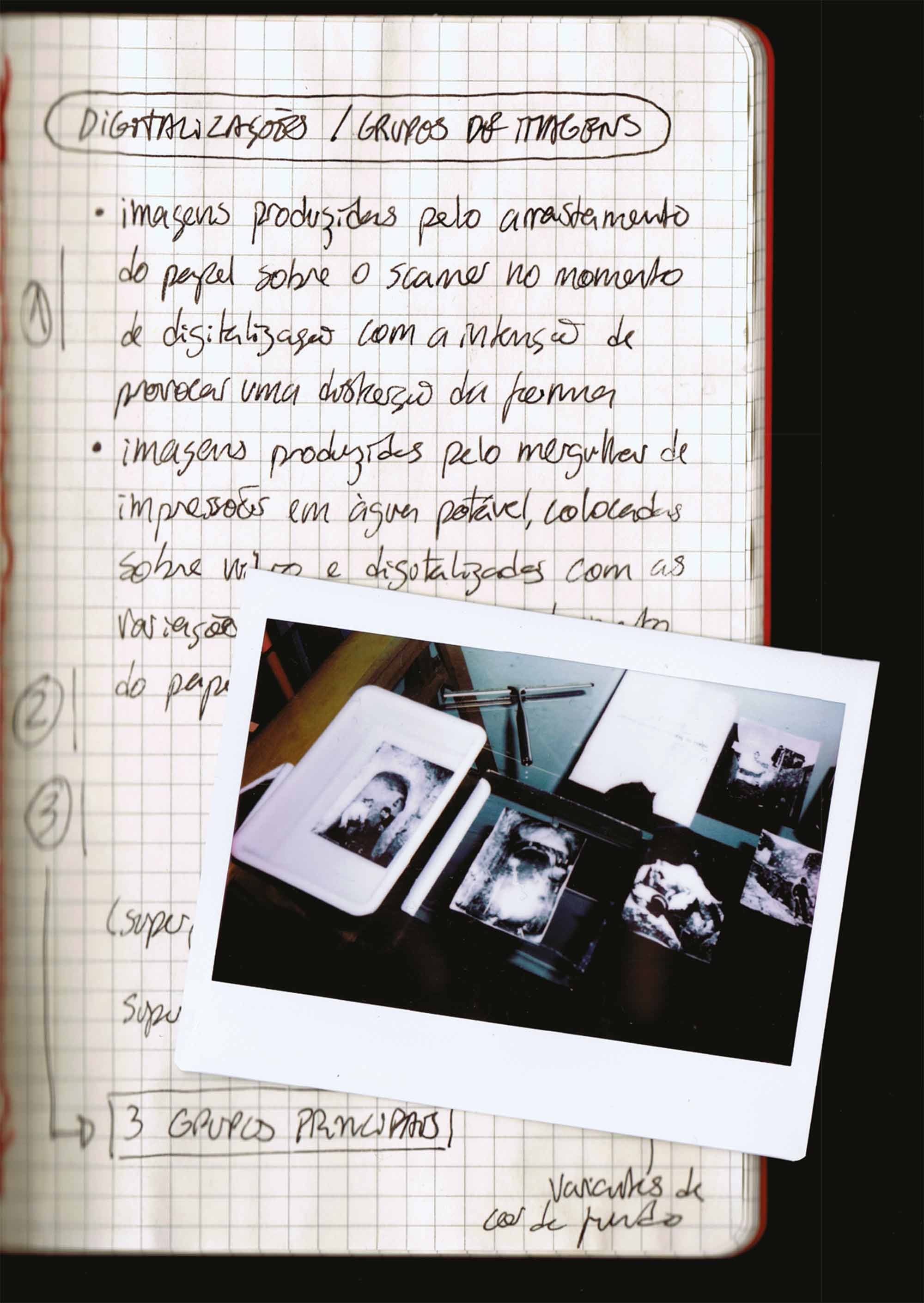
Paperback, 14.8 x 10.5 cm, 84 pages, experiments with images by photographer Marques de Abreu 1909 study ‘Contribution to Hygiene in Porto’. Scannography (or scanner photography, the process of capturing digitized images of prints) in which historical photographs are altered through a deviation in the scanning procedure, a movement of folding, juxtaposing, and dragging prints of the source images across the flatbed photo scanner with a CCD array capturing device creating waves along its path. The cover, printed in colour, shows process and work environment.
INSTRUCTIONS TO READ WITH WATER
CAPTURE
Scan a section using a zig zag motion to create light waves along its path.
← WATER STATIONS
paula roush

ORGANIC WATERS

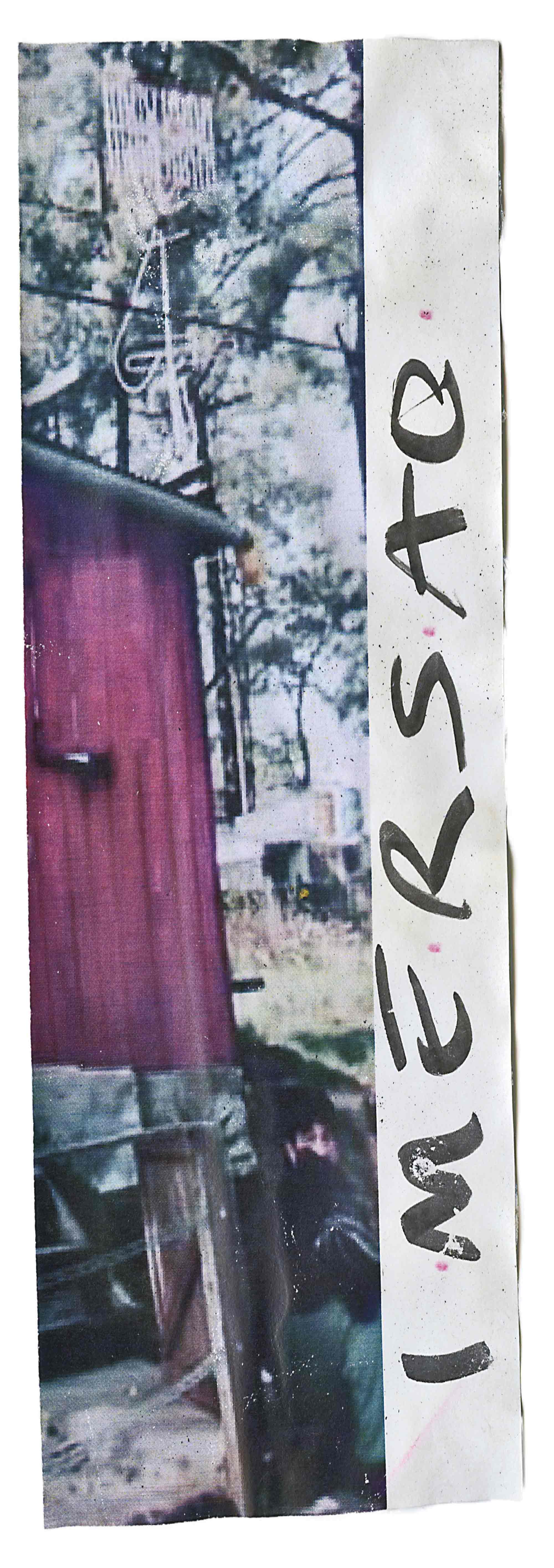
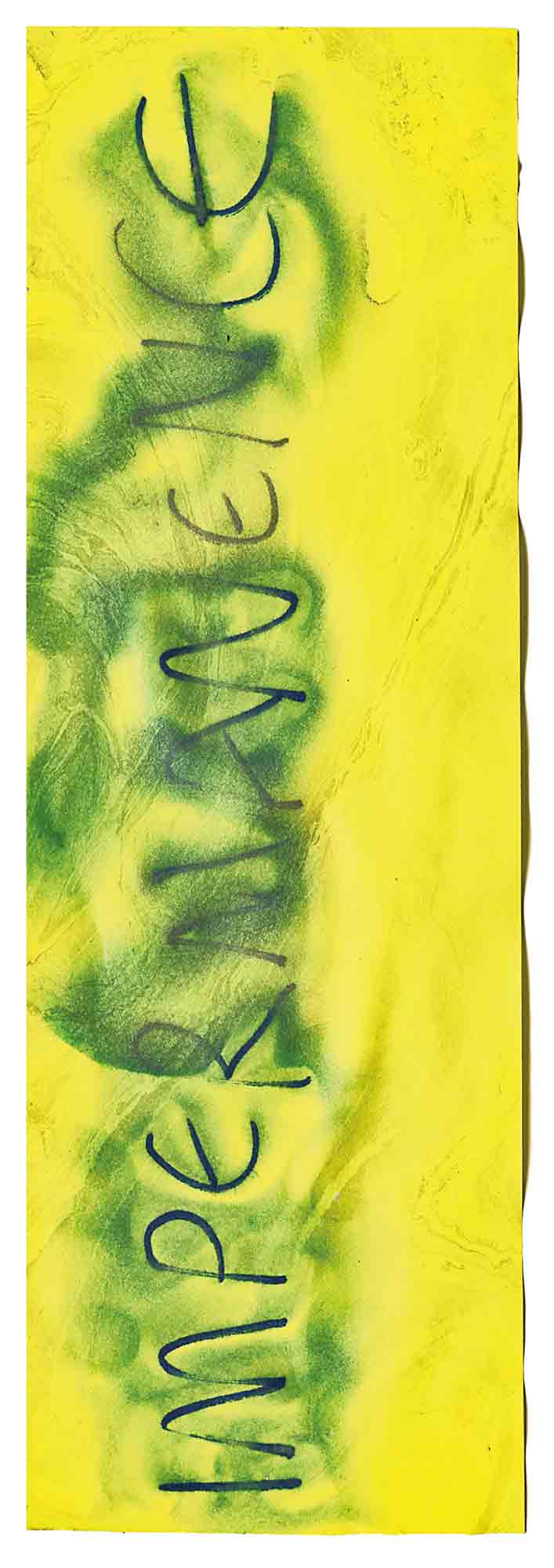
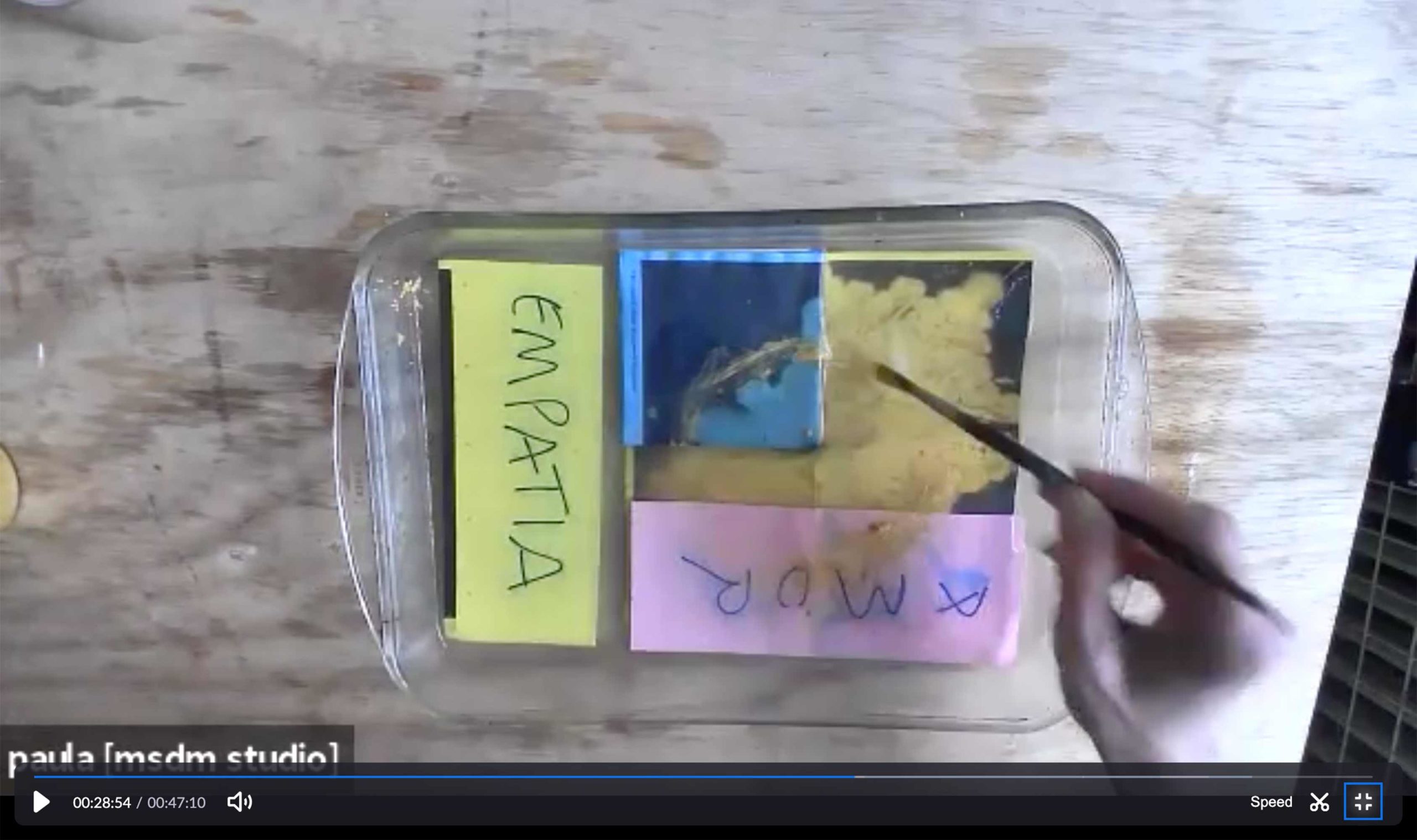
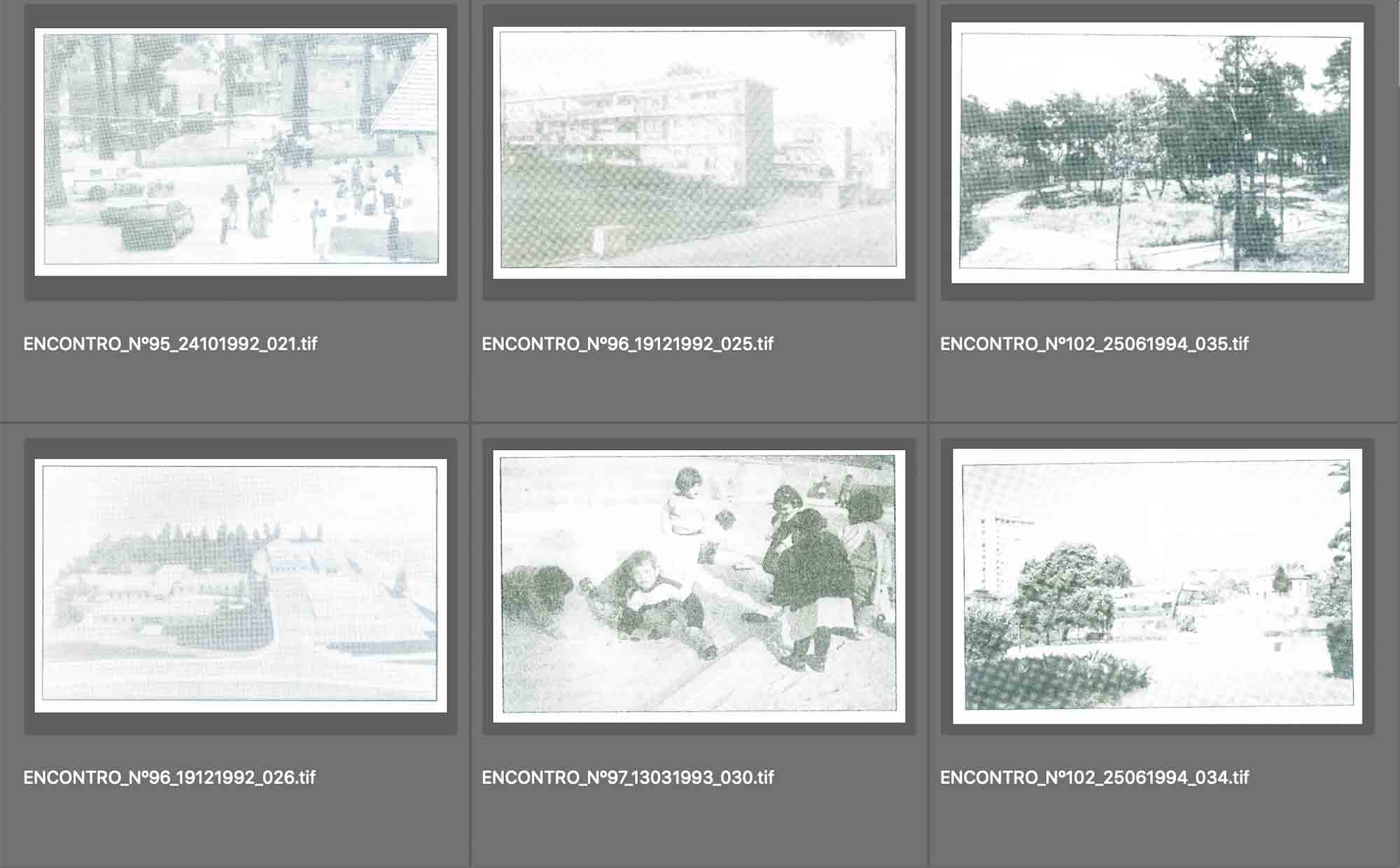
Two pamphlets created through water contact printing, with seaweed, ink and brushes, as in ancient suminagashi ‘ink floating’ technique. CHAOTIC GEOMETRY OF WATER, 16 pages, 29.7 x 21 cm, photographs sourced from Pasteleira 1950-90s Facebook group, folded into tetrahedrons (three-dimensional shapes with triangular faces), render visible continuous spiraling of liquid motion. VORTICE PATTERNS OF WATER, 12 pages, 21 x 21 cm, photographs from Periódico Encontro (Meeting Newsletter) published by the Parish of Nossa Senhora da Ajuda, Pasteleira, Around the folded edges, as additional tension coalesces, diffraction patterns create geometric, interlacing organic-like surfaces, connecting to both sacred water geometry and quantum molecular structure. Two long pamphlets, LIQUID WORDS, 29.7 x 10.5 cm, 24 and 8 pages each, assemble liquid words elicited from workshop participants, following a wateryquery guided exercise.
INSTRUCTIONS TO READ WITH WATER
LIQUID WORDS
Come up with new liquid words, find a blank page to write and smudge them somehow.
CHAOTIC GEOMETRY / VORTICE PATTERNS OF WATER
Get a tray of water with ink and place the pamphlets in direct contact with the surface, to render visible the liquid flow.
← WATER STATIONS
Betina Dal Molin Juglair

SUSPENDED WATERS

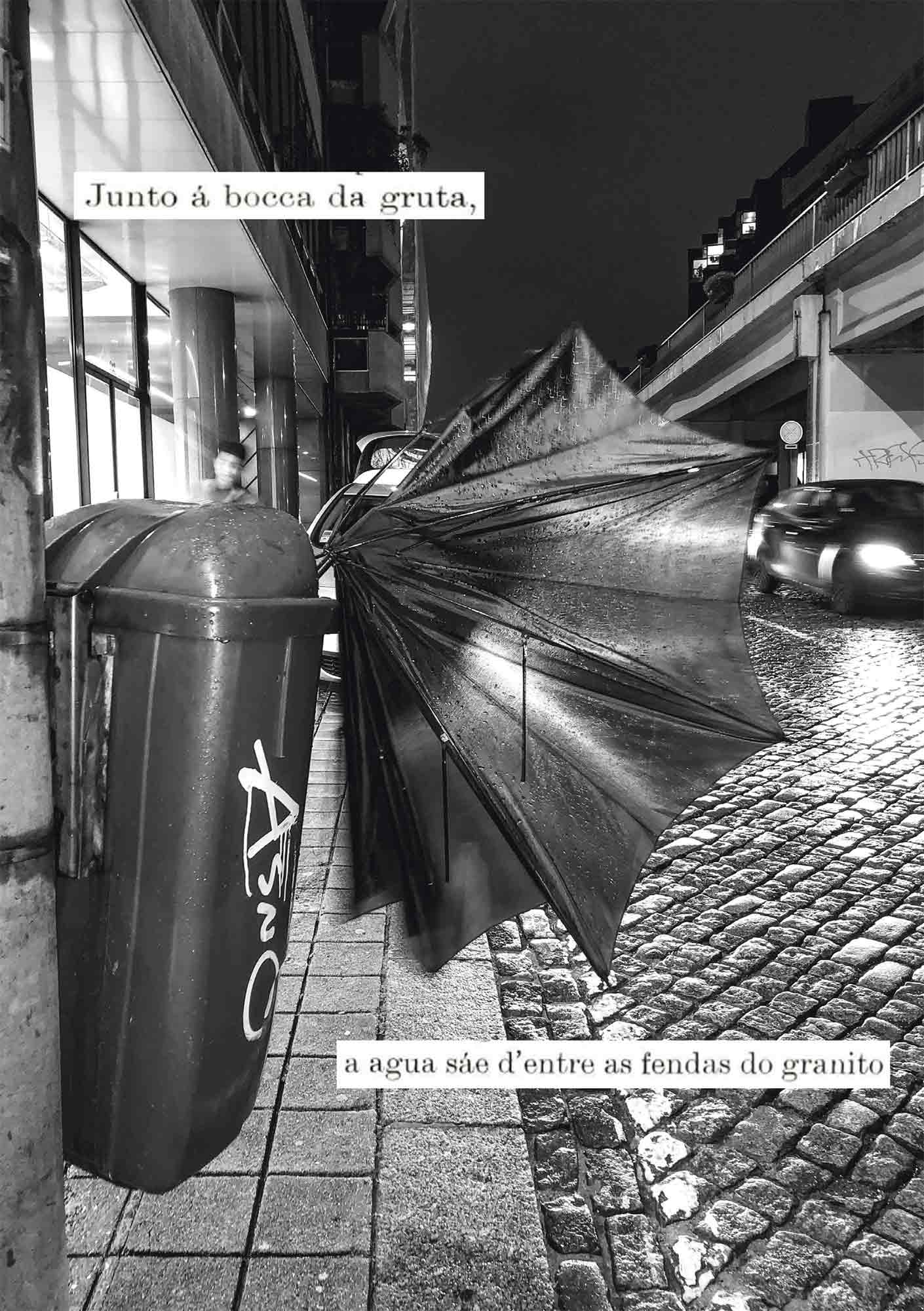
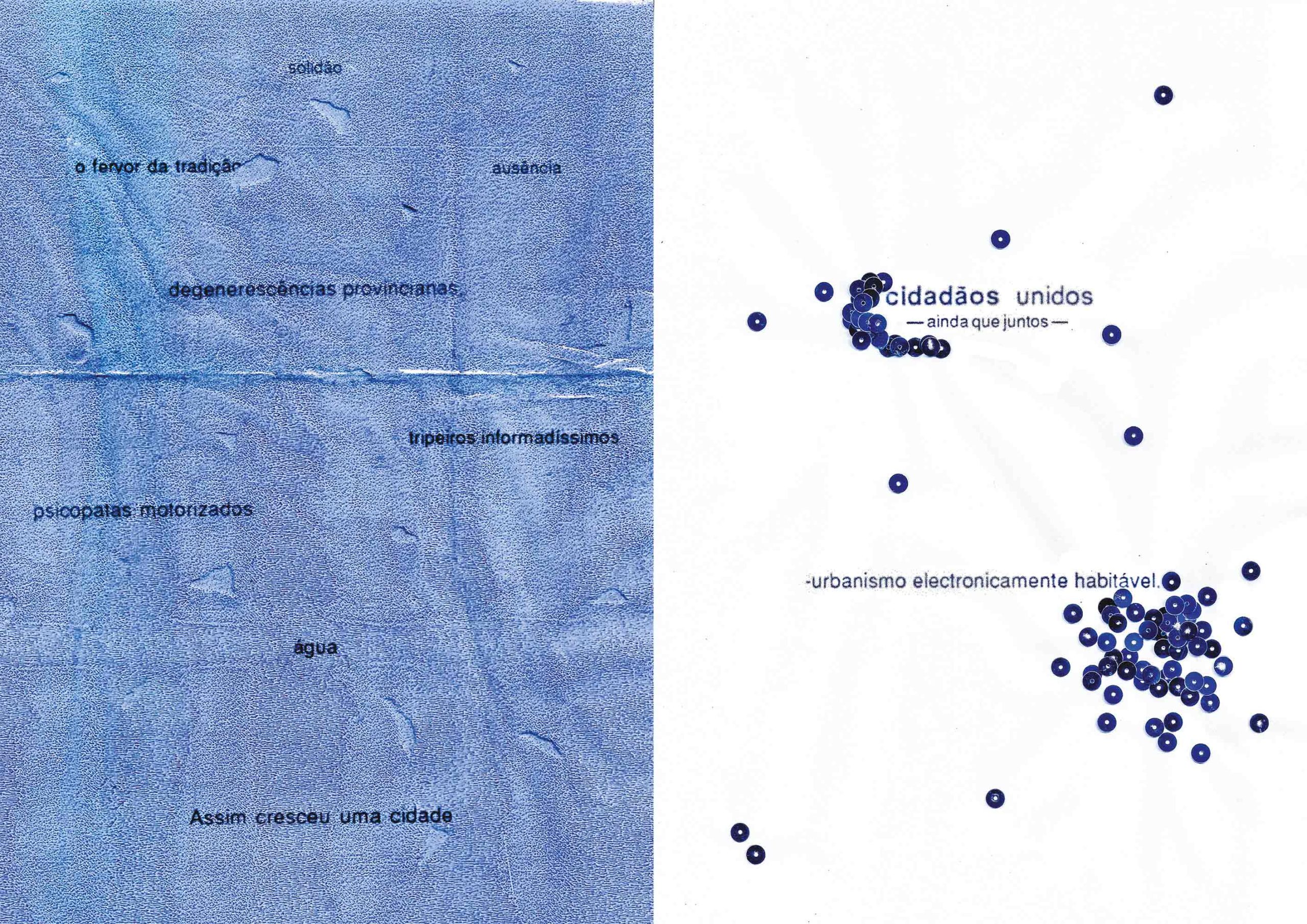
Pamphlet, 21 x 14.8 cm, 24-pages, photo-text collages developed with photographs of broken umbrellas found in the streets of Porto. Traces of extreme weather events, felt by a diasporic dweller recently arrived from Brasil, are embodied in these object-shields meant to protect from the swirl of windy, rainy days. Cut-ups from historical essays on urban waters and unsteady communities, include the 1909 study ‘Contribution to Hygiene in Porto’ and the 1994 essay ‘Time and Community: The Lost Nexus,’ about Pasteleira. A related poster, LIQUID POEMS, 29.7 x 42 cm, adds inter-textuallity to other metereological feelings.
INSTRUCTIONS TO READ WITH WATER
LIQUID POEMS
Cut out your favorite words and collage them with weather reports.
SUSPENDED WATERS
On a windy rainy day, toss this pamphlet to the wind
← WATER STATIONS
Francisco Varela

PURE MUD

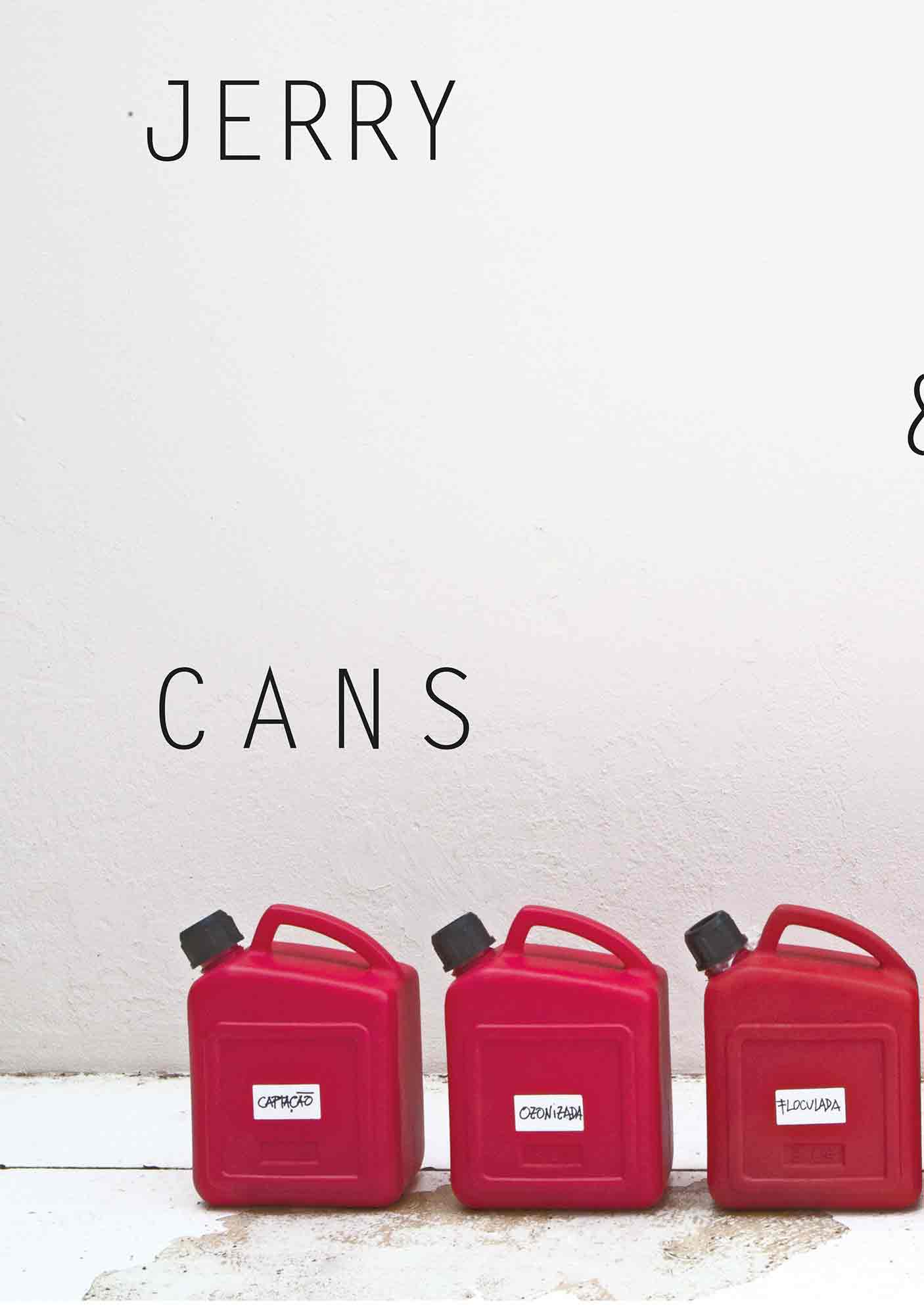
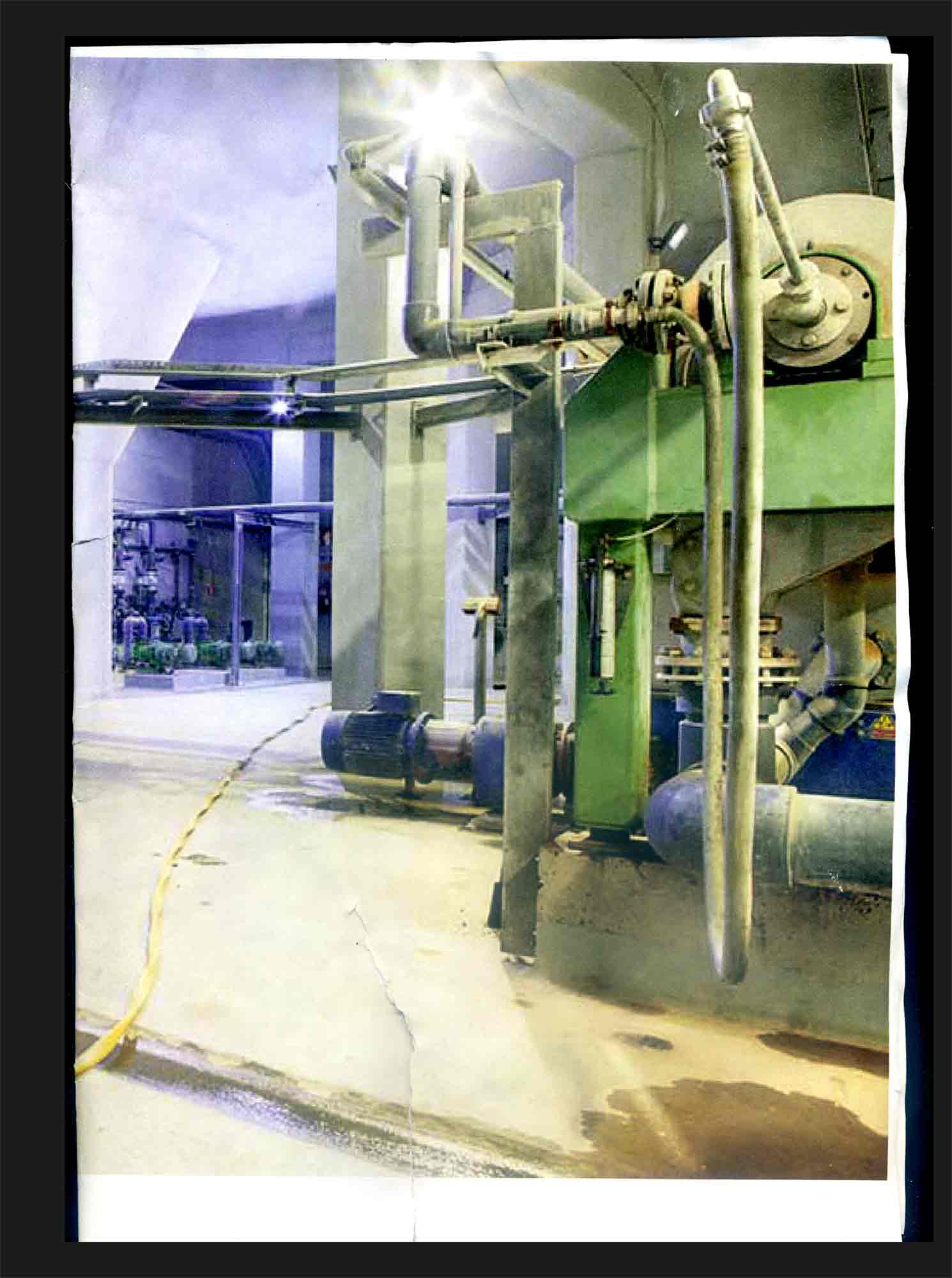
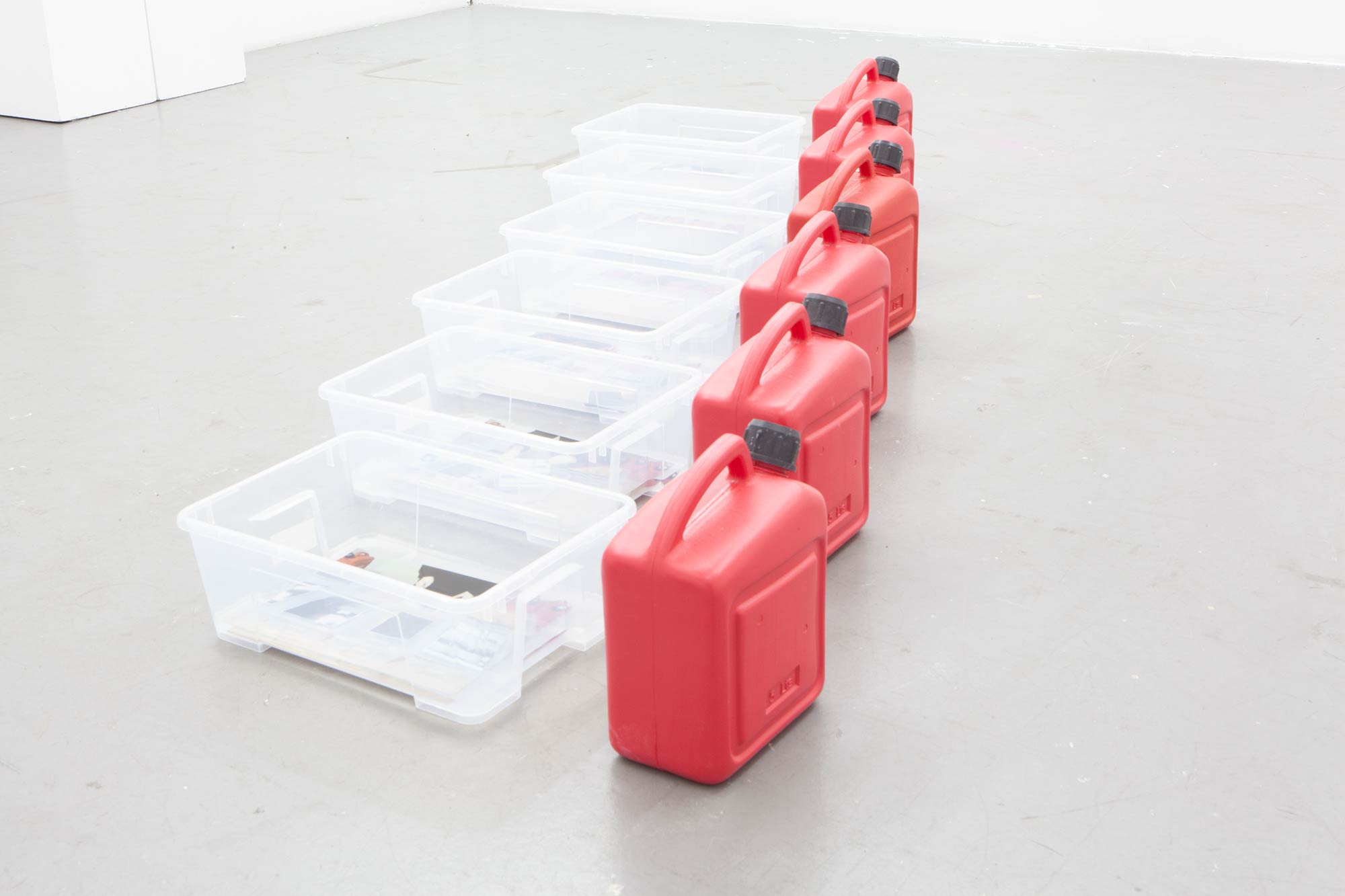
Two nested pamphlets. WATER SAMPLES & JERRY CANS, 20 pages, 29.7 x 21 cm, photographs of Lever Water Treatment Station, a supplier of water to Porto, and the route of water treatement, as it undergoes various treatment processes -capture, organic, suspended, mud, deep mud, rough. Water samples, collected in 5-liter jerry cans were used to wet photographs during the liquid memories online workshop. WET PAMPHLET, 16 pages, 28 x 21 cm, created through immersion of historical and personal photographs in water treated with ozone, aluminum sulfate, mud, and polyelectrolytes. Some prints lost their digital definition, others got darker, and some tore apart.
INSTRUCTIONS TO READ WITH WATER
WATER SAMPLES & JERRY CANS / WET PAMPHLET
Walk to the river, lake, or reservoir, that is the source water for your local water treatment plant, and collect water samples.
← WATER STATIONS
Miguel Marecos

DEEP MUDS

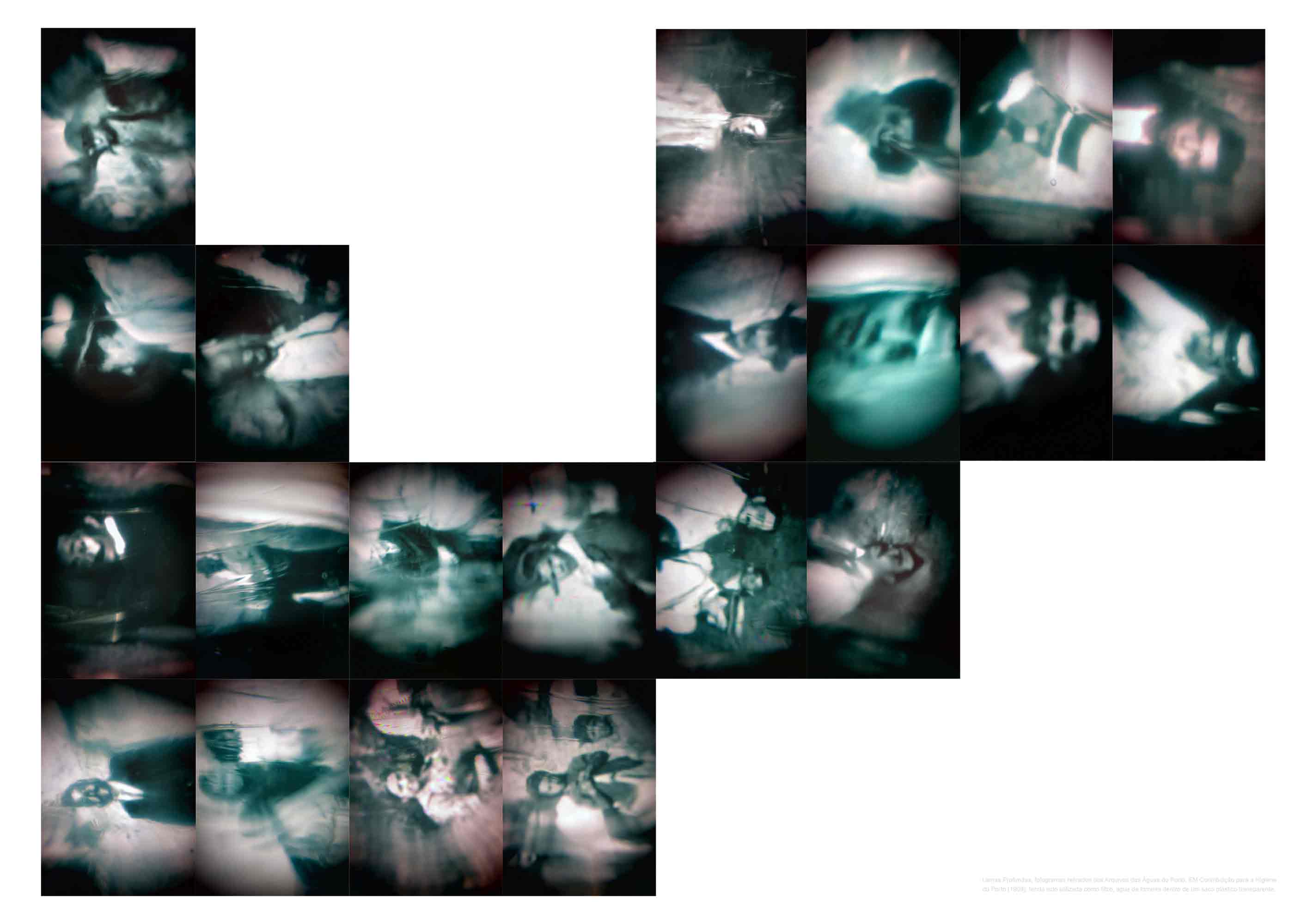
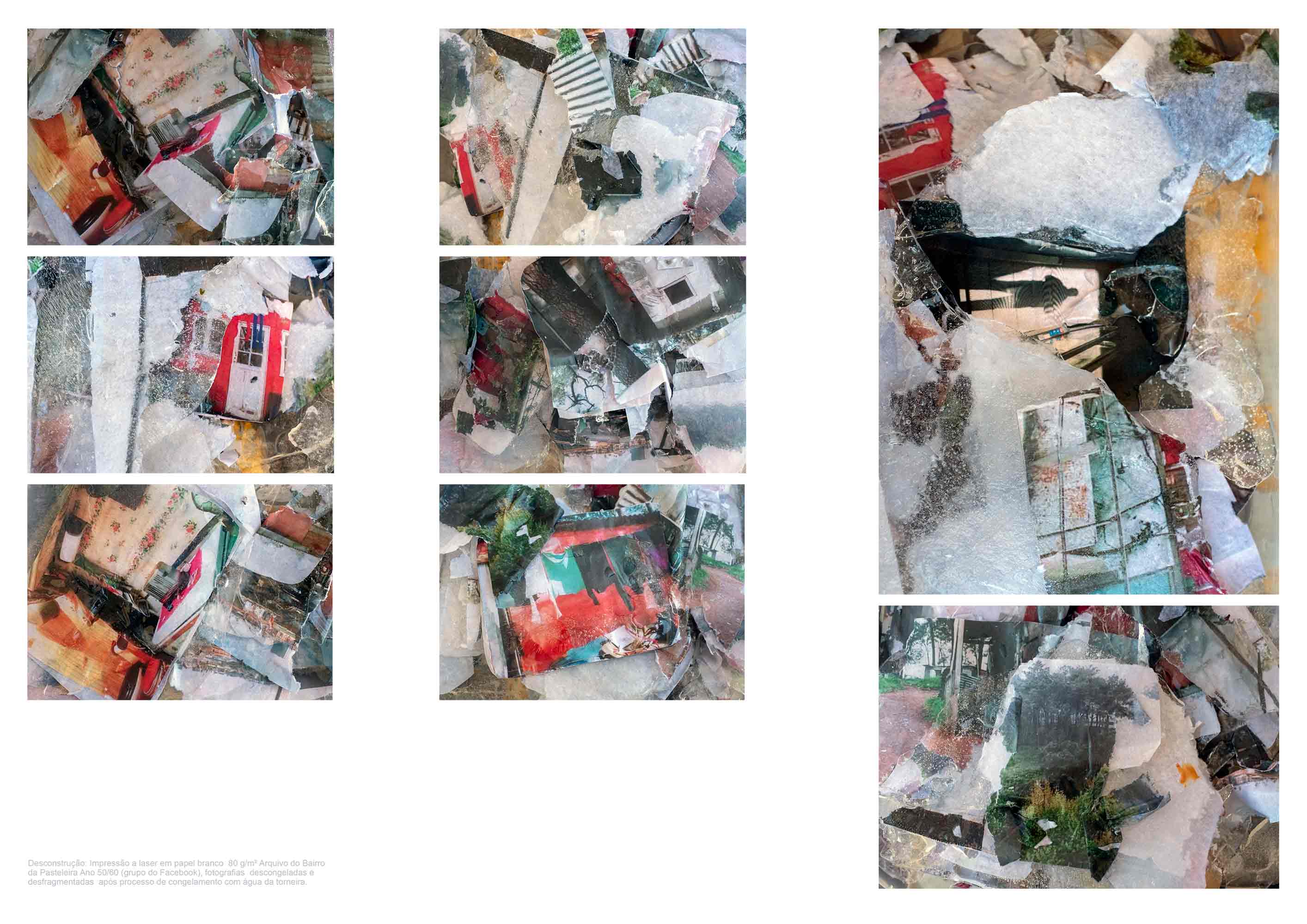
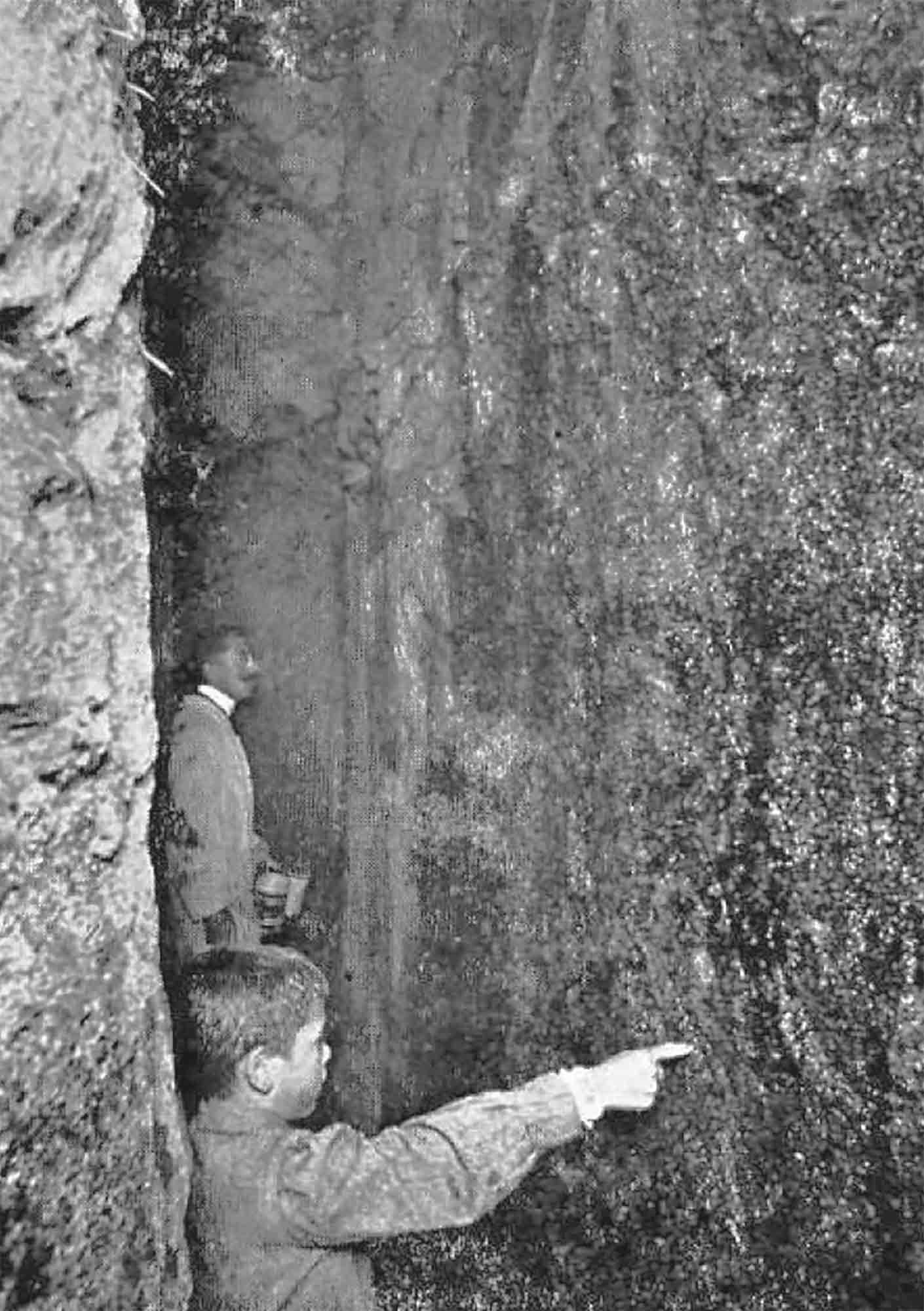
Pamphlet, LIQUID EXPERIMENTS, 29.7 x 21 cm, 28 pages, and poster 42 x 59.4 cm, contain cropped close-up portraits of people that appeared in the 1909 study ‘Contribution to Hygiene in Porto,’ posing by water fountains and inside water tunnels. Re-photographed using plastic lenses and bags filled with water as diffractive filters. Another poster DECONSTRUCTION, 42 x 59.4 cm, rephotographs of Pasteleira 1950-90s Facebook group photographs after they were frozen. and let to melt. EXERCISE OF FELT SENSE, a set of 5 cards, 21 x 14.8 cm each, present wateryquery exercises, step by step guides to formulate liquid memories arising from a felt sense.
INSTRUCTIONS TO READ WITH WATER
DECONSTRUCTION
After freezing the poster, let the ice crystals melt.
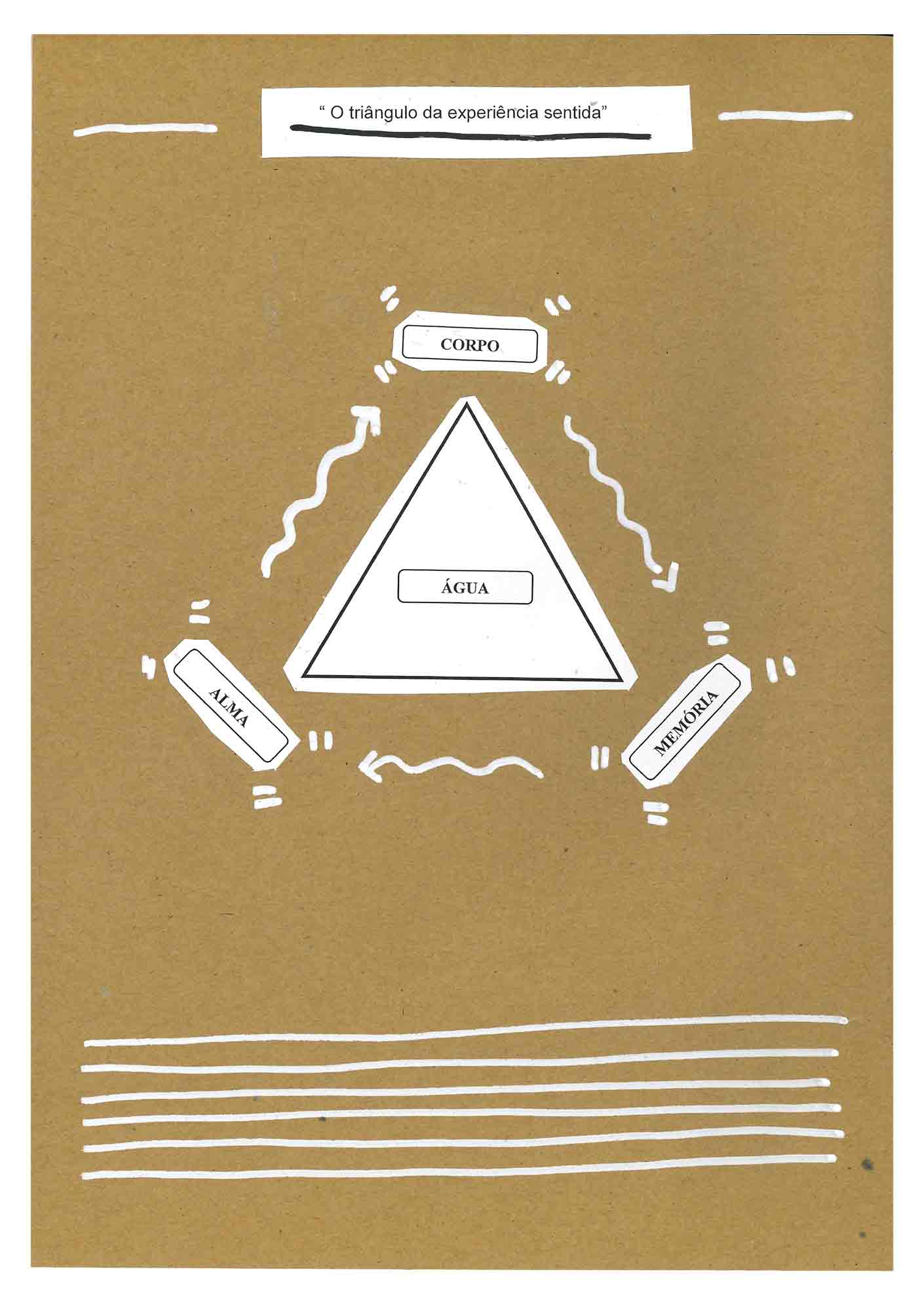
EXERCISE OF FELT SENSE
Practice wateryquery, choose one the cards and follow the instructions.
LIQUID EXPERIMENTS
Rephotograph the portraits through a bag filled with water.
← WATER STATIONS
Joana Nascimento

ROUGH WATER

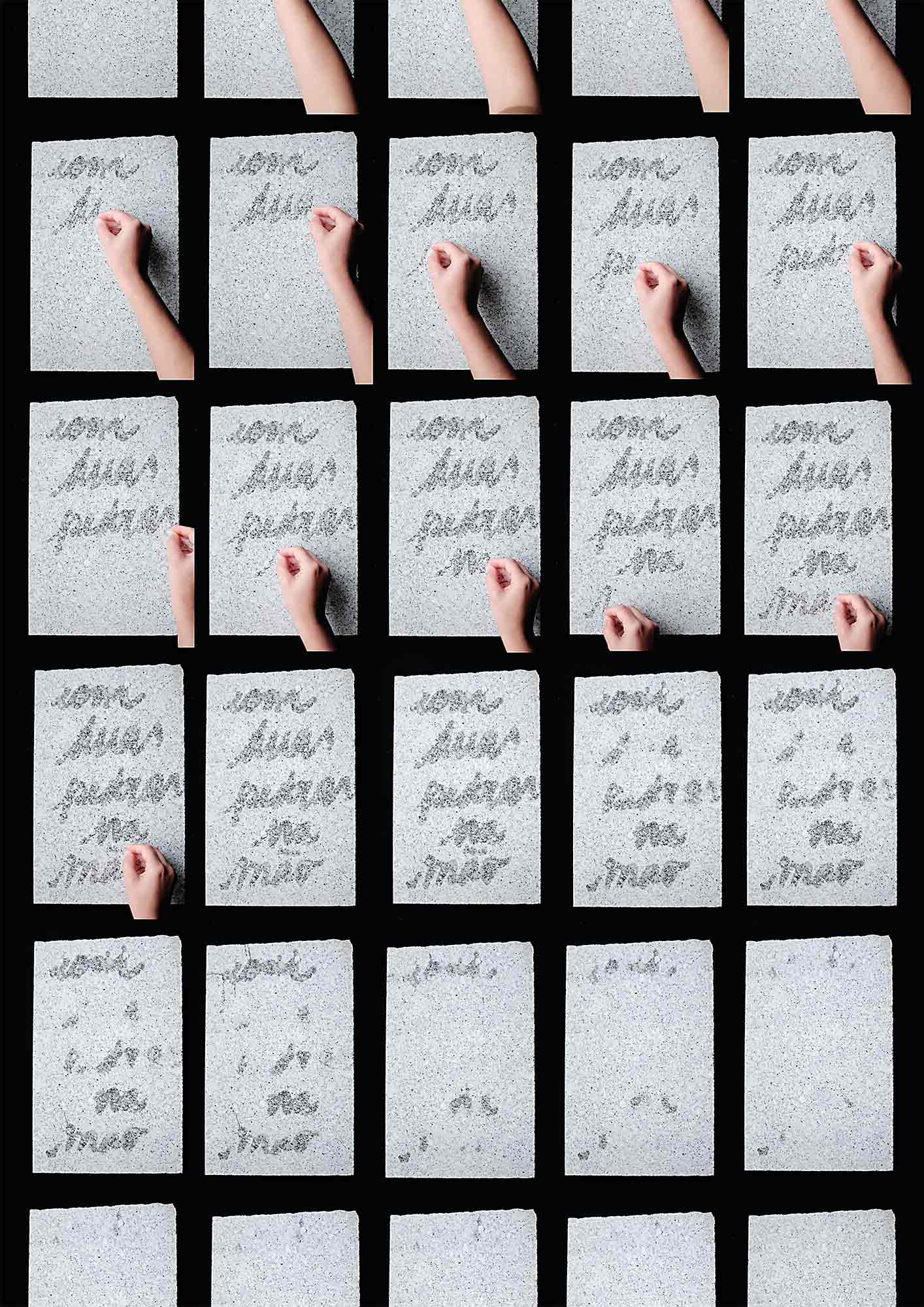
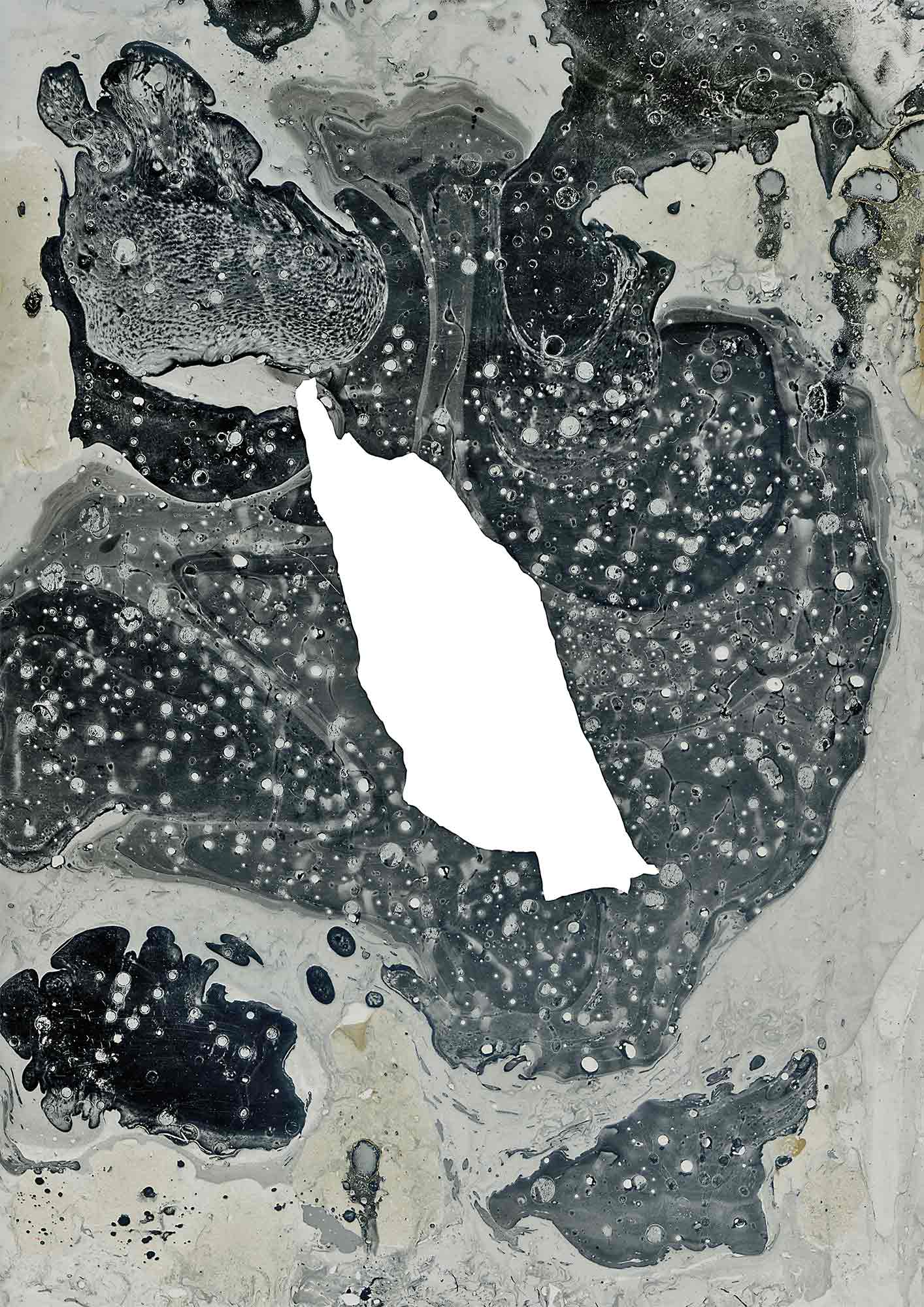
A 360° pamphlet, 44 pages, 21 x 14.8 cm, 2 parts to be read in any direction. Part 1, LIQUID STONE / RAW WATER, photocollages activate “turbulence” at the intersection of water traces at ground level (personal photographs) with 19th century underground water tunnels (historical photographs); Part 2, FLUID WRITING assembles hand written notes gathered during wateryquery guided exercises, stained with paper marbling water technique. Two posters, 42 x 29.7 cm each, to read with water: WITH TWO STONES IN HAND using ice cubes and MARBLED PATH, using street stones and salt.
INSTRUCTIONS TO READ WITH WATER
WITH TWO STONES IN HAND
Write with ice cubes on the granite page.
MARBLED PATH
Wrap the print around a street stone and immerse it in salt water.
LIQUID STONE / RAW WATER
Search for clues of underground water at street level and make note of the locations.
← WATER STATIONS
David Goldenberg

PARTICIPATORY TOOLS

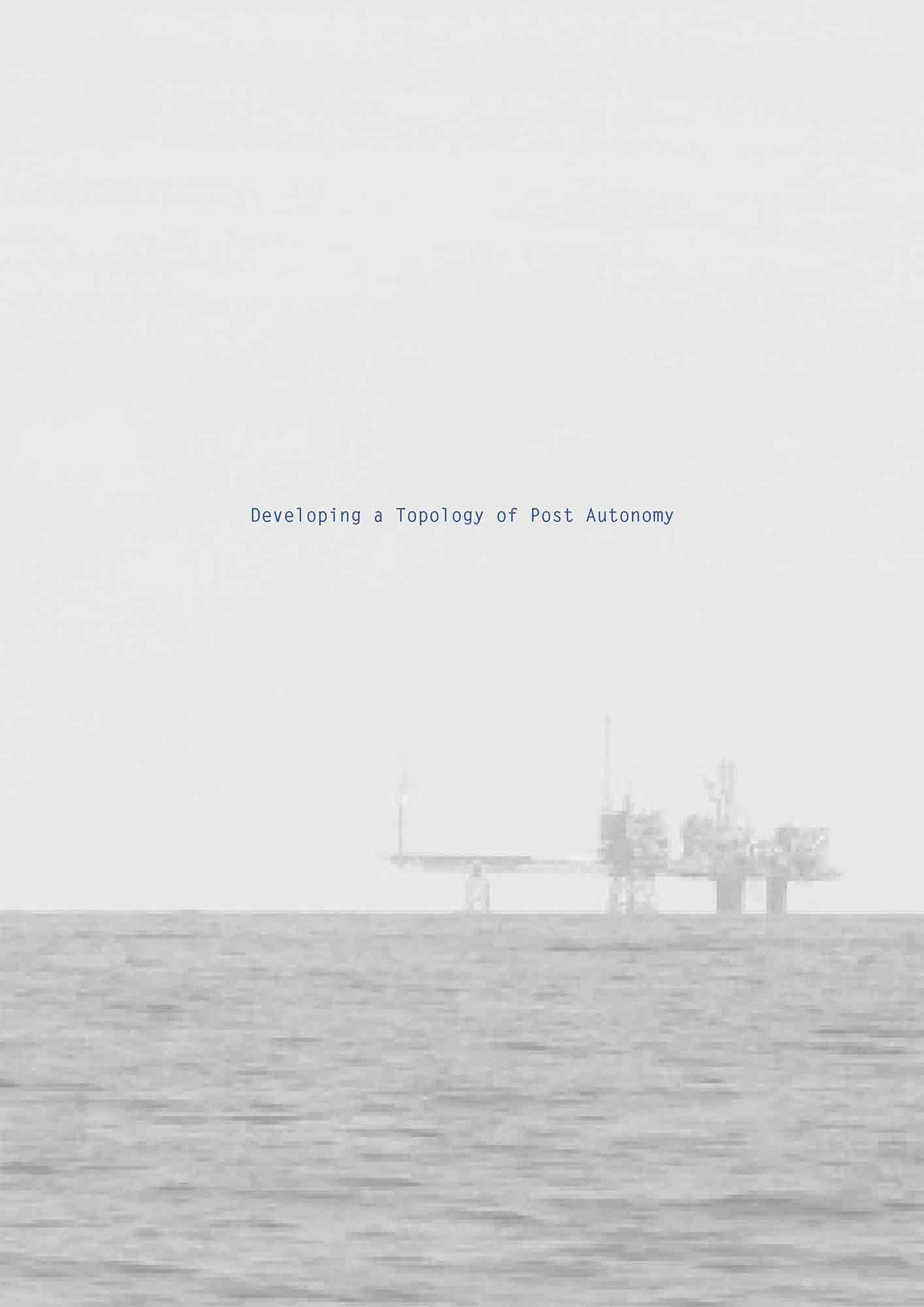
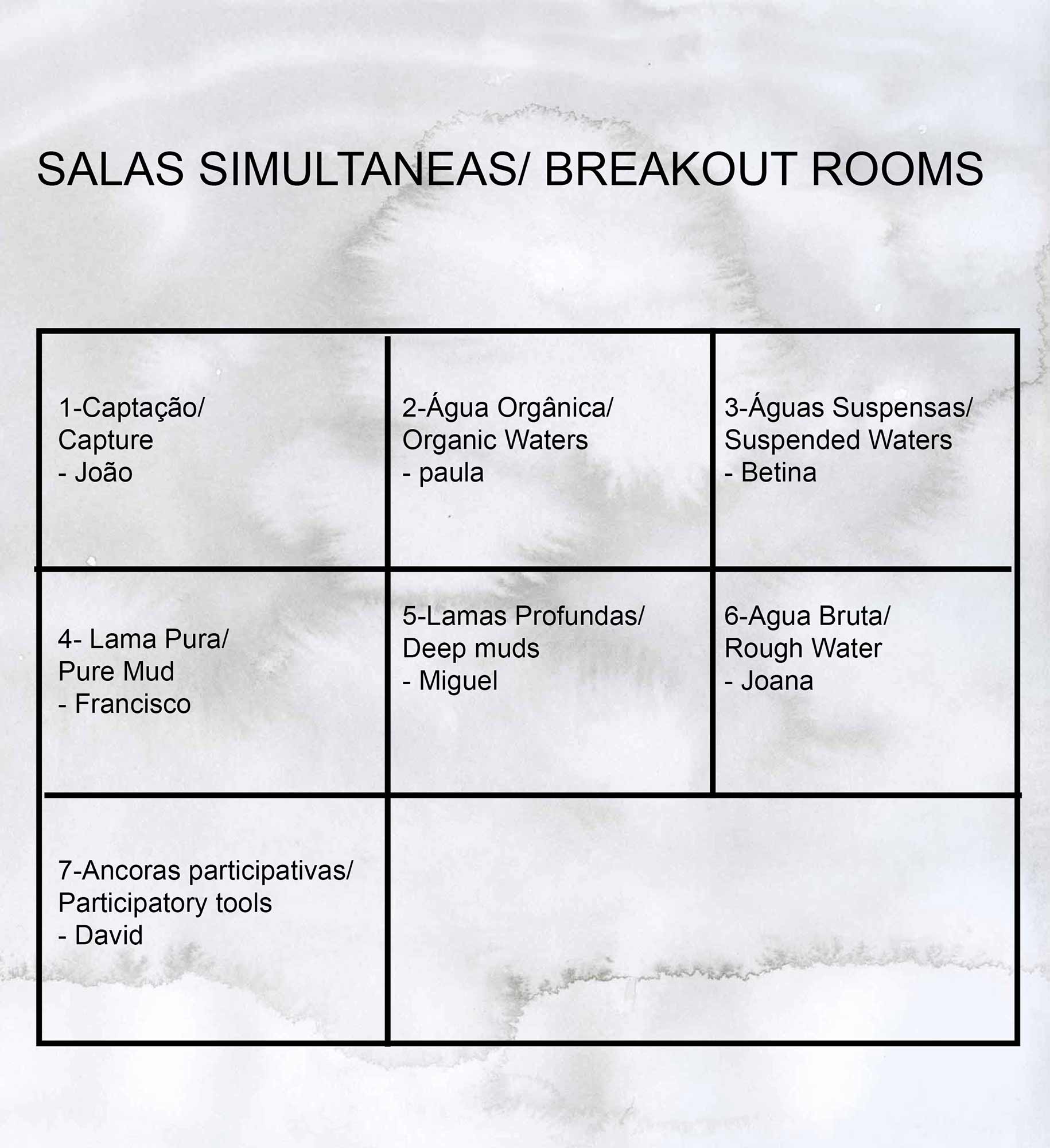
Pamphlet DEVELOPING A TOPOLOGY OF POST AUTONOMY, 24 pages, 29.7 x 21 cm, split in two halves, contains personal stories, photographs and selections from the book Post Autonomy (2010). Its conceptual framework–as another model and space separate from the existing model of art–is revisited in the context of the liquid memories workshop. Diagrams show participants navigation through six breakout rooms, and can be used by readers to map their reading journeys through the printed sections.
INSTRUCTIONS TO READ WITH WATER
DEVELOPING A TOPOLOGY OF POST AUTONOMY
Use the diagrams in the pamphlet to map your reading journey through the loose sections.
← WATER STATIONS
Raul Pinto Simões

PASTELEIRA CITY

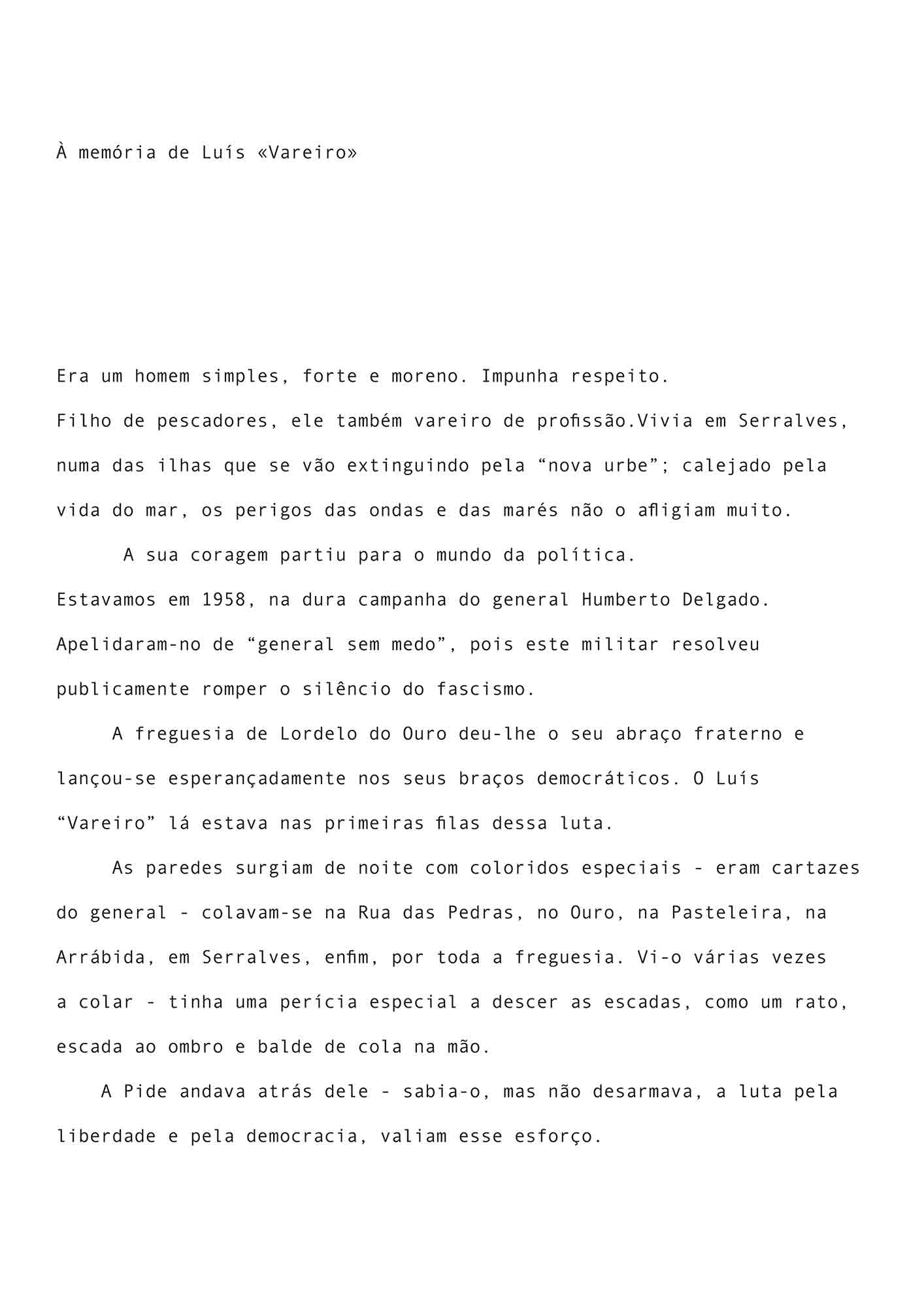
Leaflet, 29.7 x 21 cm, À MEMÓRIA DE LUÍS “VAREIRO” (‘TO THE MEMORY OF LUIS VAREIRO’), extract from the book Pasteleira City, is a testimony written in memory of Luis Vareiro, a brave resident of Pasteleira who resisted the Portuguese dictatorship. He was caught putting political posters in the streets of Porto. It was 1958. He run away and hid inside the water tunnels in Pasteleira park, but the state police found him and tortured him until he died.
INSTRUCTIONS TO READ WITH WATER
À MEMÓRIA DE LUÍS “VAREIRO” (‘TO THE MEMORY OF LUIS VAREIRO’)
Add a tear to the saddest story.
← WATER STATIONS
NDMALO archive

PASTELEIRA ECOTONE

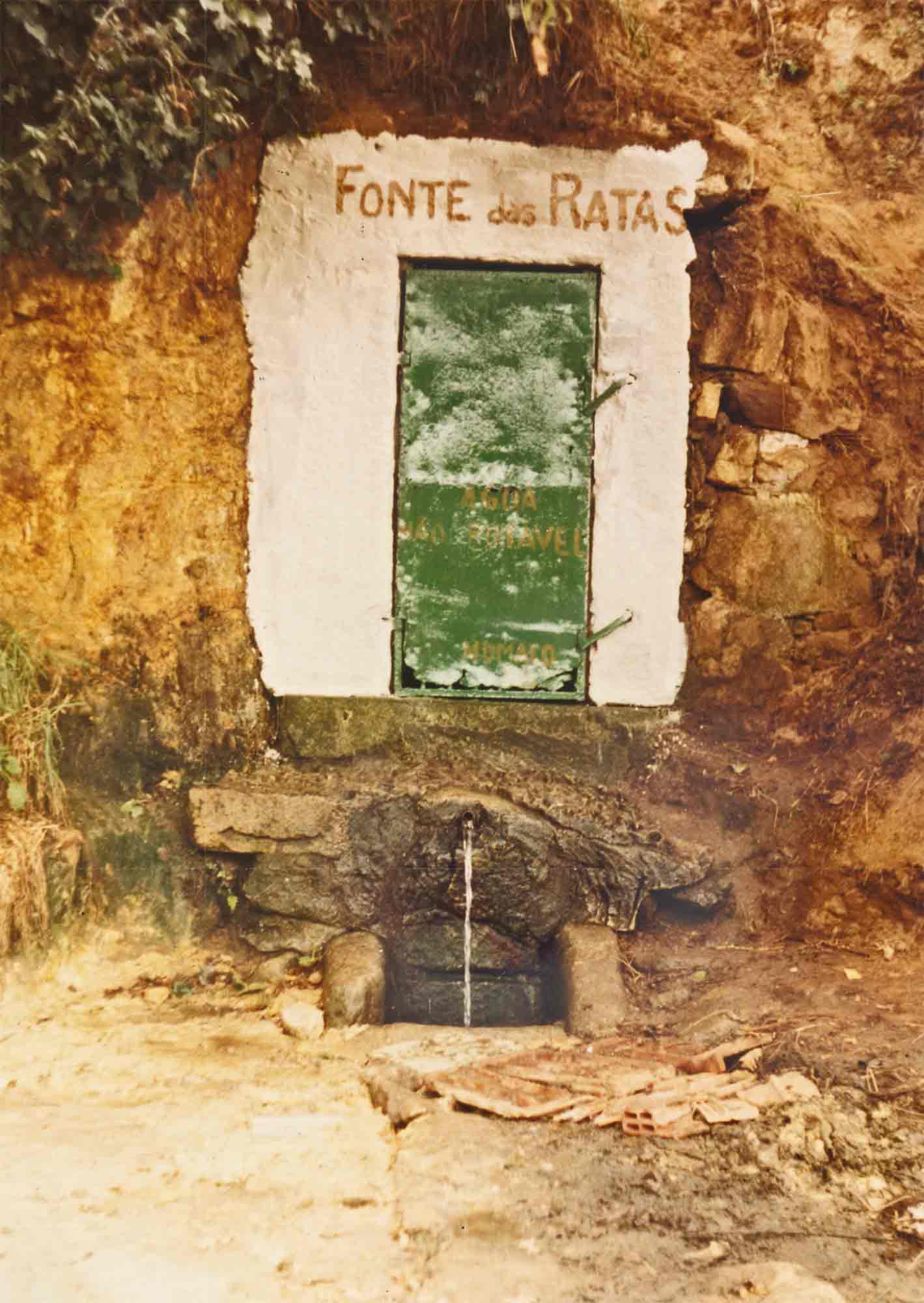
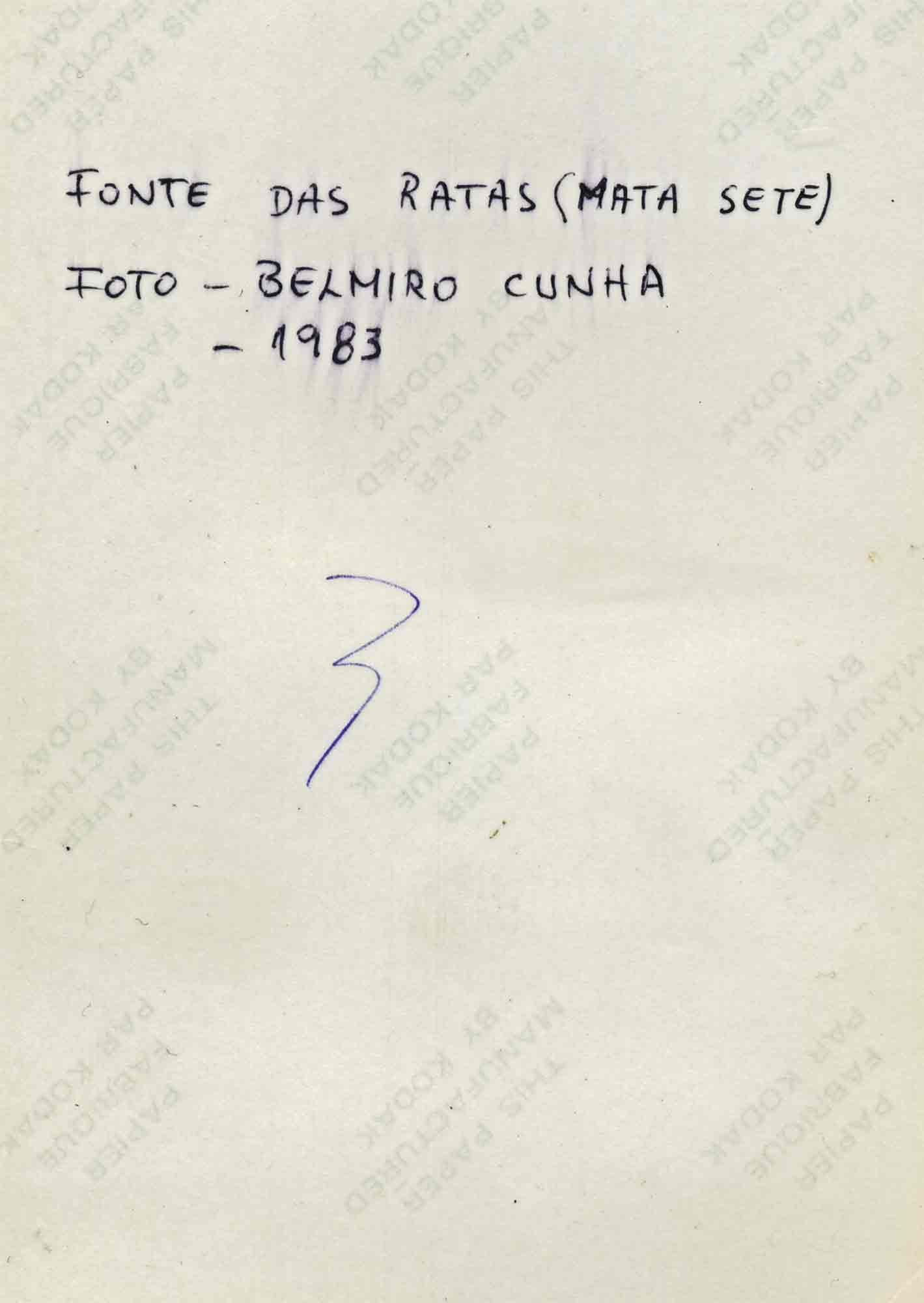
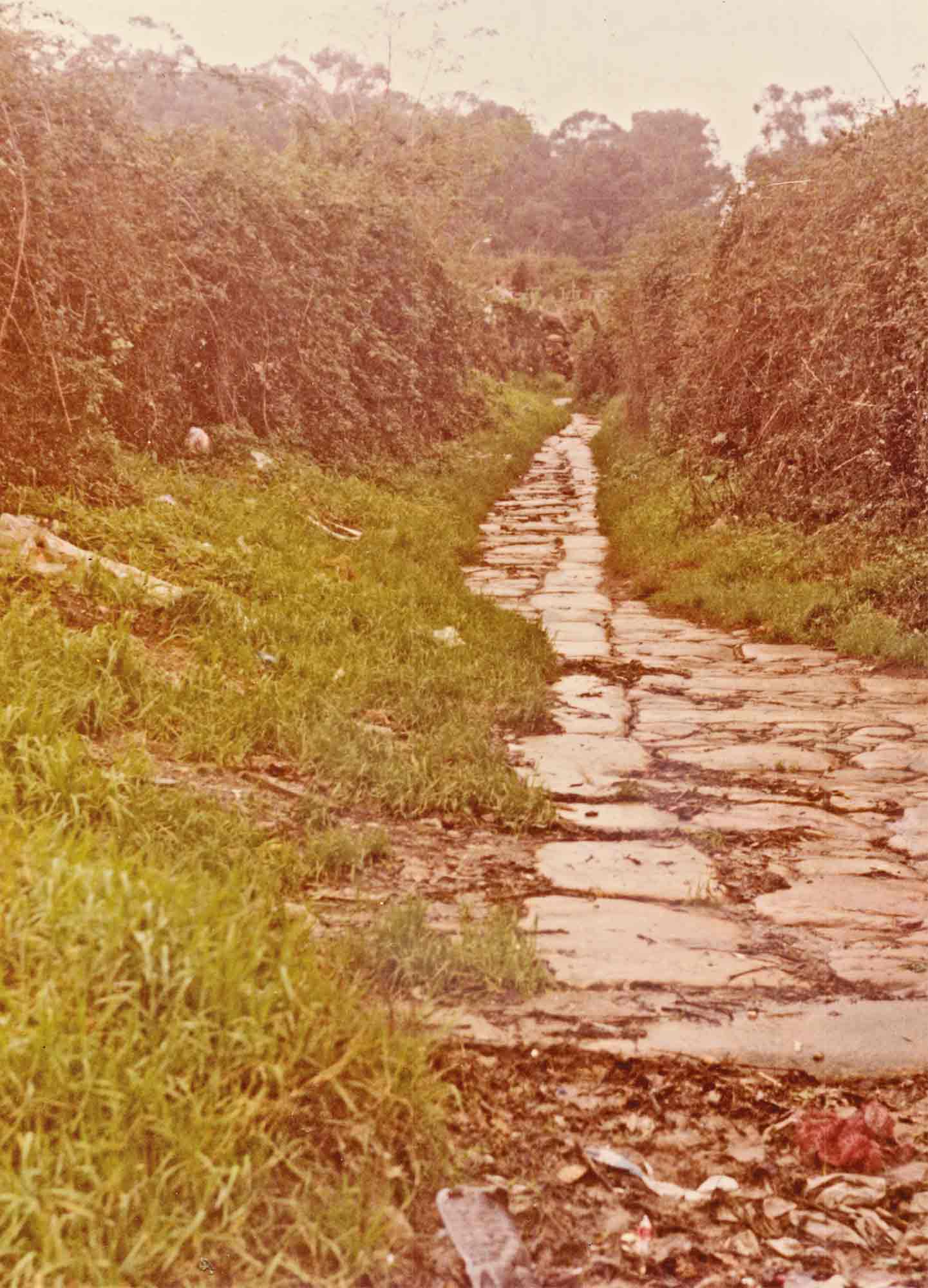
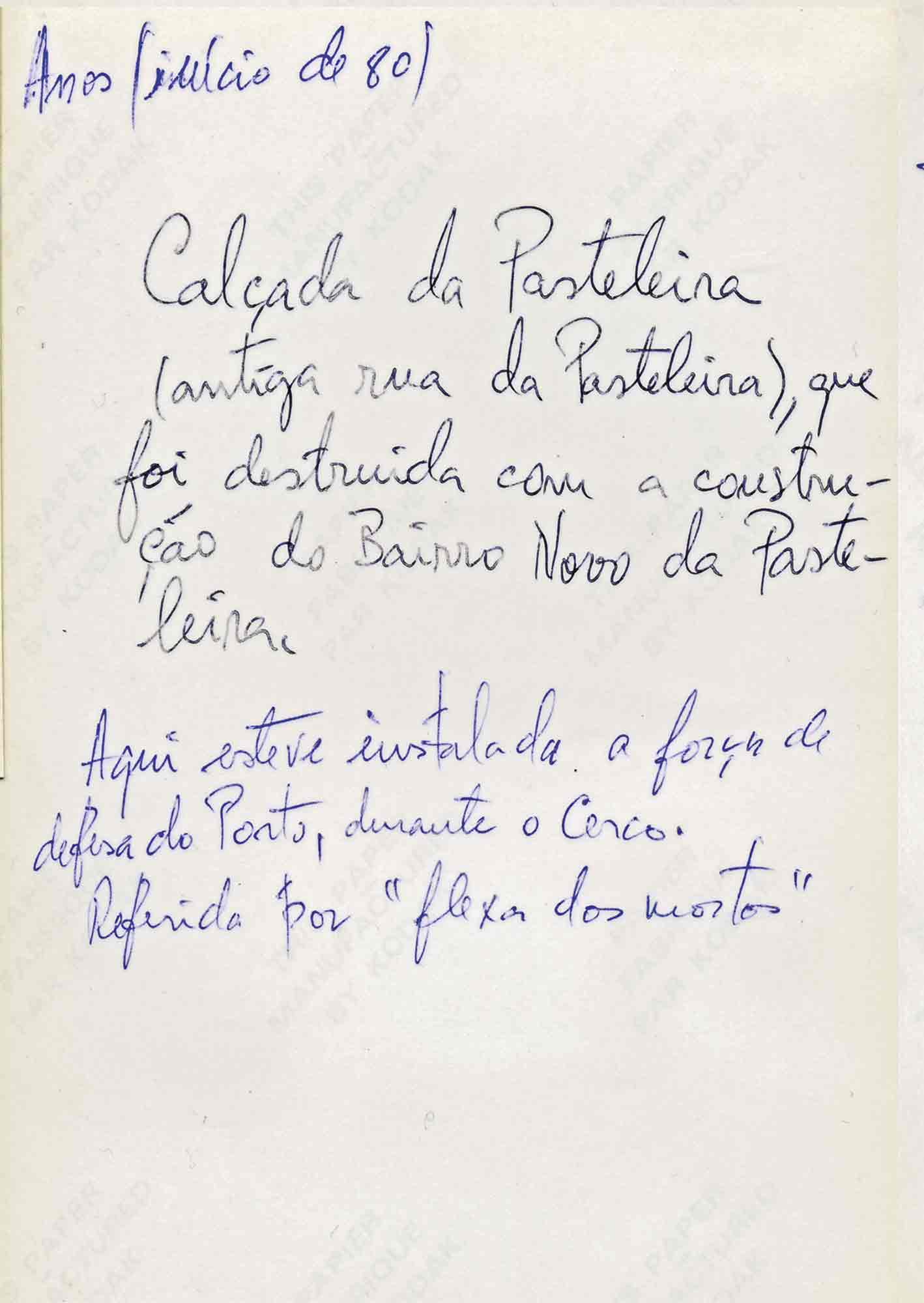
Six loose snapshots, 10.5 x 14.8 cm each, sourced from the NDMALO archive, the grass-roots activist association fighting for environmental justice in the Pasteleira area. Photographs show the park in the 1980s and 1990s. The backs have hand-written notes relating to historical spaces that have been gentrified and erased from current urban use, making it an invaluable resource in public history.
INSTRUCTIONS TO READ WITH WATER
PASTELEIRA ECOTONE
Place the photographs as bookmarks in your favourite sections.
← WATER STORIES
Alice WR

EMOTIONAL SOLVENT

Pamphlet, 20 pages, 21 x 29.7 cm, proposes the use of water for a personal rebalancing strategy. Between thinking and feeling, it involves both mental and bodily experiences, the symbolism of homeostasis, and the visit to a pond or stream in a local garden. The simple ritual consists in releasing the image of a worry to the water stream and watch it flow to create a distanced representation of the issue at hand. Throw into the water an image that represents your worry, follow its course, photograph it, rescue what is left at the end and gives another point of view. Two loose photographs, one printed black& white, 10.5 x 14.8 cm, the other in acetate, 21 x 29.7 cm, are included to throw in the water and start the process.
INSTRUCTIONS TO READ WITH WATER
EMOTIONAL SOLVENT
Throw the loose photographs onto a stream, follow their course, and look at what is left, from a different angle.
← WATER STORIES
Teresa Huertas

SUSPENDED WATERS. FLUID LANDSCAPES

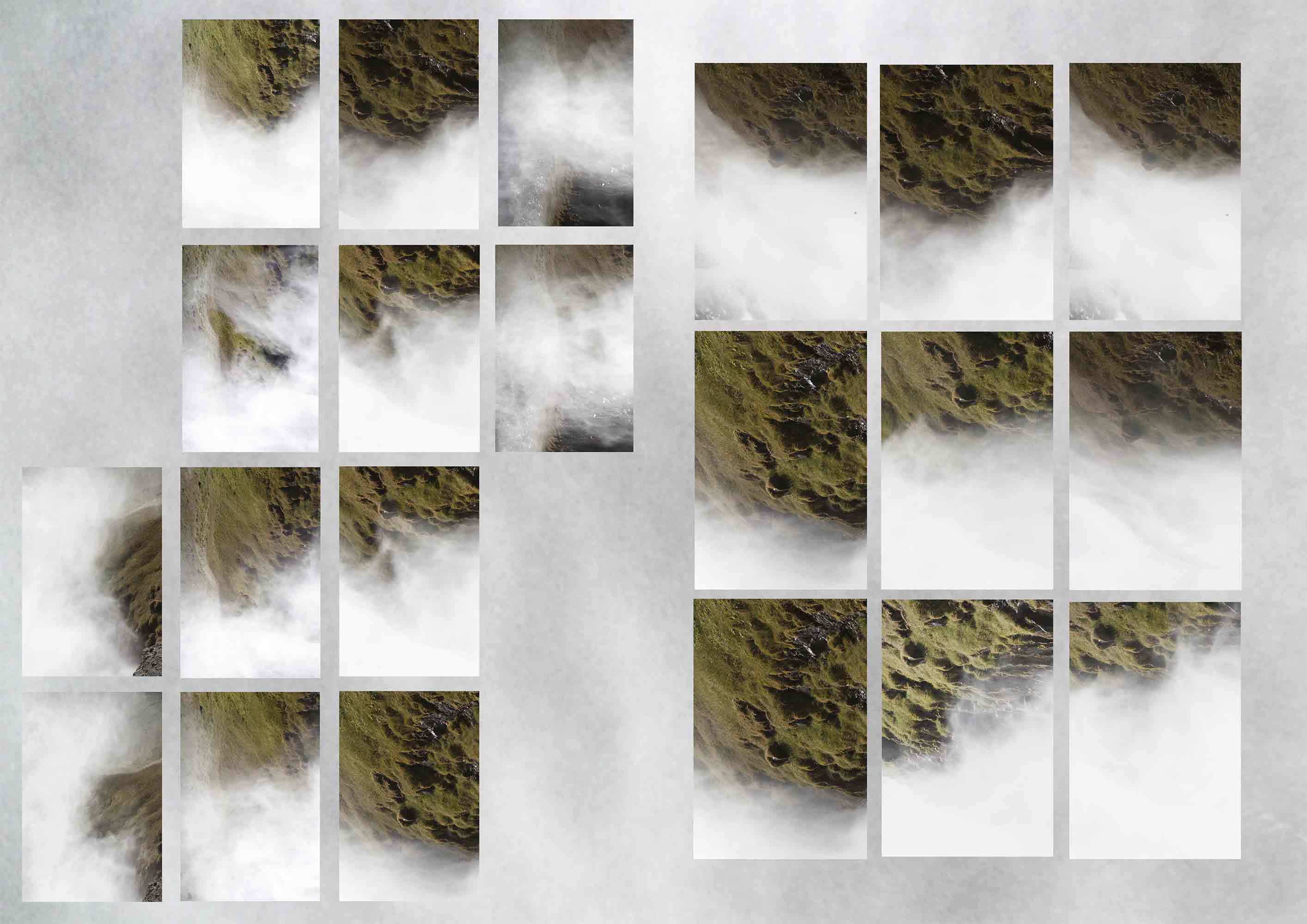
Paperback, 12 pages, 21 x 29.7 cm, and poster, 42 x 59.4 cm, multiple captures and sequential montage correspond to an experience of place affected by the action of water vapor. Arising from the phenomenon of suspension resulting from vigorous falling liquid masses, the steam configures the permanent mutation of the landscape, and the plastic liquidity of this form of suspended water is responsible for the constant metamorphosis of the place.
INSTRUCTIONS TO READ WITH WATER
SUSPENDED WATERS. FLUID LANDSCAPES
Boil water and read the misty landscape through the vapour.
← WATER STORIES
Carla Fragata

SILVER SKY

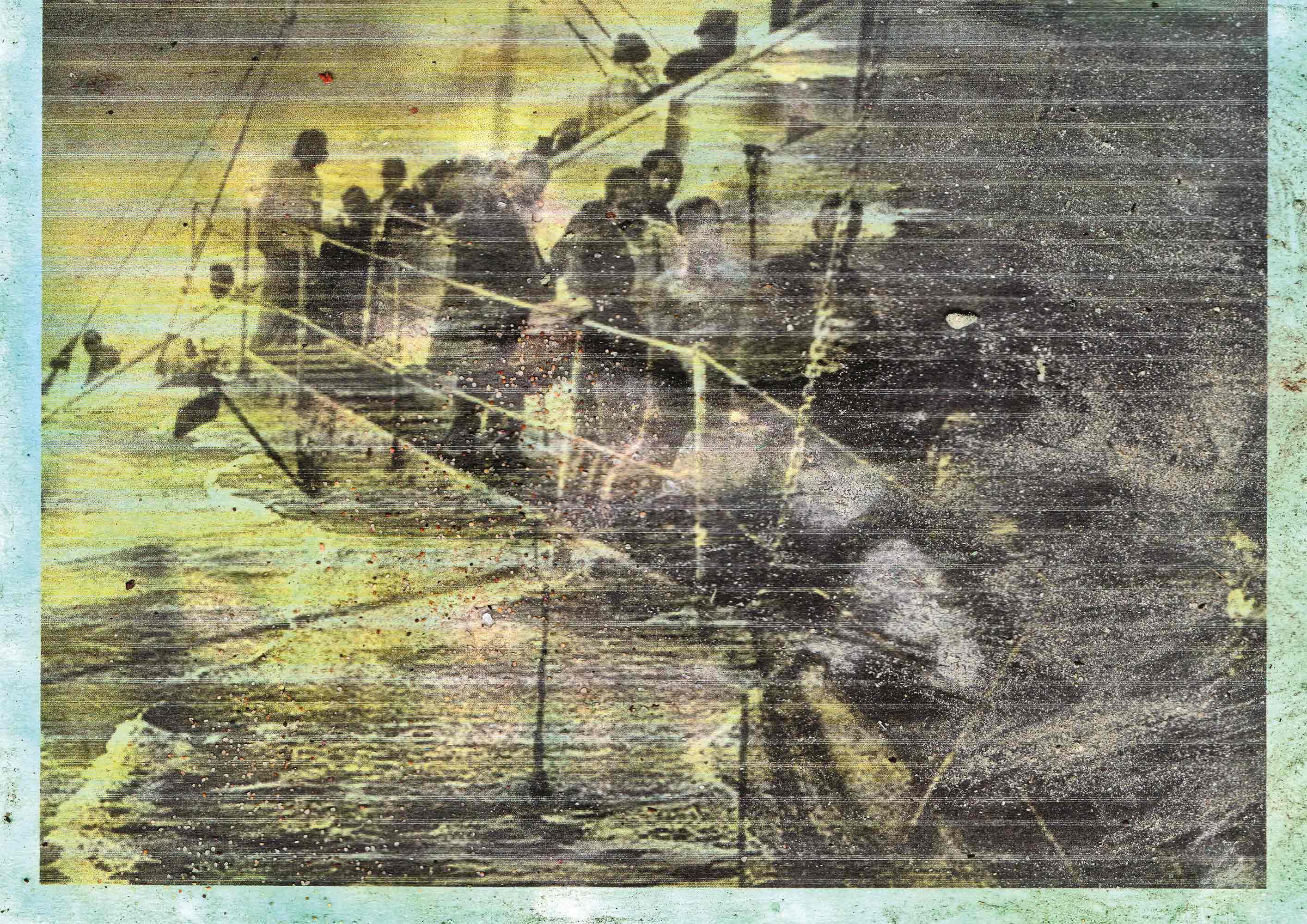
Pamphlet, 24 pages, 29.7 x 21 cm, and poster, 42 x 59.4 cm, a journey of exile, from Africa to Portugal, across the Atlantic ocean. Since childhood’s waters were lost with displacement, and the trauma kept a secret, it involved resorting to other waters and telling the story through the father’s memories. Rusty and oxidated objects, notebooks fallen and recovered from water, family photographs aboard the ship Silver Sky, immersed in rainwater for 10 minutes (each minute representing a day’s journey on the freighter) with splashes of Vila Real de Santo António sea water, moss, blue acrylic paint, vinyl glue, salt, maritime clay from the Portuguese Costa Vicentina and Namib Desert sand.
INSTRUCTIONS TO READ WITH WATER
SILVER SKY
Immerse in rainwater, 1 minute for each person that dies crossing the ocean.
← WATER STORIES
Eduardo Sousa Ribeiro

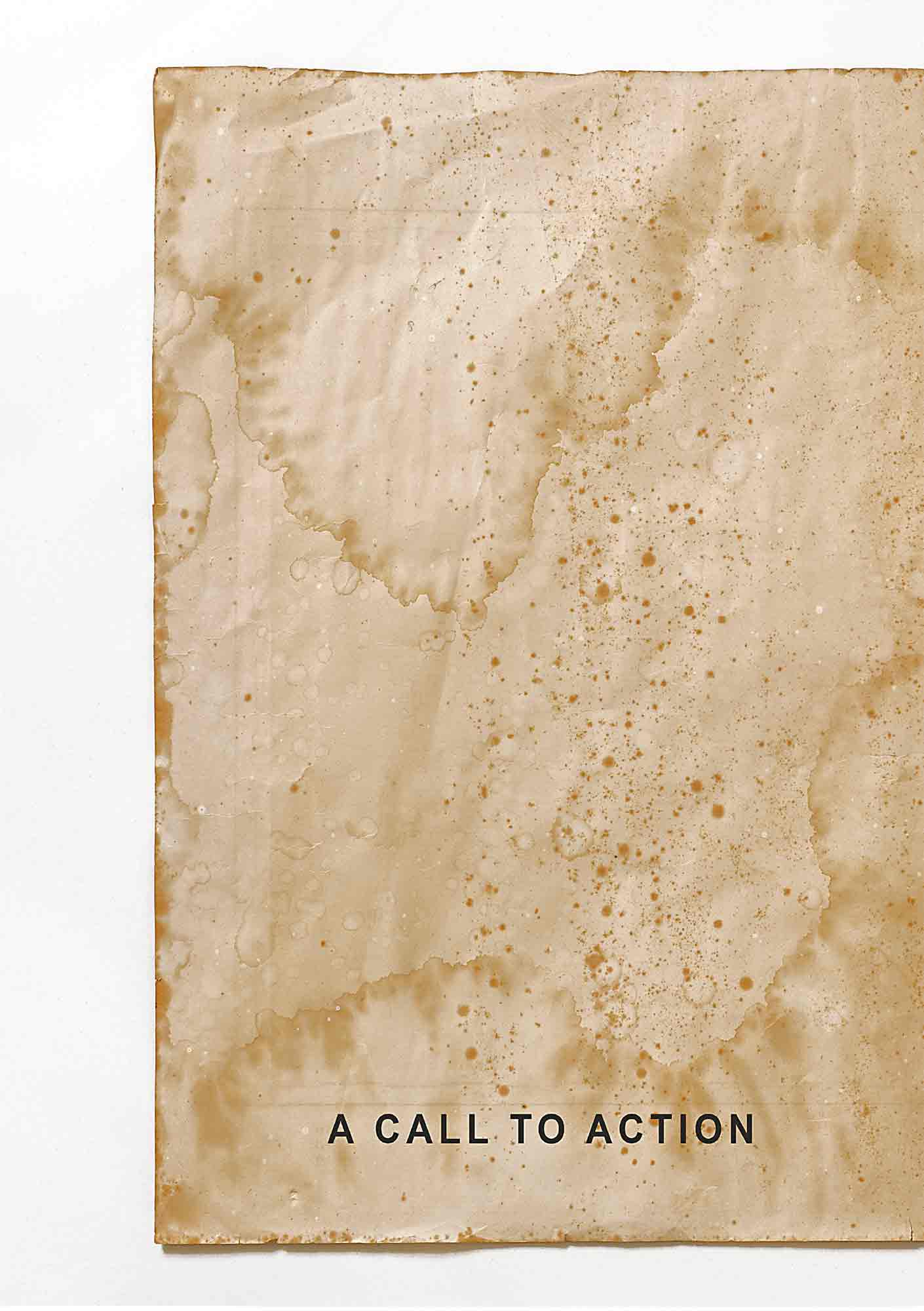
A CALL TO ACTION

Pamphlet, 44 pages, 21 x 14.8 cm, started from a map found at Lisbon Flea Market. The back of the map records the moisture absorbed by the paper. From here, a series of photographs were taken in an exploratory way to the stains memorizedon the paper.
INSTRUCTIONS TO READ WITH WATER
A CALL TO ACTION
Add your own liquid stains to the pamphlet.
← WATER STORIES
Manuela Matos Monteiro

INFILTRATIONS

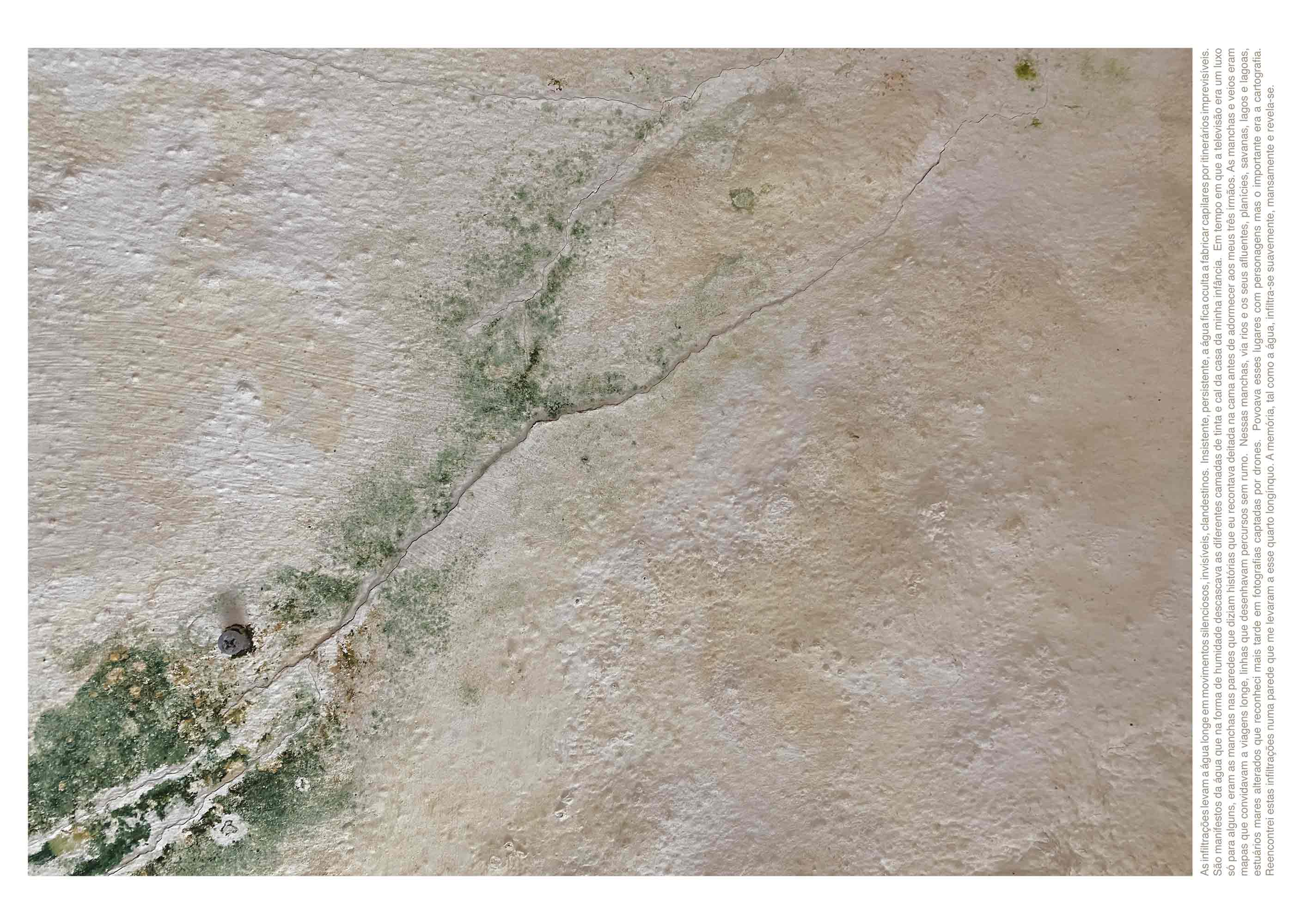
Water infiltrating walls in a 16 pages pamphlet, 29.7 x 21 cm, and poster 42 x 59.4 cm. Photographs of current infiltrations connect to memories of the family home, where infiltrations were manifest in the water that, in the form of humidity, peeled the different layers of paint. Infiltrations move water in silent, invisible, clandestine movements, creating capillaries through unpredictable routes. Memory, like water, infiltrates gently, and gently reveals itself.
INSTRUCTIONS TO READ WITH WATER
INFILTRATIONS
Apply the wet poster over a wall with infiltration and let wall, paper, and water merge.
← WATER STORIES
Luís Carvalhal

WATERED DOWN (APAISADO)

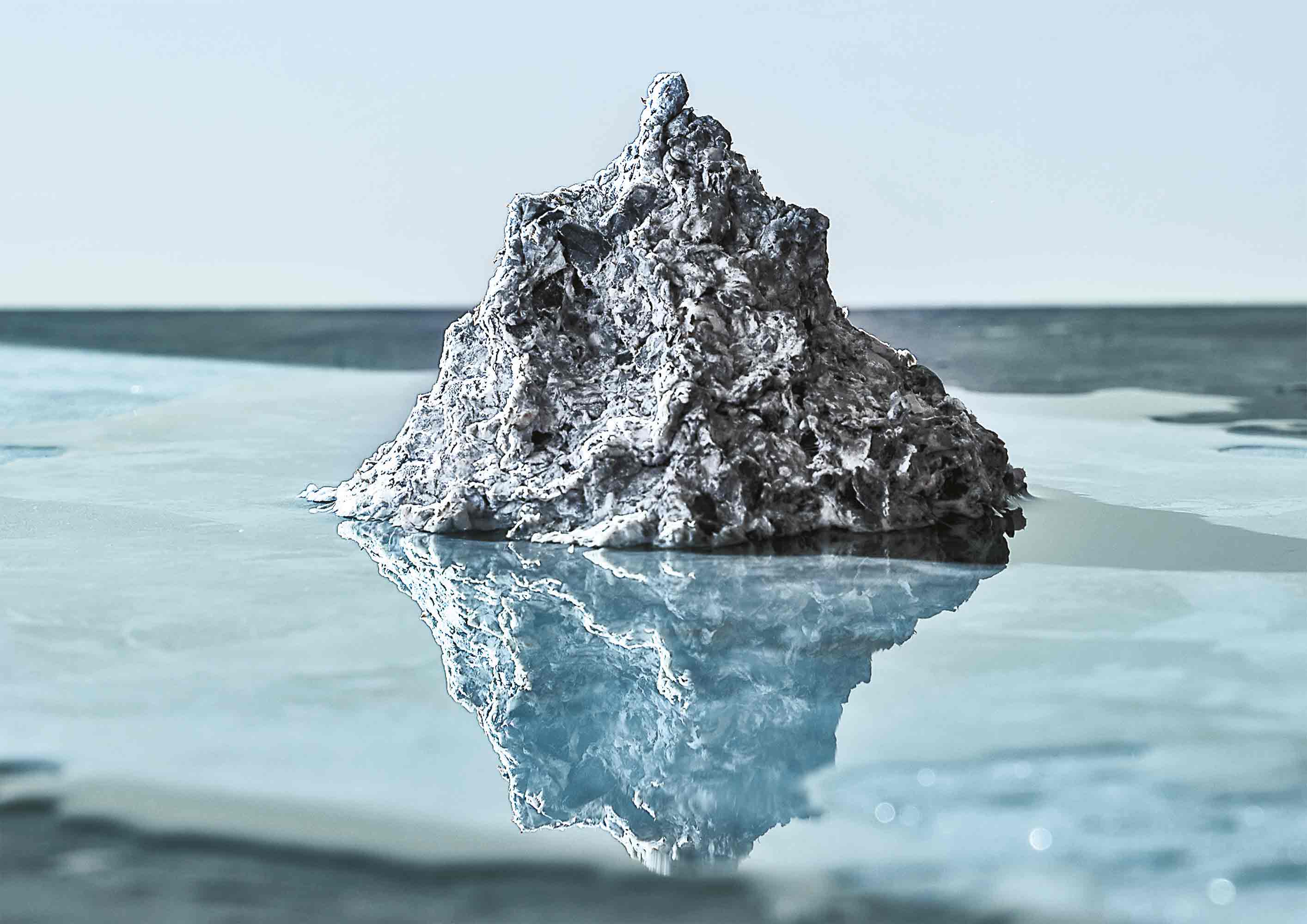
The plane trip from Lisbon to the Azores is two and a half hours over the Atlantic Ocean. Observing the immensity of water surrounding the nine small islands, between Europe and America, was the first moment of passion for the archipelago. It inspired the creation of the photobook titled Apaisado that, for technical printing errors, was never published. A pamphlet, 28 pages, 29.7 x 21 cm, documents the process of returning the photobook to the waters in its photographs. The deconstruction and manipulation of the book object, to create a set of pieces, symbolizes the power of the liquid medium over the ephemerality of the image on paper. A poster, 42 x 59.4 cm, shows “The Rock.” Pages from the book were made into paper pulp and shaped to simulate a cliff from the periphery of the island, a reference to the volcanic origin of the archipelago. This was then placed again over water and photographed almost like if it was a scale model.
INSTRUCTIONS TO READ WITH WATER
WATERED DOWN (APAISADO)
Pulp a pamphlet and shape it to look like a faraway island.
← WATER STORIES
Natércia Caneira

O DIA EM QUE EU MORRI

Pamphlet, 28 pages, 29.7 x 21 cm, narrating a near-death experience occurring whilst diving into the deep waters of Africa. A story of personal development narrated at a slow pace, the fluid passage between life and death with water filling the lungs, a journey that ends with personal growth and mind expansion.
INSTRUCTIONS TO READ WITH WATER
O DIA EM QUE EU MORRI (THE DAY I DIED)
Practice ocean breathing whilst reading
breathe in and imagine the wave rolling in,
breathe out and imagine the wave rolling out.
← WATER STORIES
Ana Botelho

GUSH

Pamphlet, 24 pages, 21 x 14.8 cm, the starting point being the public works for water extraction in the Douro River. Historical photographs were mixed with underwater photographs of the Mondego River. The goal was to wet dry areas of the photographs with a gush of distant waters. This process uncovered memories of laundresses, women who used to wash clothes in the river for a living, a story that is included in the pamphlet. A folded card, 10.5 x 14.8 cm, connects the industry of water extraction with an orphan photograph of the Lavadeiras do Mondego (Mondego laundresses).
INSTRUCTIONS TO READ WITH WATER
GUSH
Wash your family’s clothes in the river.
← WATER STORIES
João de Goes

O LAGO / THE LAKE

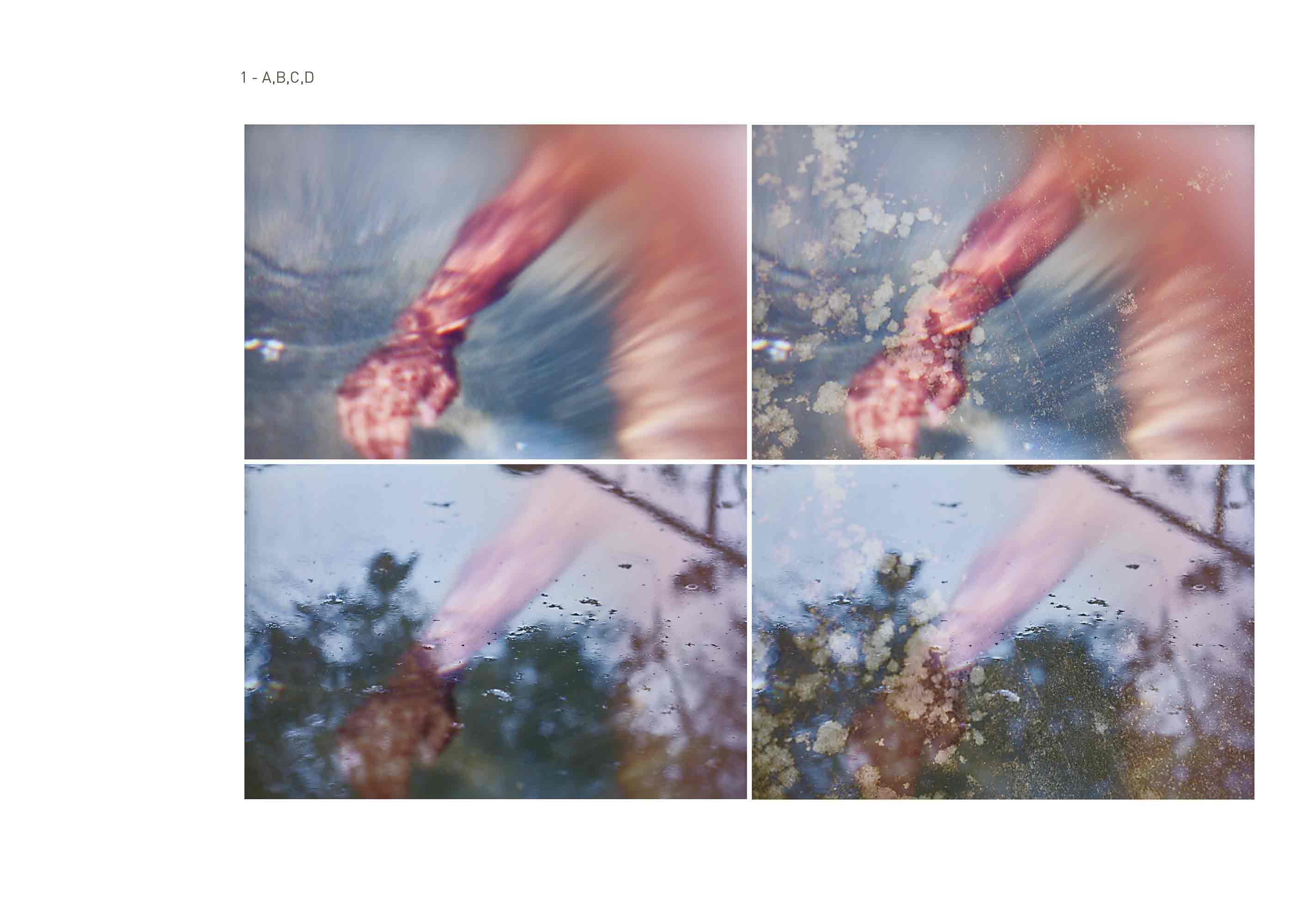
Paperback, 44 pages, 21 x 29.7 cm, about a lake that was a swimming pool. Childhood photographs were rephotographed to extract 3 layers: the child’s body swimming, the bottom of the lake, and the surface of water; a process centred around three layers of matter: diving, surface, and transparency. Considering the forty years interval between the child’s dives and the conceptualization of the project, the number of forty images was fixed. Ten series, each with four images. The result of the project is a 158 x 132 cm vertical rectangular panel.
INSTRUCTIONS TO READ WITH WATER
O LAGO (THE LAKE)
Look at your childhood photos for one of you by the water and tip it in the book.
← WATER STORIES
Inês R. Amado

CONNECTING WATERS

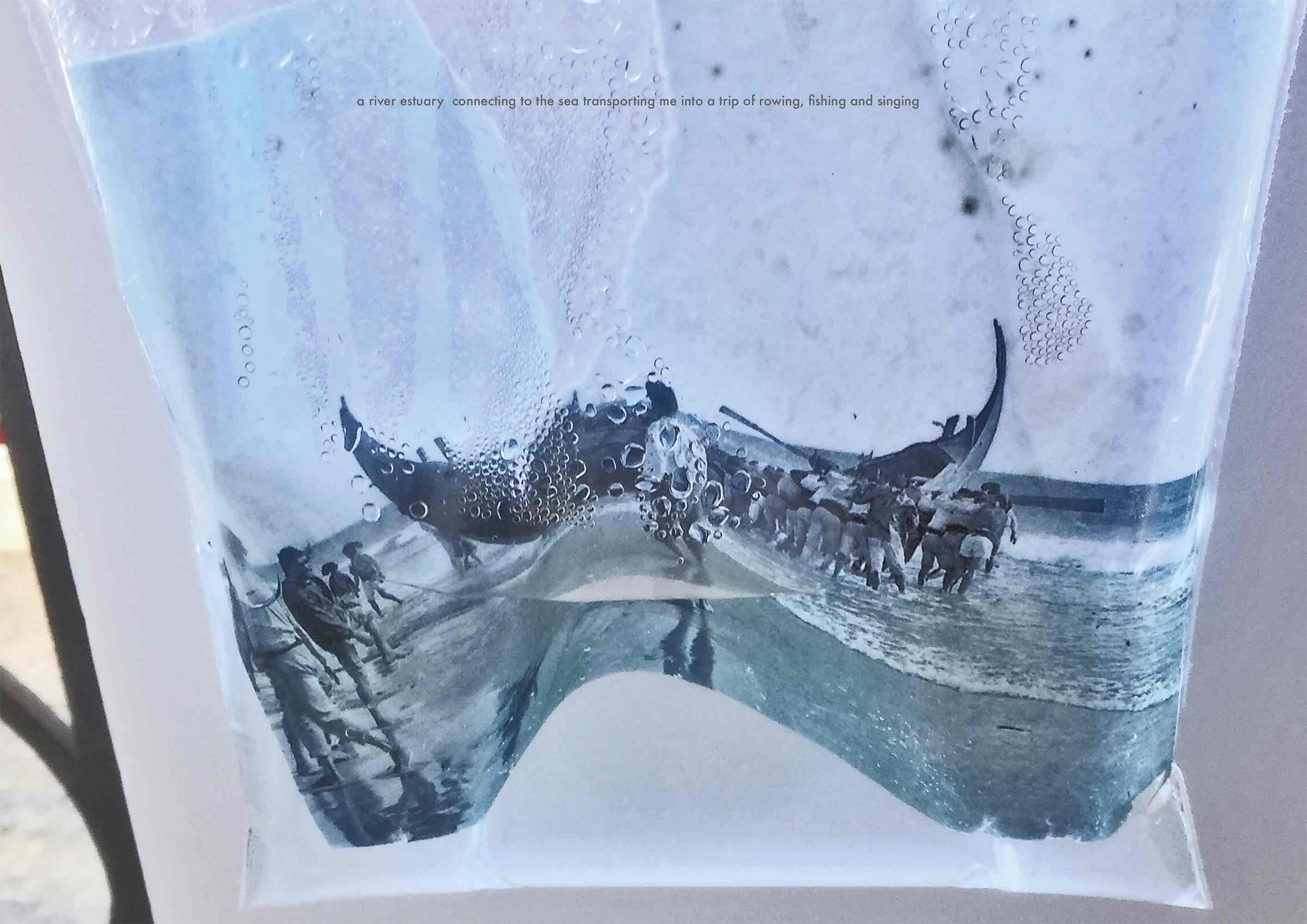
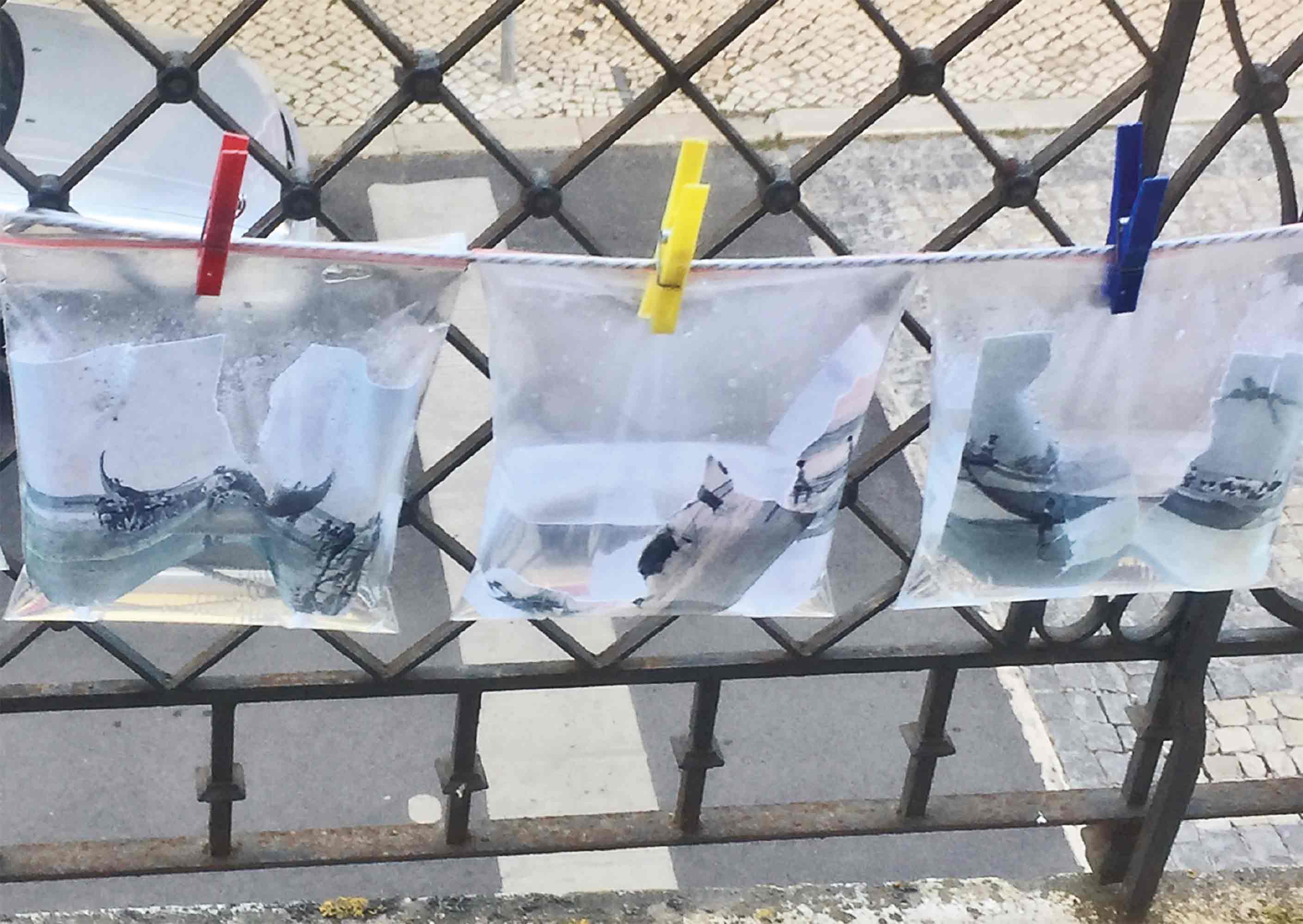
Pamphlet, 48 pages, 21 x 14.8 cm, poster, 29.7 x 42 cm, and 4 photo-text cards, 10.5 x 14.8 cm, show photographs of traditional fishing boats in bags of water, hung on a clothesline. Different waters connect: in historical photographs of Pedrógão beach, Coimbrão in Leiria (fisherman going to sea) and real waters from the Tagus River estuary, in Barreiro. They connect residues of memories, and ongoing processes of liquid reassemblage.
INSTRUCTIONS TO READ WITH WATER
POSTER — CONNECTING WATERS
Select a section in this publication to immerse in a bag filled with water.
CARDS — CONNECTING WATERS
Chose one of the cards and transform it into a daily mantra.
PAMPHLET — CONNECTING WATERS
Use the blank pages to write your watery memories.
← WATER STORIES
Manuela Vaz

DEPURA A ÀGUA / PURIFY THE WATER

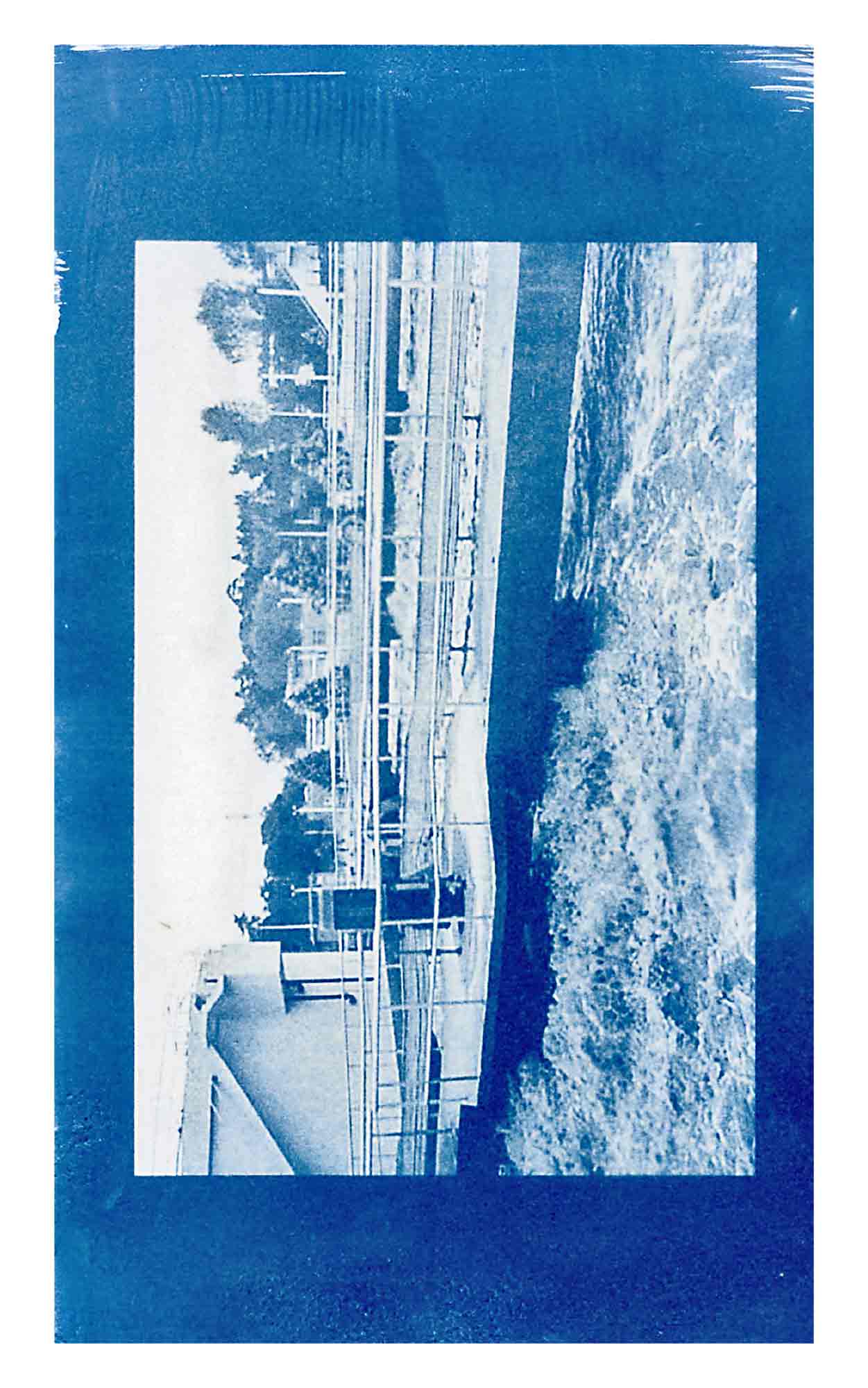
Paperback, 40 pages, 20.3 x 12.7 cm, photographs taken whilst facilitating guided tours to various water treatment plants in Portugal. Images developed with water collected from Ribeira da Granja (Granja stream), that crosses Porto. A series of symbolic processes with this water were applied to the entire cyanotype printing process, from the dilution of the chemicals to the washing of the images after exposure to ultraviolet light.
INSTRUCTIONS TO READ WITH WATER
DEPURA A ÀGUA (PURIFY THE WATER)
Use water from a local stream to treat your photographs.
← WATER STORIES
Renato Roque

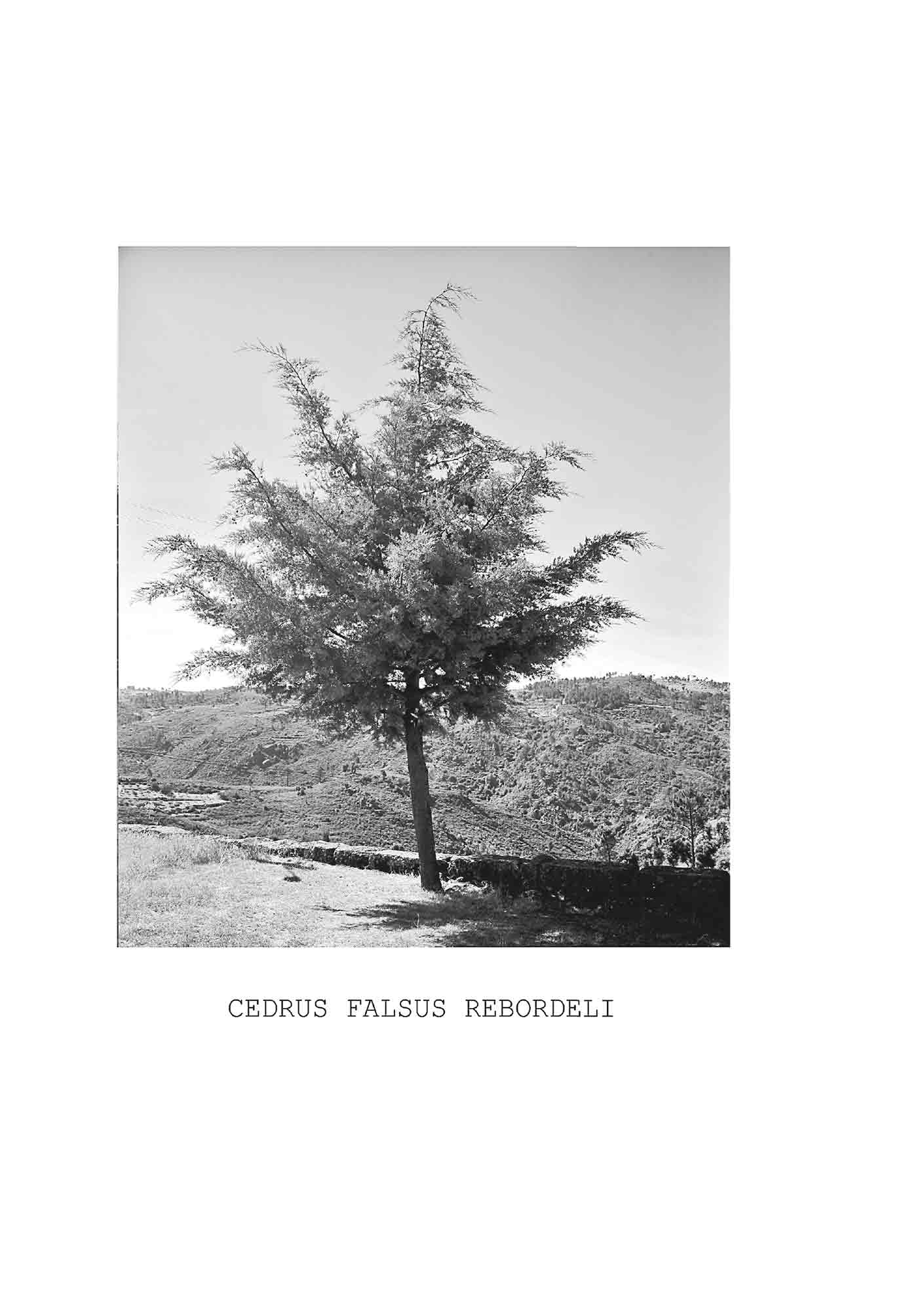
CEDRUS FALSUS RENATI

Paperback, 56 pages, 14.8 x 10.5 cm, narrates a public art intervention in Tondela Forest, linking the ephemeral cycles of life and photography. To memorialise a dead cedar tree, a living tree of the same species was photographed; black & white prints in a gradation (from white to black) were immersed in trays filled with water set up around the dead tree. The photographs–of the dead tree, of the same species tree and those floating in the water–are all the Cedrus Falsus species. The irony of destiny made the photograph even more false than it always is. Photus Falsus Cedri Falsi.
INSTRUCTIONS TO READ WITH WATER
CEDRUS FALSUS RENATI
Water a dead tree.
← WATER STORIES
Eliane Velozo & Severino Iaba

LAMA DE MORTE / DEATH MUD

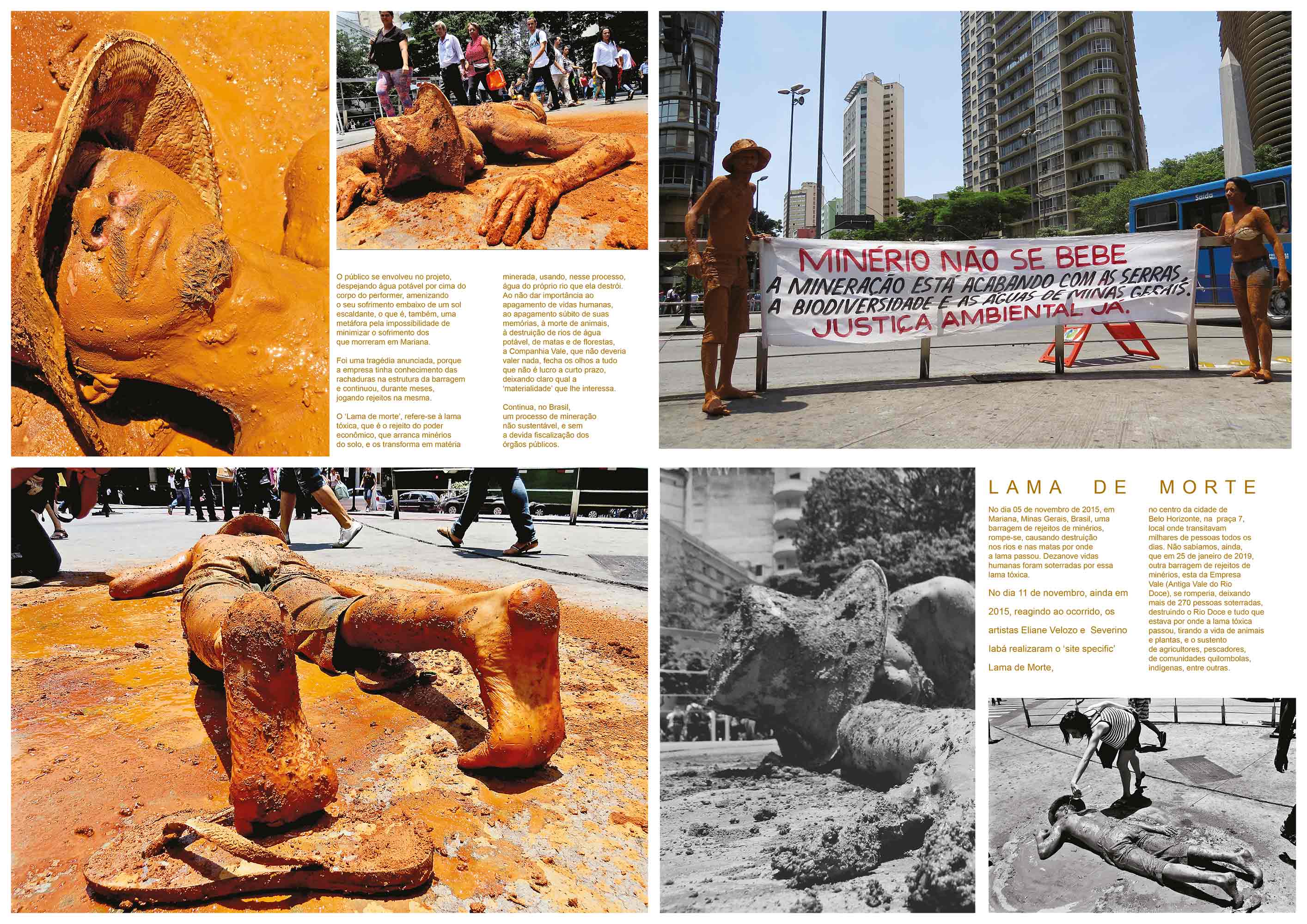
A 4-page foldout newspaper, 42 x 59.4 cm, about an ecological disaster. November 5, 2015, in Mariana, Minas Gerais, Brasil, a dam of mineral waste breaks, causing destruction in the rivers and forests where the mud passes by. Nineteen people die buried in this toxic sludge. November 11, 2015, reacting to what happened, the artists Eliane Velozo and Severino Iabá perform the ‘site specific’ ‘Death Mud’, in the center of Belo Horizonte city, Plaza 7, a place thousands of people pass by every day. The public becomes involved in the project, pouring drinking water over the performer’s body, easing his suffering under a scorching sun, a metaphor for the impossibility of minimizing the suffering of those who died in Mariana.
INSTRUCTIONS TO READ WITH WATER
LAMA DE MORTE (DEATH MUD)
Be a water guardian for a day.
← WATER STORIES
Susana Paiva

SKIN

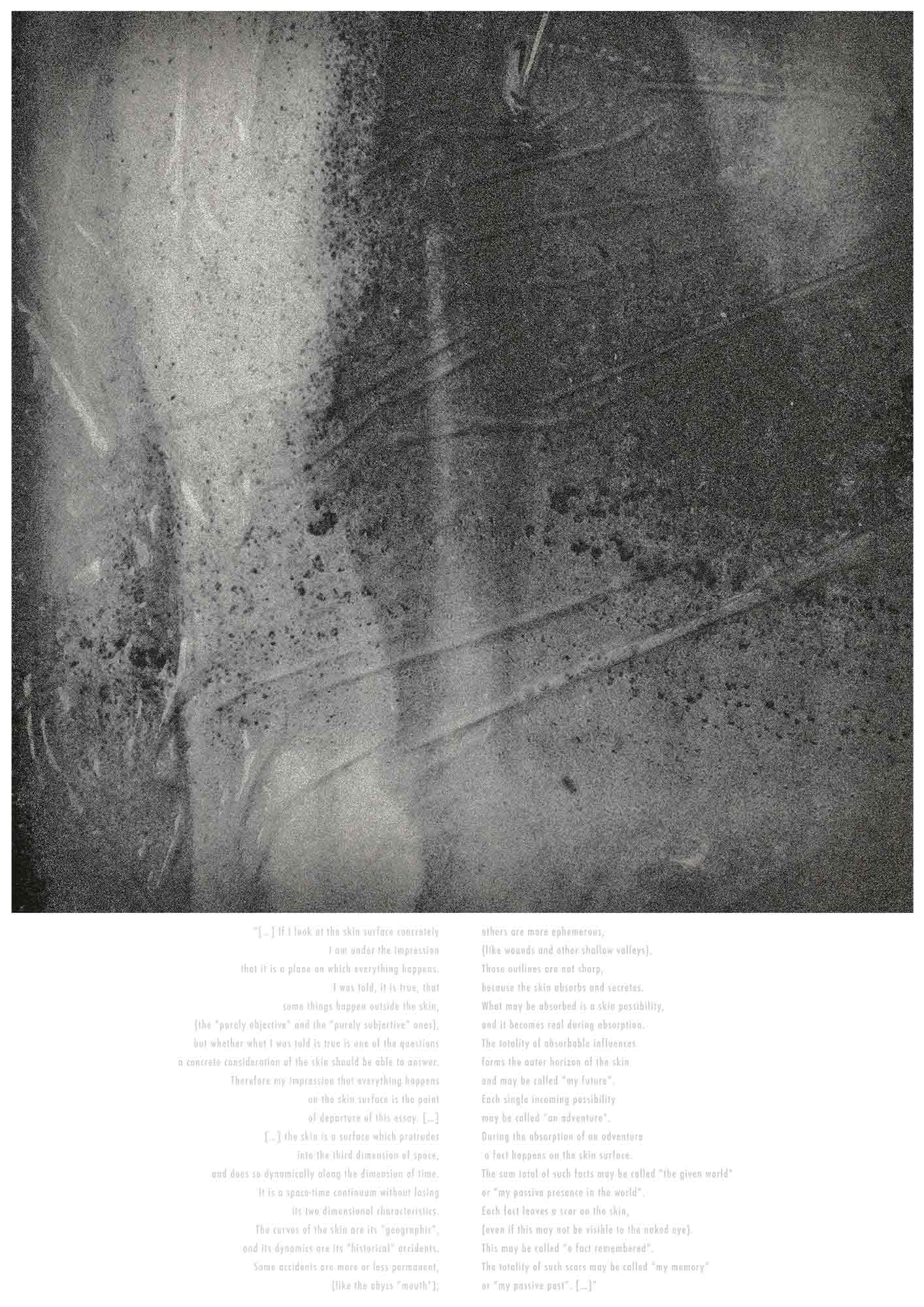
Poster, 42 x 59.4 cm, conveying the impression that everything happens on the skin surface. A thermal sublimation print on photographic paper was submerged in tap water (from Paredes, Portugal), and for 7 days left exposed to the weather, outside the house. A fragment from Vilem Flusser’s unpublished text ‘The Skin’ adds to the visualisation of skin’s liquid border.
INSTRUCTIONS TO READ WITH WATER
SKIN
Immerse the poster in water and place it over your wet skin.
← WATER STORIES
Mide Plácido

ESTADO DE IMERGÊNCIA / STATE OF IMMERGENCY

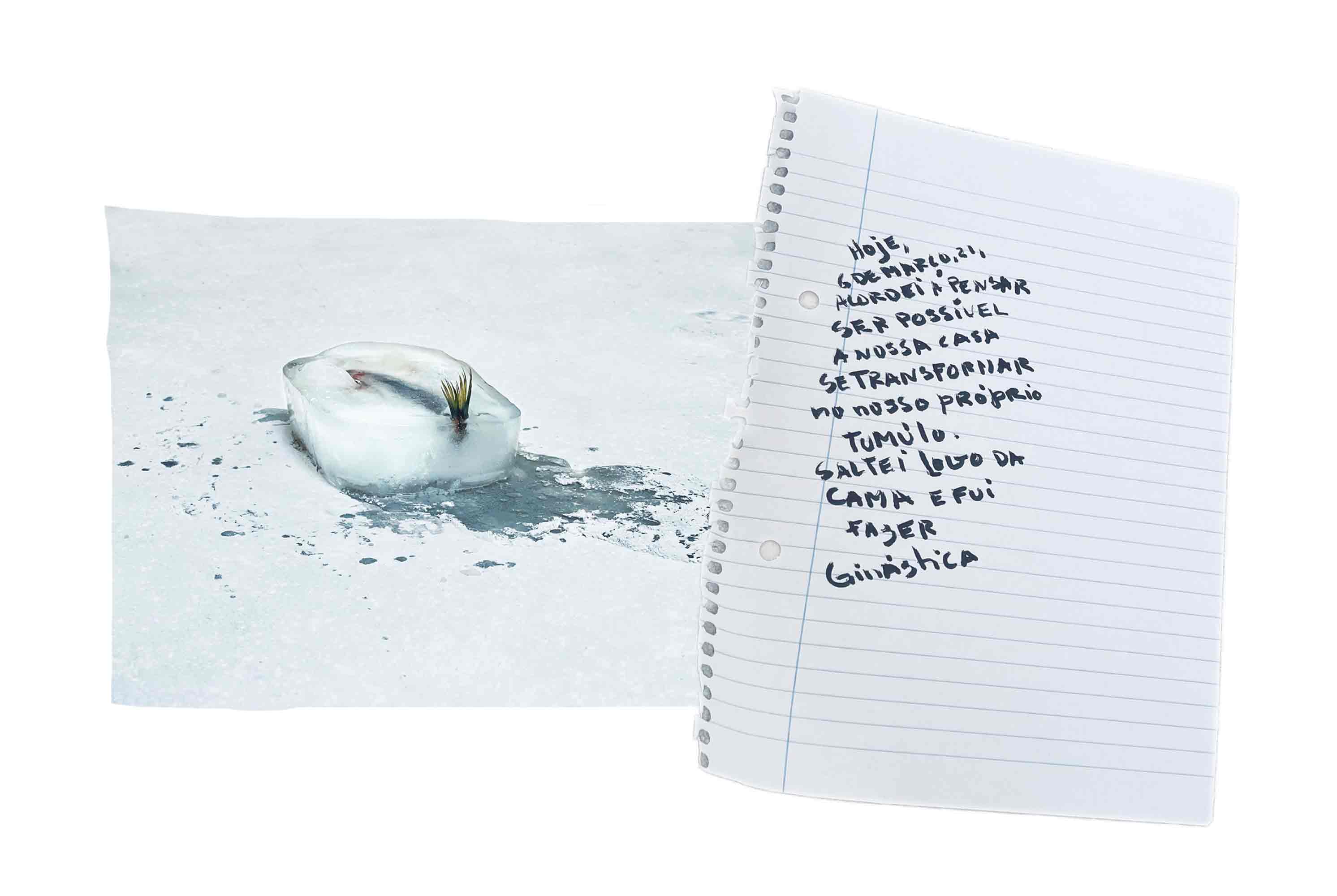
Print, 18.3 x 27.3 cm about waking up, some day in March 2020, thinking to be possible one’s home to become one’s tomb: a metaphor for who we are in a daily life that flows in waiting; Sentenced to be free; the need to act.
INSTRUCTIONS TO READ WITH WATER
ESTADO DE IMERGÊNCIA / STATE OF IMMERGENCY
Write down a number: on a scale of 1 to10, how liquid do you feel today?
READ ME FIRST

READ ME FIRST

liquid memories
~ to read with water INSTRUCTIONS

Once all sections are downloaded to your computer, you can read with water by printing the files.

With this book everyone can create their own liquid memories by setting the 55 unbound sections – 18 pamphlets, 5 paperbacks, 12 posters, 10 cards, 9 photographs and 1 leaflet in motion.

Get a scanner, a camera, trays of water, ink, brushes, scissors and markers to play and practice wateryquery (water enquiry).

Connect with a felt sense.

Follow a non-linear path,
read one section through the other,
let them interfere and overlap
as water waves.

Read the book with others.
Organise a liquid workshop,
wateryquery other photographic collections.

Document your watery reading and email it to
msdm@msdm.org.uk

msdm publications
www.msdm.org.uk/liquid-memories

EDITORIAL

EDITORIAL

figuring liquid memories:::::::::::::::
mobile aesthetics of wateryquery by paula roush

“There is an undeniable tension between the solidity of a book and the wetness of water’s memory” as found in writers who chose to remember their emotional states through metaphors of watery depth.1 When artists dive into the past, which is frequently figured as watery places, the waters in these narratives immerse us in alternative modes of temporal experience that offer a potentially counter-hegemonic archive. The experiments collected in this publication partake in figuring liquid memories as counter-narratives, whilst branching out into participatory, multi-sensorial approaches with photographic archives and real waters.

Working with photographs of water (public and private) and water’s liquid physics, two main mobilities were revealed to us. One is the continuous flux of photographic archives, shape-shifting between screen and print; the other is water’s own archival, editorial and reading mobilities.

In 2021, London-based studio and publishing platform msdm – mobile strategies of display & mediation – incubated and hosted a two-part residency at the invitation of Francisco Varela, to participate in his curatorial project, designed to explore the contact zone between water, photography and publishing. Conceived as process-based, this publication started with the “situated waters,”2 of the Douro River and Pasteleira reservoir park, in the city of Porto, Portugal. This ecotone, a location in transition at the juncture of multiple living and non-living systems, offered a multi-scalar entry point into the relations between people and river. The bookwork brings together the works assembled around the residency, planned to happen in Porto, and performed online as a result of Covid-19 lockdowns.3

The first bloc of works titled ‘WATER STATIONS’ was developed in workshop with a group of Porto-based artists and photographers.4 Water samples collected from a local water treatment plant, were used to soak the photographic collections, and unleash water’s own archival materialities. Inspired by the research of water visionaries,5 we explored the memory of water, life’s archiving medium, to appropriate and collage historical archives.

Records held by two companies that capture water from the river and distribute it to the city, include studies of the impact of urban settlements on water’s sanitation. Images by photographer Marques de Abreu, first published in the 1909 study ‘Contribution to Hygiene in Porto,’ accompany a study of water infrastructure and its relation to public urban health by medical doctor Bahia Junior, a depiction of an early 20th century Portuguese “bacteriological city.”6 Other records show men at work in the riverbed in the 1980s, building deep wells where Douro River flows.

Water and humans interact in these photographs, exposing a logic of extraction, that came to eradicate a now forgotten mythology of the golden river Durius, a deity worshiped by the ancient Lusitanians and Celtiberians of the Iberian Peninsula.7 Its sacred shores brutally excavated with pipes and machinery for the provision of tap water to the city, led by Porto’s Lever Water Treatment Plant.8 The archives of a local grass roots environmental group offer a different snapshot of people’s interaction with water at the Pasteleira Park, an informal self-built settlement, situated by the Douro River shore.

This DIY (do-it-yourself) architecture, is also visible in the Pasteleira 1950-90s Facebook group photographs, shared by an anonymous social worker after its demolition. Fonte das Ratas (‘Ratas Fountain’) functioned as communal watery source and meeting point in a neighbourhood lacking water infrastructure. A contested territory, Pasteleira underwent a gentrification process, its ecosystems, and histories, displaced by state, church and cultural agencies working together to build over a historical site. The park is now a ‘hydro-spectacle,’ a conversion of the disused water reservoir into the city museum, in the vicinity of Serralves contemporary art museum.

The second bloc of works titled ‘WATER STORIES’ was activated through a mass zoom live editing lab and open call for further collaborations.9 This was an online workshop cum networked performance, staging the ‘water stations’ (capture, organic, suspended, mud, deep mud, rough) in six breakout rooms. The addition of a 7th station for participatory tools, offered a meta-room to map participation. The session started with the activation of visitors’ felt sense, awakening their intuition for liquid navigation of the ‘water stations’ and their own photographic collections.

This, in turn, resulted in projects that unfolded memories in relation to emotional and psychological dimensions, liquid memories figured as bodies of water: an urban stream, misty waterscapes, a childhood pond, fishing sea vessels and sounds, the Atlantic ocean and, for those in the diaspora that lost their waters young, other waters collected here and there to embody those liquid emotions.

In both blocs – ‘WATER STATIONS’ and ‘WATER STORIES’ – historical subjects appear as meteora, atmospheric phenomena like windy rain, clouds, misty vapour, and as watery places like rivers, lakes, streams, oceans, water stations, wet environments, inseparable from various human and non-human actors. They are chaotic, fragmented, messy, unruly, flow, fall, dissolve in multiple layers, with slippages, deep wells, knots, holes, underground tunnels, flooding, and contamination.

Diffraction is the way waves of light or water overlap, producing inter-relational patterns of interference in flux. It is equally a tool10 used for a fluid form of knowledge-production, that inspired our diffraction apparatuses.11 Whilst “reflective remembering” is more about an individual narrative “that savors details and memorial signs,”12 we relied on the material characteristics of water, their perpetual spiraling motion, to read liquid memories with water’s surface tension, swirling vortices, pressure, and density, as seen in the chaotic sensitivity of water in constant motion.13

Moving through time like water waves, one memory reads through another, as they meet and overlap in their entangled entanglements. Seen, for example, in wave patterns of light and dark lines of light waves moving across the flatbed scanner encountering the obstacle of historical photographs being dragged across the glass; or in the swirling spherical marks created by contact print on floating ink, a result of water waves created through surface tension.

We draw insights from new materialism feminist models of wet historical time, challenging the repression of wetness from western philosophy.14 In this conception, fluid liquids offer a model for time, space, and matter in relational flux. We follow this relational ontology and approach water as process of becoming, dissolution of human and non-human, bodies and water,15 an ecologically oriented posthuman feminism for the Anthropocene.16

Liquid water has also been repressed from the histories and practices of photography.17 Focusing on physical waters rather than metaphors of liquid photographic data flows,18 we chose to pay attention to specific ways in which waters mark their motion on paper surfaces. The movement between these two figurations- analogies of water on printing processes and revelations of the world through printed pages, allows us to read, archive and publish photographic images through wet photoprints and publications.

Our methodology of indaguar (wateryquery) emerged out of artistic research with water. An incremental process of formulating the implicit, and an adaptation of Thinking At the Edge,19 step by step guided exercise to help us figure our bodies of water; two words ‘indagar’ (enquiry) and ‘agua’ (water) joined together to form a new word that doesn’t feature in standard dictionaries and suggests a felt sense of enquiring with water. In the method there is a focusing moment of connection with our liquid bodies, the intricacy of our watery memories.

Unlike other approaches to ‘liquid books,’20 where the term is used as a metaphor for the potential of open access multi-authored electronic publishing, our interest lies in the intersections of artists’ publishing with liquid waters –thematically and formally. Books that take wet nature as aesthetic reference and cultivate an aesthetic of variation.

That an oceanic book,21 A Voyage on the North Sea, 1973 – a book and film in a box, pairing images of amateur’s 19th-century painting of fishing vessels with photographs of a 20th century sailboat, with instructions to read with a knife– is chosen to build an argument about the aesthetic mobility of the artist’s book is revelatory of the synchronicity of watery aesthetics and the book format.22 Likewise, Le Livre (‘The Book’)23 is mobilised in ‘The Open Work,’ as the ideal dream of a mobile work: a work in motion, a utopian bookwork, that can be rearranged by the reader and always express new perspectives by allowing the deconstruction of its unity into smaller, fluid units.

A core feature of early 20th century art publishing is its aesthetic of process over product, display of ink stains and variations from copy to copy to emphasise mutability over final form, as evidenced in Mirskontsa (Worldbackwards).24 And the “swamp style” book, A Ave (The Bird),25 the book-poem at the core of the Process/Poem movement, analogises the Amazon River waters, with punched holes to be actively read through rearrangement of pages and textual fragments that reveal (flying) lines of liquid poetry.

  1. 1 Virginia Woolf and Marcel Proust are two of the artists that approach the past as watery matter out of which they pull submerged memories. See Janine MacLeod, “Water and the Material Imagination: Reading the Sea of Memory against the Flows of Capital.” in Thinking with Water, ed. Cecilia Chen, Janine MacLeod and Astrida Neimanis (Montreal, Quebec: McGill-Queen’s University Press, 2013)
  2. 2 Cecilia Chen, “Toward a Hydrological Turn?” Ibid.
  3. 3 liquid memories workshop was to have taken place at the Faculty of Fine Arts at the University of Porto and had to be moved online due to the Covid 19 pandemic
  4. 4 Liquid workshop, January and February 2020
  5. 5 Like Masaru Emoto The Hidden Messages in Water (Beyond Words Pub, Emeryville, CA: 2004)
  6. 6 Term used by Matthew Gandy in his studies of water, sanitation, and the modern city
  7. 7 See Jo Forty, Mythology: A Visual Encyclopaedia (Sterling Publishing Co., 2001)
  8. 8 Located next to the Crestuma-Lever reservoir, with its deep wells, pumping stations, surface water capture stations, raw water reservoirs and mud treatment units.
  9. 9 Liquid Assembly, March 5th, 2020
  10. 10 Donna Haraway, Modest_Witness@)Second_Millennium.FemaleMan Meets_OncoMouse™: Feminism and Technoscience (New York: Routledge, 1997)
  11. 11 Karen Barad, Meeting the Universe Halfway: Quantum Physics and the Entanglement of Matter and Meaning (Durham, NC, and London: Duke University Press, 2007), Chapter 2: “Diffractions: differences, contingencies and entanglements that matter” for water and light diffraction patterns
  12. 12 Li Li, Memory, fluid identity, and the politics of remembering: the representations of the Chinese Cultural Revolution in English-speaking countries (Leiden, Netherlands; Boston, Massachusetts: Brill, 2016)
  13. 13 Theodor Schwenk, Sensitive Chaos: The Creation of Flowing Forms in Water and Air (East Sussex: Rudolf Steiner Press, 1996)
  14. 14 Jessica Bardsley, “Luce Irigaray, Michel Serres, and the Ages of Water,” philoSOPHIA, 8/2 (2019): 13–38
  15. 15 Luci Attala, How Water Makes Us Human: Engagements with the Materiality of Water (University of Wales Press, 2019)
  16. 16 Astrida Neimanis, Bodies of Water: Posthuman Feminist Phenomenology (London: Bloomsbury Publishing, 2017)
  17. 17 See Water in the Camera (chapter 3), Kaja Silverman, The Miracle of Analogy or The History of Photography, Part 1 (Stanford, CA: Stanford University Press, 2015) and Jeff Wall, “Photography and liquid intelligence,” in Jeff Wall: Selected Essays and Interviews, ed. Peter Gallassi (New York: Museum of Modern Art, 2007)
  18. 18 The metaphor of liquidity in late capitalism followed by Joanna Zylinska, “On Bad Archives, Unruly Snappers and Liquid Photographs,” Photographies, 3:2 (2010): 139–153
  19. 19 Eugene Gendlin’s exercises that are part of his philosophy of the implicit. https://focusing.org/felt-sense/thinking-edge-tae
  20. 20 See Gary Hall and Clare Birchall project http://liquidbooks.pbworks.com/w/page/11135951/FrontPage
  21. 21 Marcel Broodthaers, A Voyage on the North Sea (London: Petersburg Press, 1973–1974)
  22. 22 Anne Moeglin-Delcroix, Esthétique du livre d’artiste (Marseille: Le Mot et Le Reste, 2012), chapter 1 Qu’est-ce qu’un livre d’artiste? relies on Marcel Broodthaers’ A Voyage on the North Sea, 1973 to formulate the aesthetics of the artist’s book argued in the study.
  23. 23 Le Livre (The Book) by Stéphane Mallarmé (published first posthumously in French in 1957) in Umberto Eco, The Open Work (Harvard University Press, 1989).
  24. 24 Aleksei Kruchenykh, Velimir Khlebnikov, Natalia Goncharova, Mikhail Larionov, Nikolai Rogovin, Vladimir Tatlin, Mirskontsa (Worldbackwards) (St. Petersburg: G. L. Kuz’min and S. D. Dolinskii, 1912)
  25. 25 Inspired by the Pantanal region near Cuaibá (Amazon, Brasil), Wlademir Dias-Pina, A AVE (The Bird), Wlademir Dias-Pina: 1948–56. originally published in 1956. e-book published 2015 https://issuu.com/antoniomiranda/docs/wlademir_dias_pino
EVENTS

EVENTS

PUBLIC LIFE OF THE PROJECT

Exhibitions, workshops, editorial laboratories, lectures and gatherings through which Liquid Memories has circulated as a collective editorial and artistic practice.

The Pencil of Nature
2026UPCOMING · EXHIBITION

The Pencil of Nature

Sociedade Nacional de Belas Artes · Lisbon
5 November — 5 December 2026

Liquid Memories joins The Pencil of Nature, presented by Imago Lisboa at the Sociedade Nacional de Belas Artes. The collective editorial and artistic project brings together experiments around water, memory, territory and photography, developed through images, texts and material processes shared across different geographies.

Curated by Elina Heikka · Project & editorial design paula roush

VIEW EVENT ↗
Liquid Memory
2023EXHIBITION

Liquid Memory

Museu da Água · Estação Elevatória a Vapor dos Barbadinhos · Lisbon
25 August — 15 October 2023

A curatorial, artistic and editorial project with 25 authors and 33 photographic and videographic projects. Water operates both as theme and medium, bringing together questions of infrastructure, territory, biography, identity and artistic process.

Curated by Francisco Varela

VIEW EVENT ↗
Liquid Memories ~ To Read With Water
2022EXHIBITION · EDITORIAL LAB

Liquid Memories ~ To Read With Water

Borough Road Gallery · London
May 2022

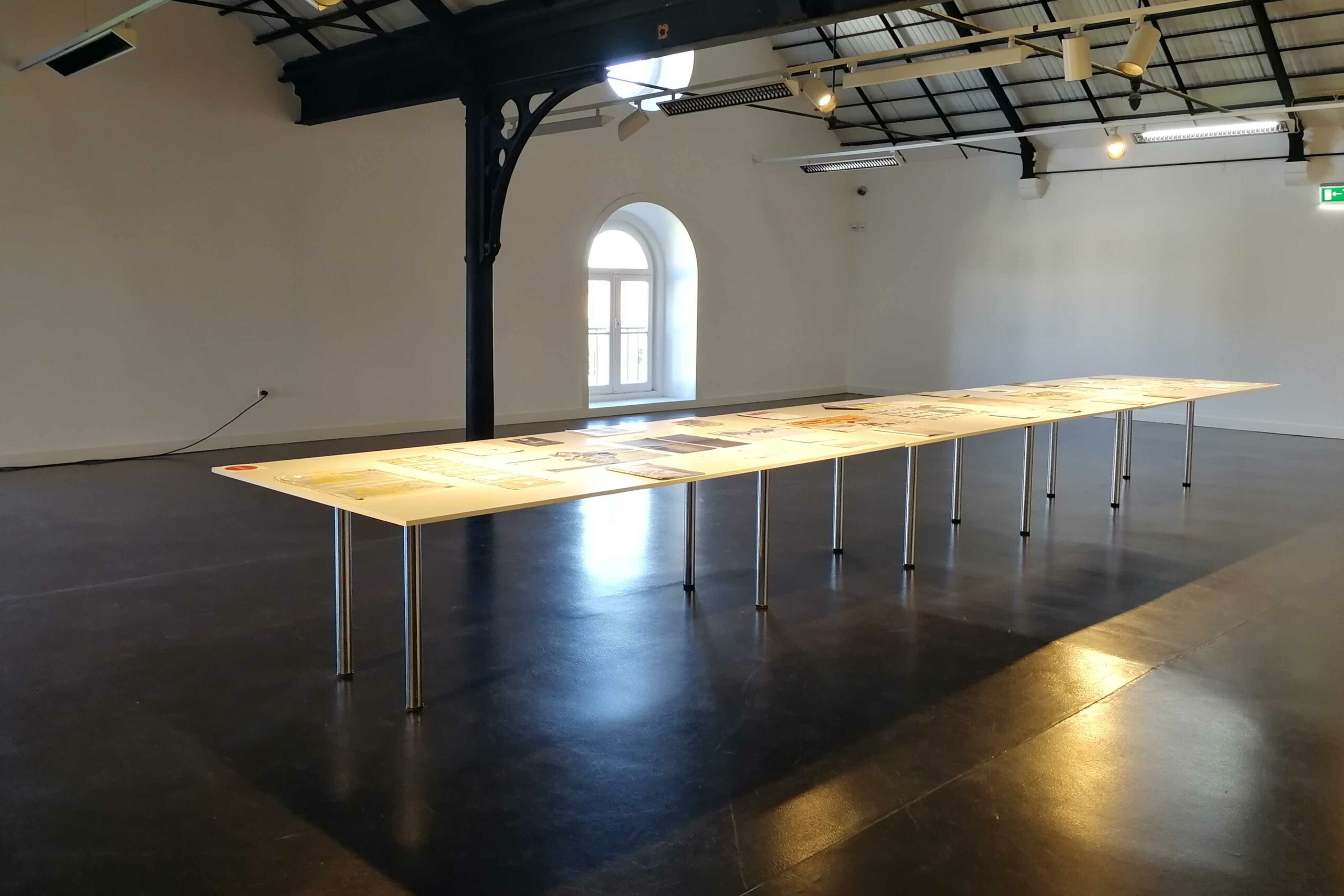
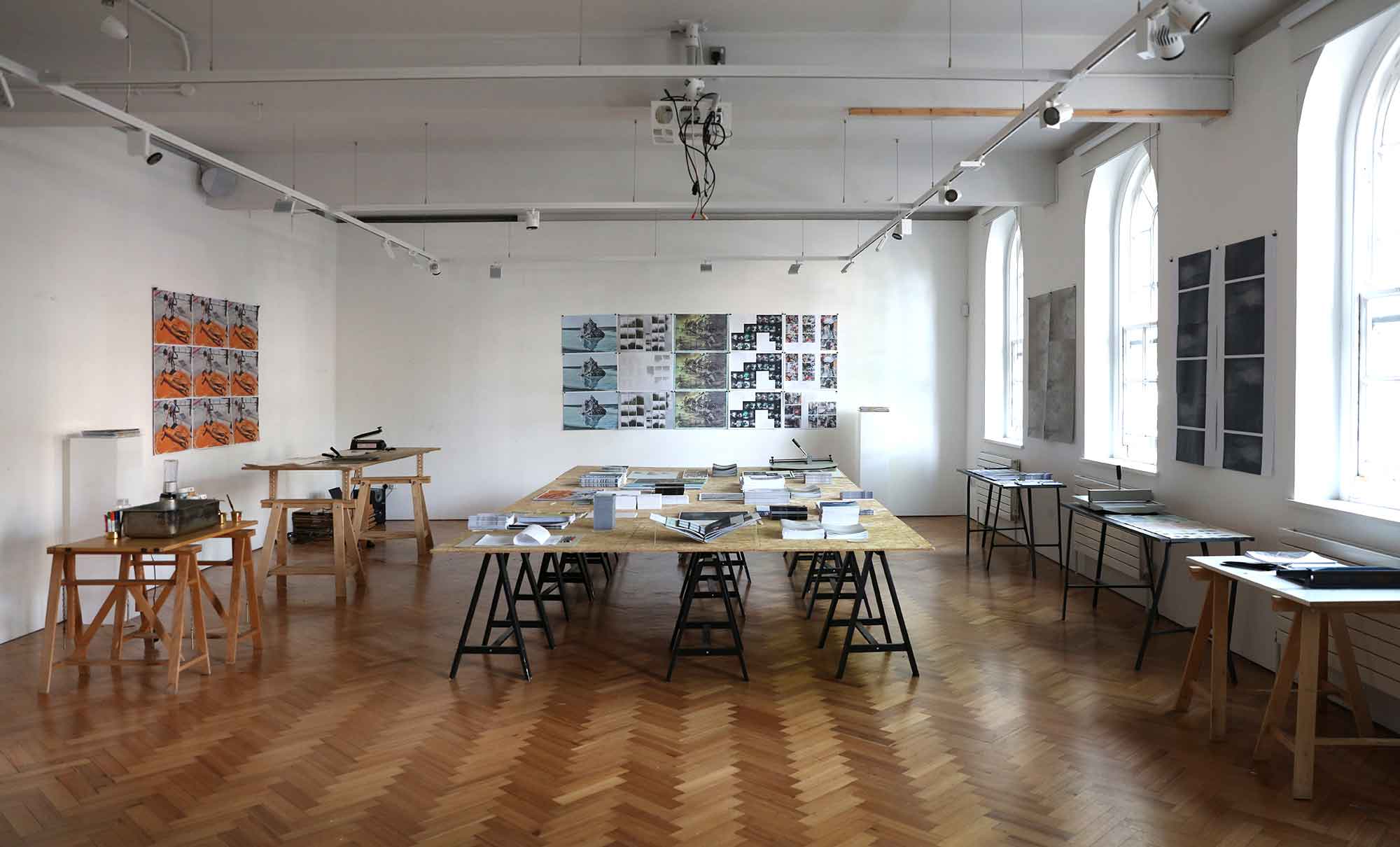
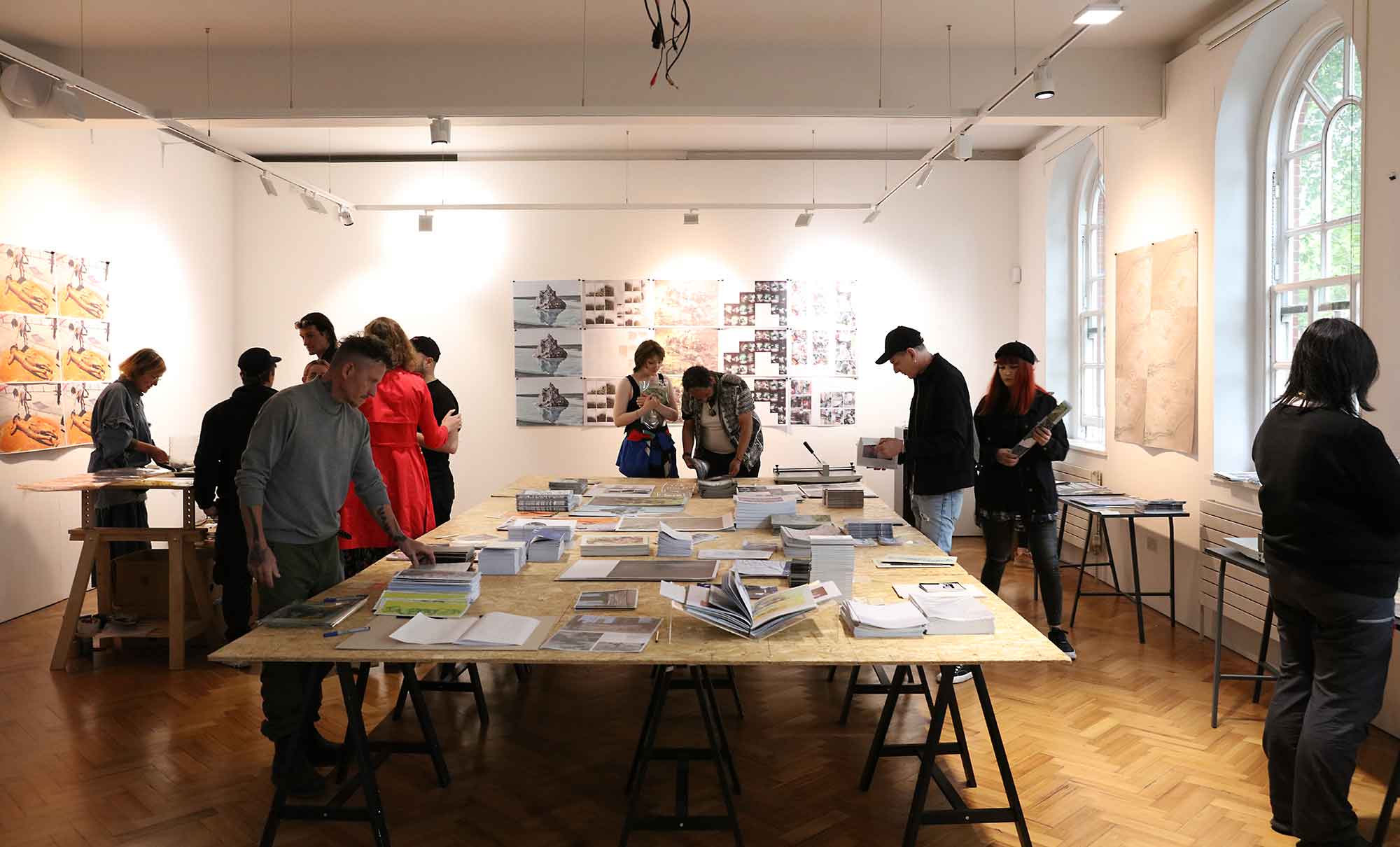
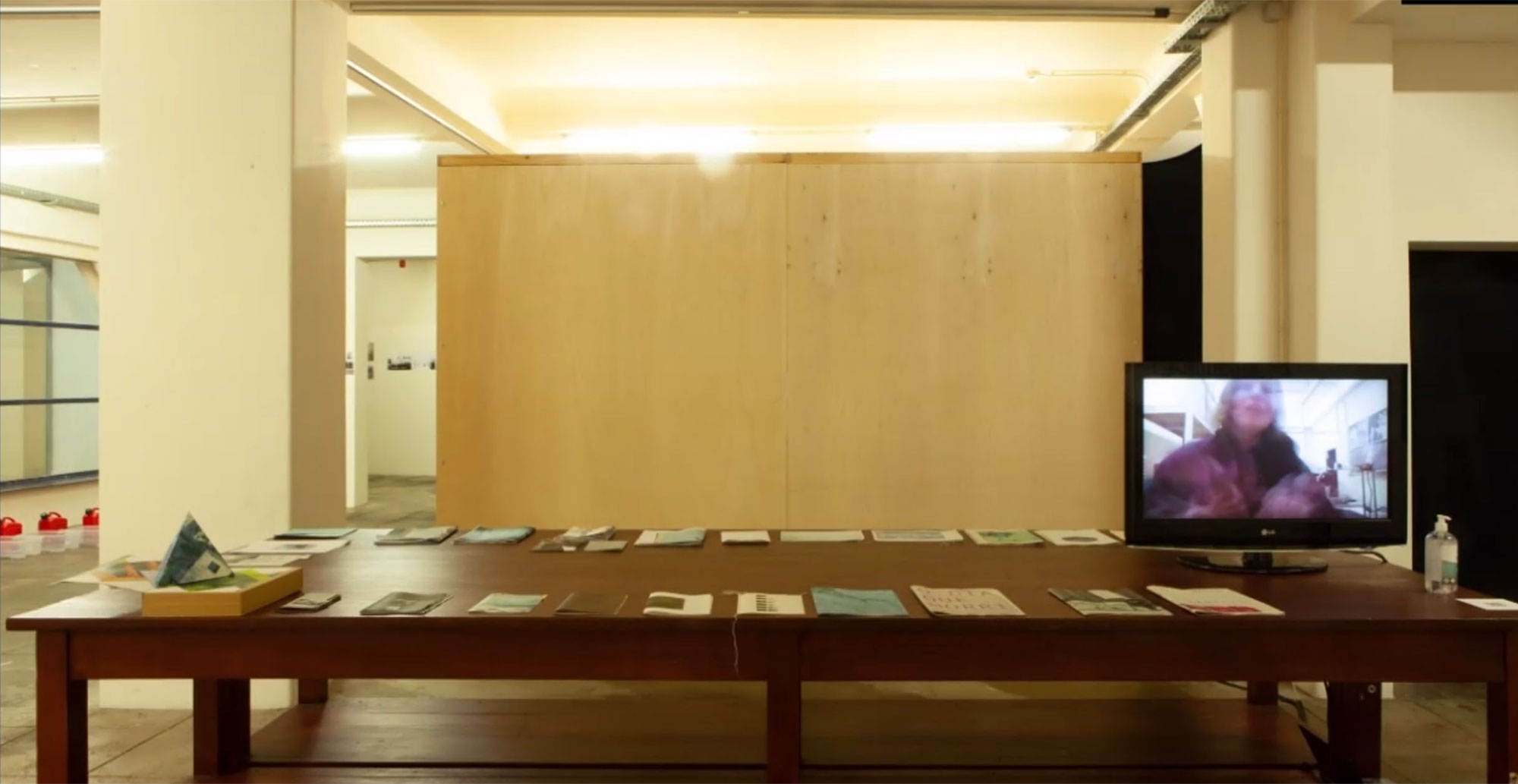
A one-day event and live editorial lab in which visitors created their own Liquid Memories by selecting from 55 unbound pamphlets, posters, cards and photographs and compiling an individual constellation of printed matter.

mobile strategies of display & mediation

VIEW EVENT ↗
Collective Publishing Practices
2022COLLECTIVE PUBLISHING EVENT

Collective Publishing Practices

Borough Road Gallery · London
May 2022

Three collaborative experimental publishing projects — Liquid Memories, Road Less Travelled Press and Photobook Popup — were brought together to test distinctive modes of collective publishing, reading, assembly, binding and circulation.

Borough Road Gallery · msdm

VIEW EVENT ↗
Memória Líquida
2021EXHIBITION

Memória Líquida

Casa da Imagem · Vila Nova de Gaia
2 — 15 December 2021

The final exhibition of an artistic and curatorial process exploring water in and beyond Porto. Publication was a central axis of the project, materialising the intertextual relations generated through the wider Memória Líquida programme.

Editing, design + artwork paula roush · Commissioning + artwork Francisco Varela

VIEW EVENT ↗
Trabalhos Líquidos & Jerricans
2021EXHIBITION

Trabalhos Líquidos & Jerricans

Galeria Cozinha · FBAUP · Porto
19 — 29 May 2021

Works incubated in the Liquid Workshop moved into exhibition space. The artist's book was approached in an expanded condition, with objects, images and materials produced upstream and downstream of the book remaining part of its unfolding editorial process.

Liquid Memories workshop · msdm + Francisco Varela / FBAUP

VIEW EVENT ↗
The Disappearing Dialogues Collective: Waters of Change Archive
2021ARCHIVE GATHERING · PRESENTATION

The Disappearing Dialogues Collective: Waters of Change Archive

Online archive gathering
5 June 2021

Presentation of the Liquid Memories publication project to Waters of Change, an international archive bringing together artistic and community practices associated with water and reimagining relationships between humanity, nature, nourishment and care.

Waters of Change Archive · The Disappearing Dialogues Collective

VIEW EVENT ↗
Liquid Workshop: Live Editorial Lab
2021LIVE EDITORIAL LAB · ZOOM

Liquid Workshop: Live Editorial Lab

Online · seven simultaneous Zoom rooms
5 March 2021 · 19:00–20:45

A live editing laboratory presenting the liquid archive through seven simultaneous Zoom rooms: six rooms sharing liquid methodologies and a seventh meta-room focused on participation. The collective publication in progress was shared as downloadable PDFs.

Francisco Varela · paula roush / msdm studio · Joana Nascimento · Maria João Ferreira · Miguel Marecos · Betina Dal Molin Juglair · David Goldenberg

VIEW EVENT ↗
~Liquid Memories~ + Mobile Strategies of Display & Mediation
2021LECTURE

~Liquid Memories~ + Mobile Strategies of Display & Mediation

Atelier de Lisboa · Women in Photography course
7 March 2021

Lecture on Liquid Memories and mobile strategies of display & mediation for the Women in Photography course at Atelier de Lisboa, coordinated by Filipa Valladares.

Atelier de Lisboa

VIEW EVENT ↗
Between Archive and Publication: A Liquid Workshop
2021WORKSHOP · ONLINE

Between Archive and Publication: A Liquid Workshop

Visualising Liquid Archives · online
4 January 2021

The first workshop meetup explored liquidity through the material processes of photographic representation, printing, archiving and publishing within a post-digital workflow.

Facilitated by paula roush and Francisco Varela

VIEW EVENT ↗
TEXTS

TEXTS

Joana Nascimento — Liquid memories: collaboration and expanded reading

“A partir de um caso de estudo, este ponto pretende responder à questão: De que forma se expressa a colaboração entre artistas na produção do livro e de que forma o livro publicado propõe uma leitura expandida?”

“The publication Liquid memories is an example of FCO – Faz com outros [Make With Others] practices in which I was involved. It considers the collaborative workshop by focusing on the dynamics established through modes of sharing dependent on a virtual network.”

“In editorial terms, the book seeks to reflect an intention to leave open the possibility of mediating new relationships, allowing each contribution to be separated and reorganised with the other sections as desired.”

COLOPHON

COLOPHON

PRINTED EDITION

liquid memories ~to read with water is a collective photobook work, an assemblage of experimental photo-texts that respond to the challenge of photographing/remembering with water.

A publication in 55 unbound sections
Laser and Indigo print, edition of 100 copies
Total: 721 pages, 544 photographs

Project and Editorial design: paula roush

PHOTOGRAPHS AND WORDS

Maria João Ferreira, paula roush, Betina Dal Molin Juglair, Francisco Varela, Miguel Marecos, Joana Nascimento, David Goldenberg, Raul Simões Pinto, NDMALO archive, Alice WR, Teresa Huertas, Carla Fragata, Manuela Matos Monteiro, Luís Carvalhal, Natércia Caneira, João de Goes, Inês R. Amado, Eduardo Sousa Ribeiro, Ana Botelho, Manuela Vaz, Renato Roque, Eliane Velozo and Severino Iaba, Susana Paiva, Mide Plácido
FORMAT

BILINGUAL: Portuguese, English

CONTENTS: 55 loose sections — 18 pamphlets, 5 paperbacks, 12 posters, 10 cards, 9 photographs, and 1 leaflet

PRINTING: Laser and Indigo printing on uncoated papers and silk finish paper on facsimile photographs

SIZE: 23 × 35 cm — closed enclosure
individual sections range in size from 10.5 × 14.8 cm to 42 × 59.4 cm

COVER / EDITION

COVER: Soft cover in clear PVC with 2 side-sealed pockets and unique acrylic gold monoprint

For each book, the assemblage of the 55 sections is different and each cover is individually customised with a gold acrylic monoprint.

WEIGHT: 2kg 100 g
RELEASE DATE: May 12 2022
PUBLISHED BY: msdm publications