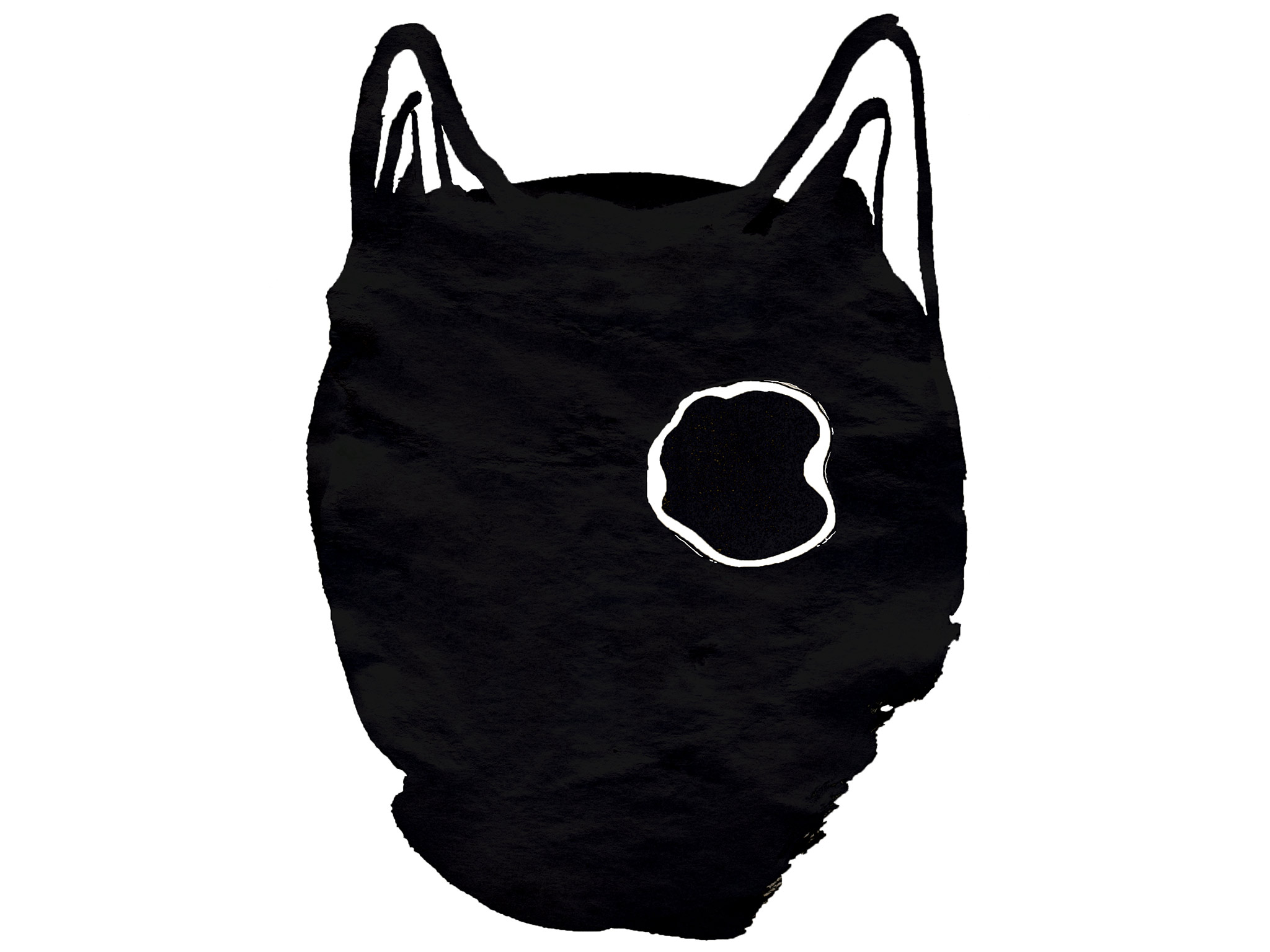
Hybrid Printed Textiles — Herbarium of the Anthropocene
Hybrid printed textiles developed within One Green Eye, the Other Blue: Herbarium of the Anthropocene. Combining plant-based printing processes and AI-generated imagery, this body of work explores textile as a surface where ecological, material, and computational systems converge.
Nos tecidos, começo por escutar.
O herbário deixa de ser apenas uma coleção de plantas e torna-se um campo de impressão — uma superfície onde diferentes regimes de imagem se encontram, friccionam e se transformam.
Neste projeto, trabalho com dois modos distintos de relação com a imagem e a matéria.
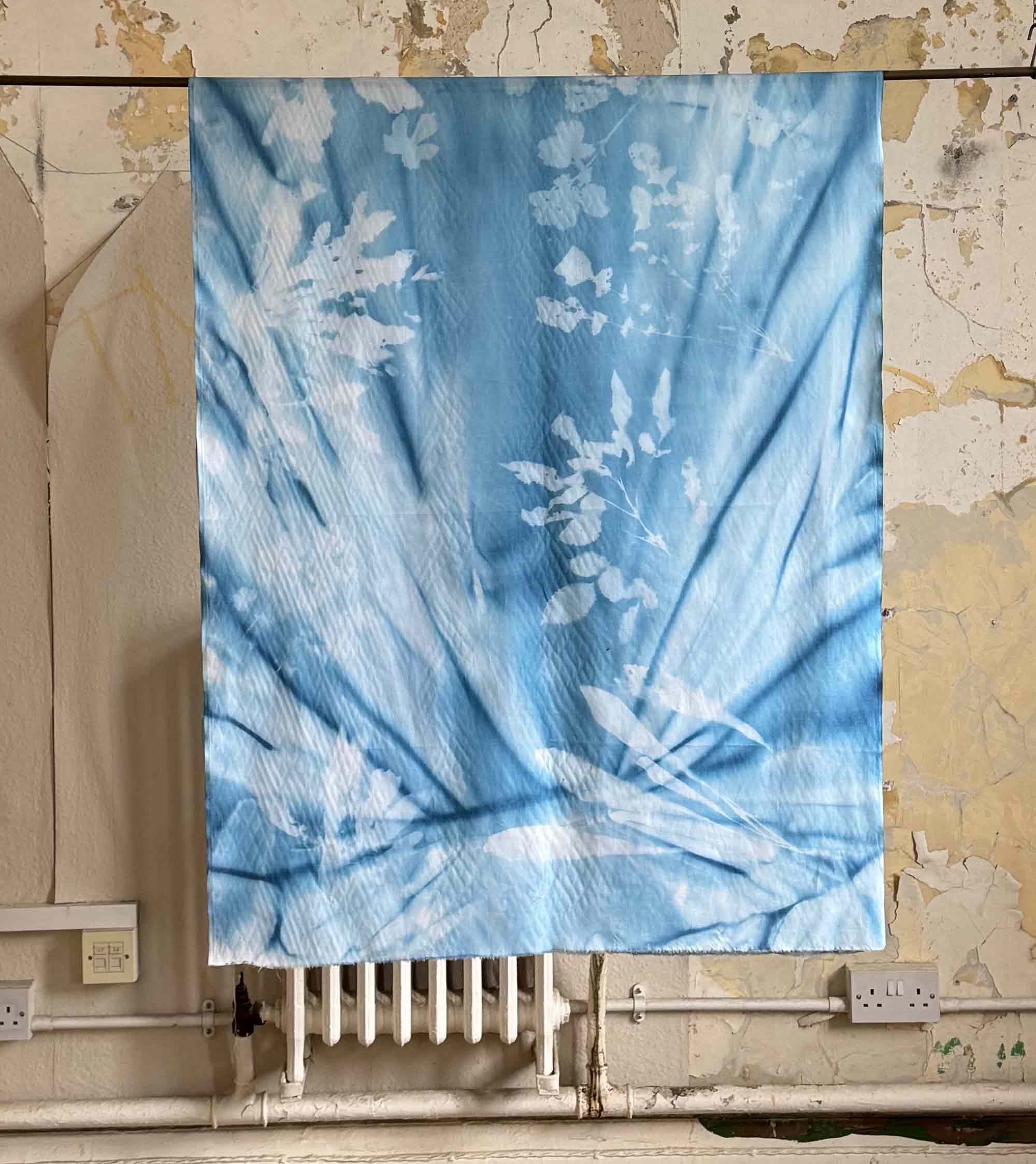
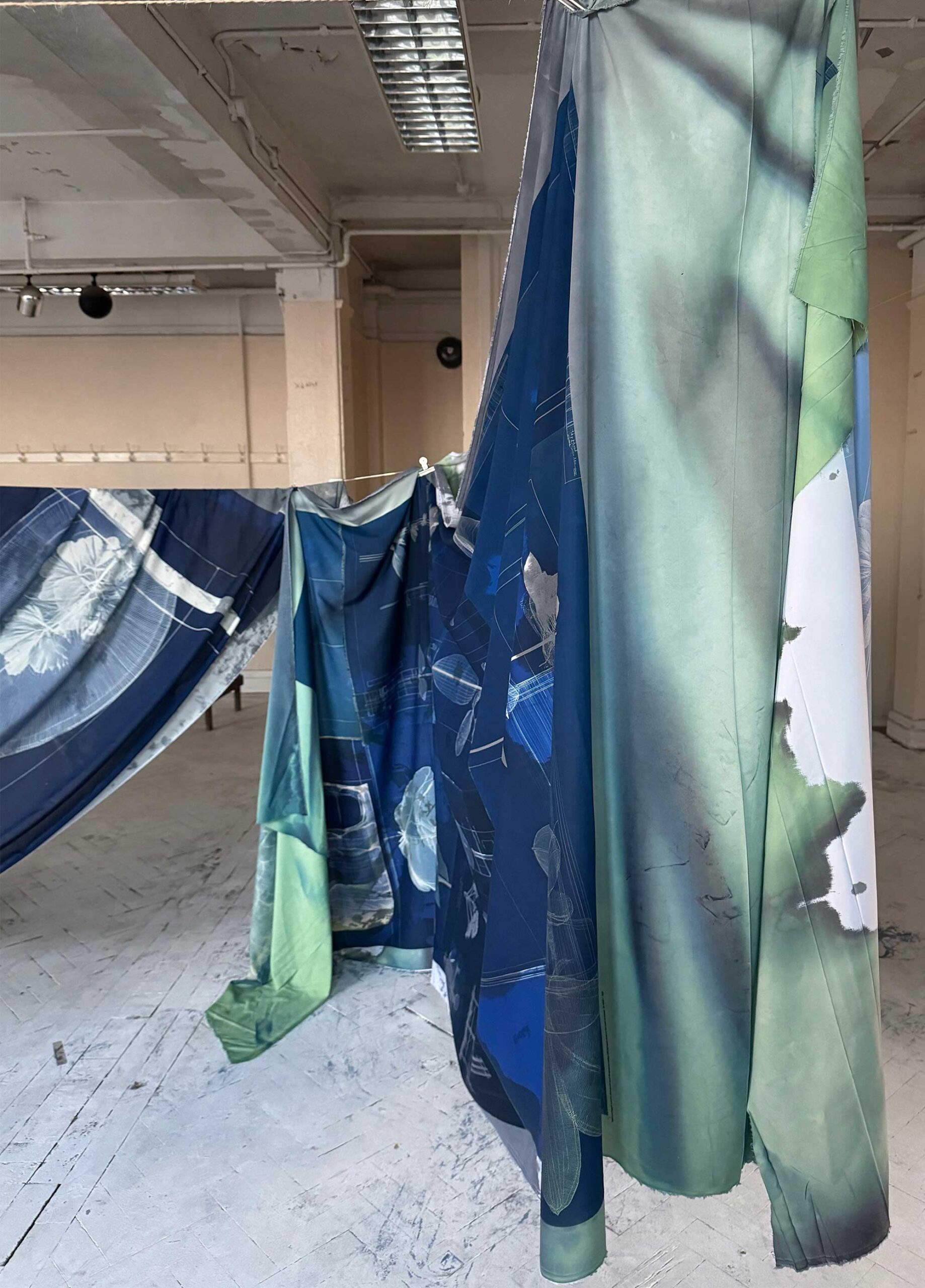
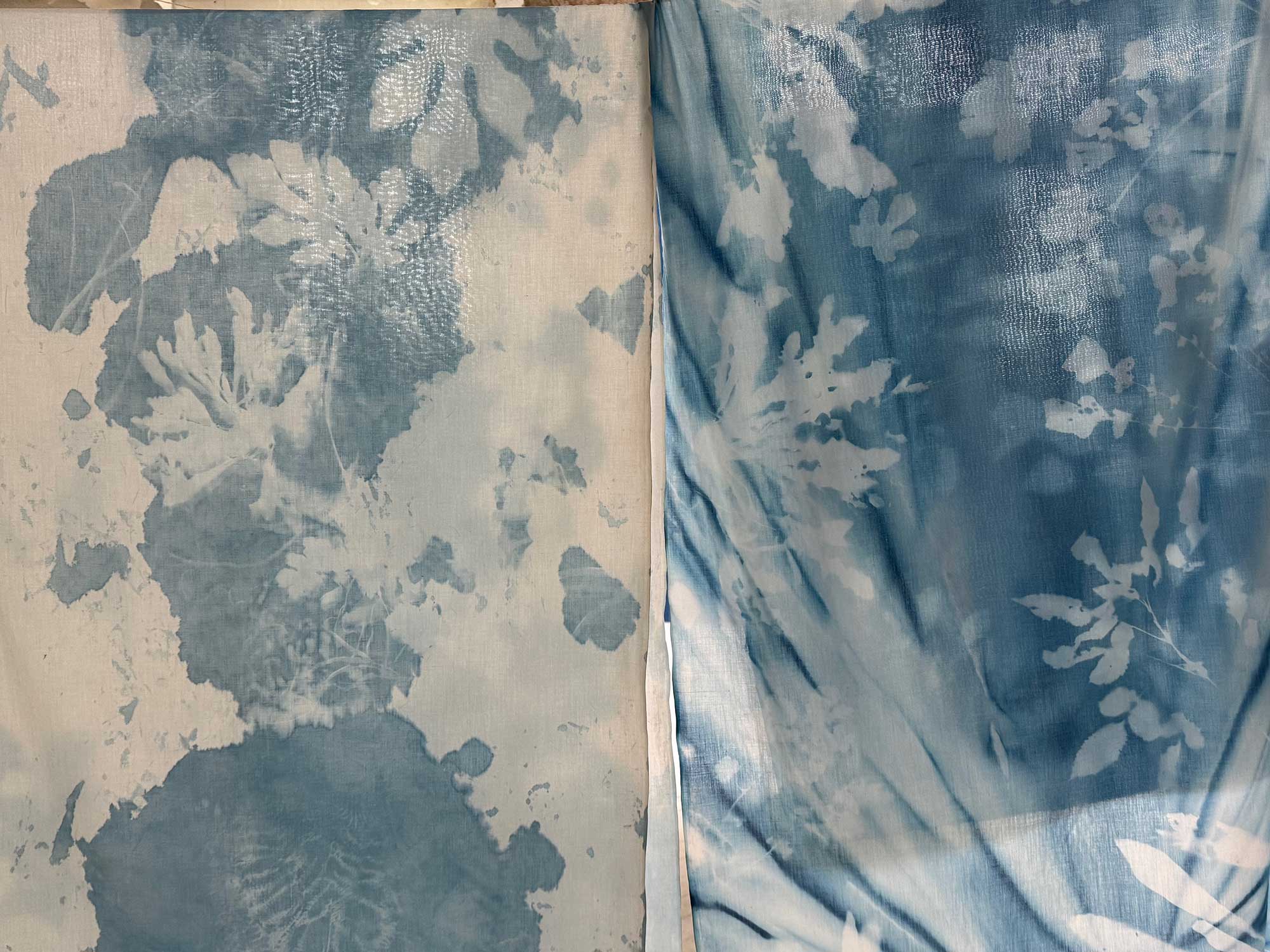
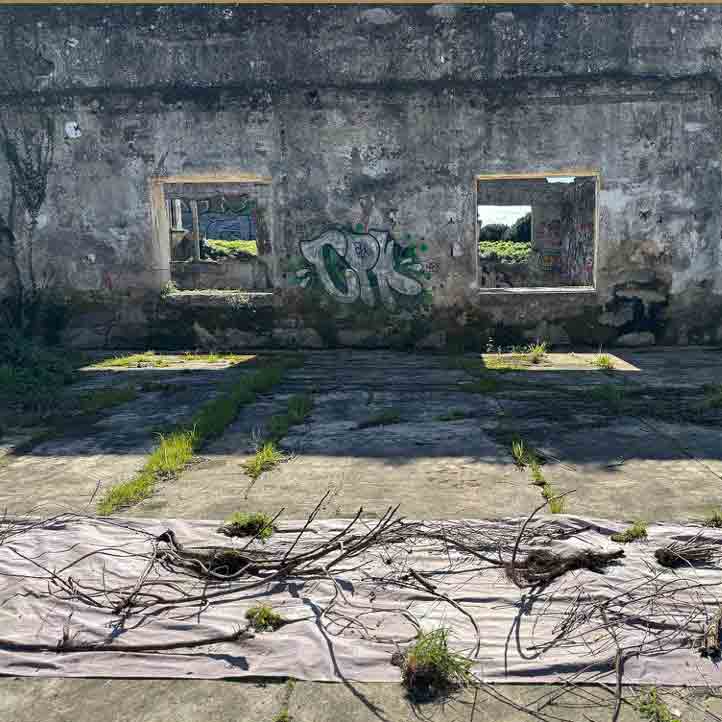
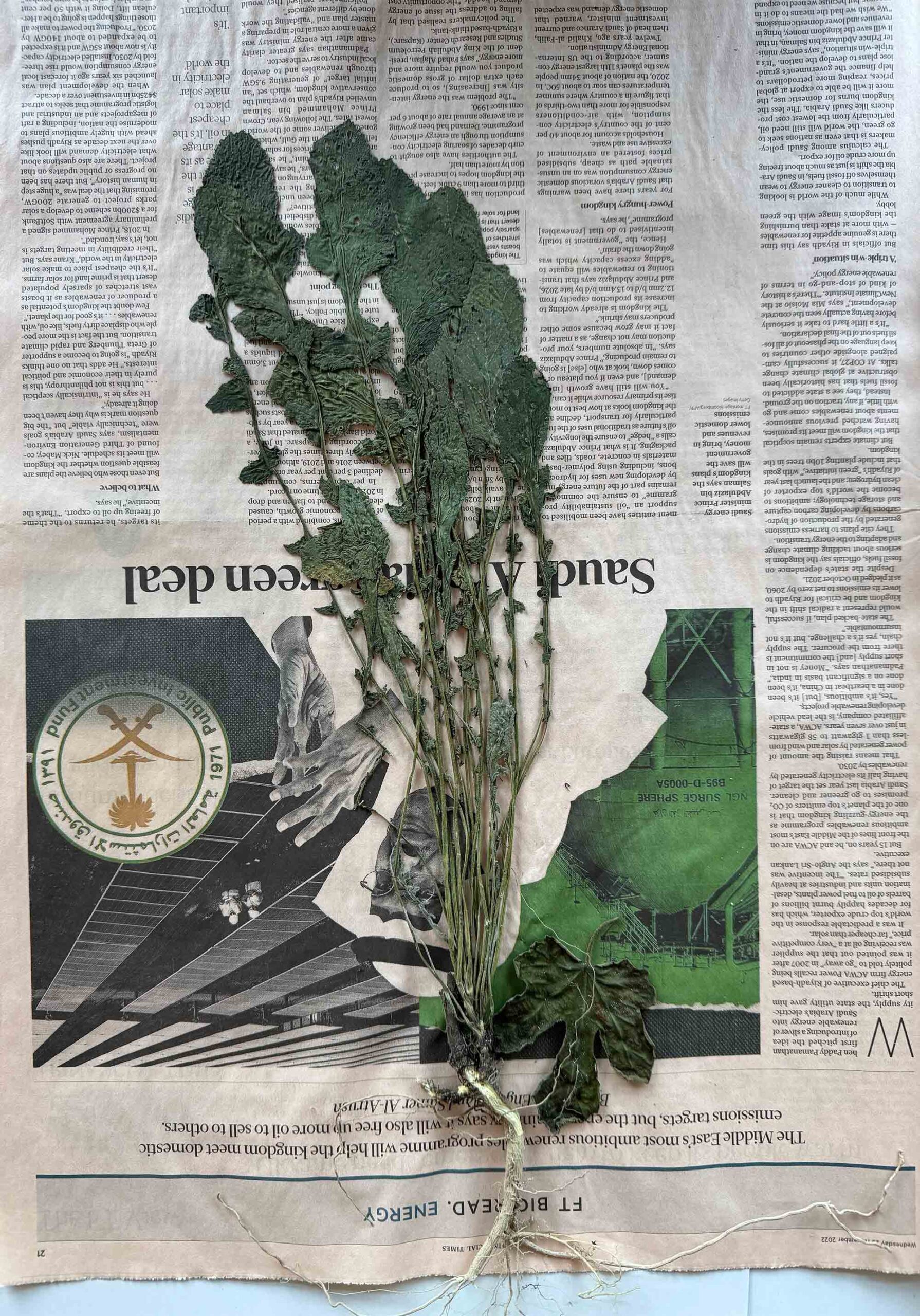
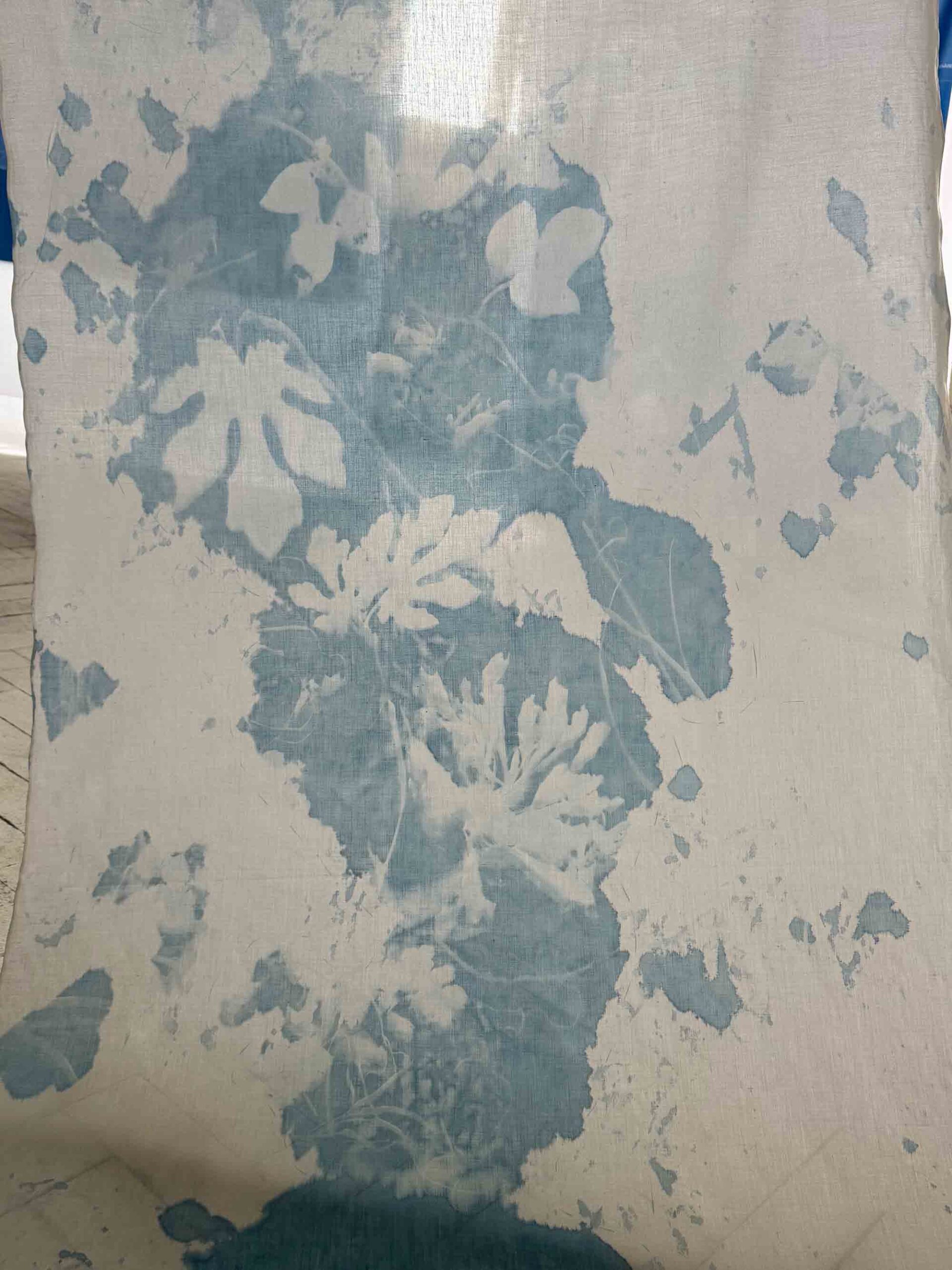
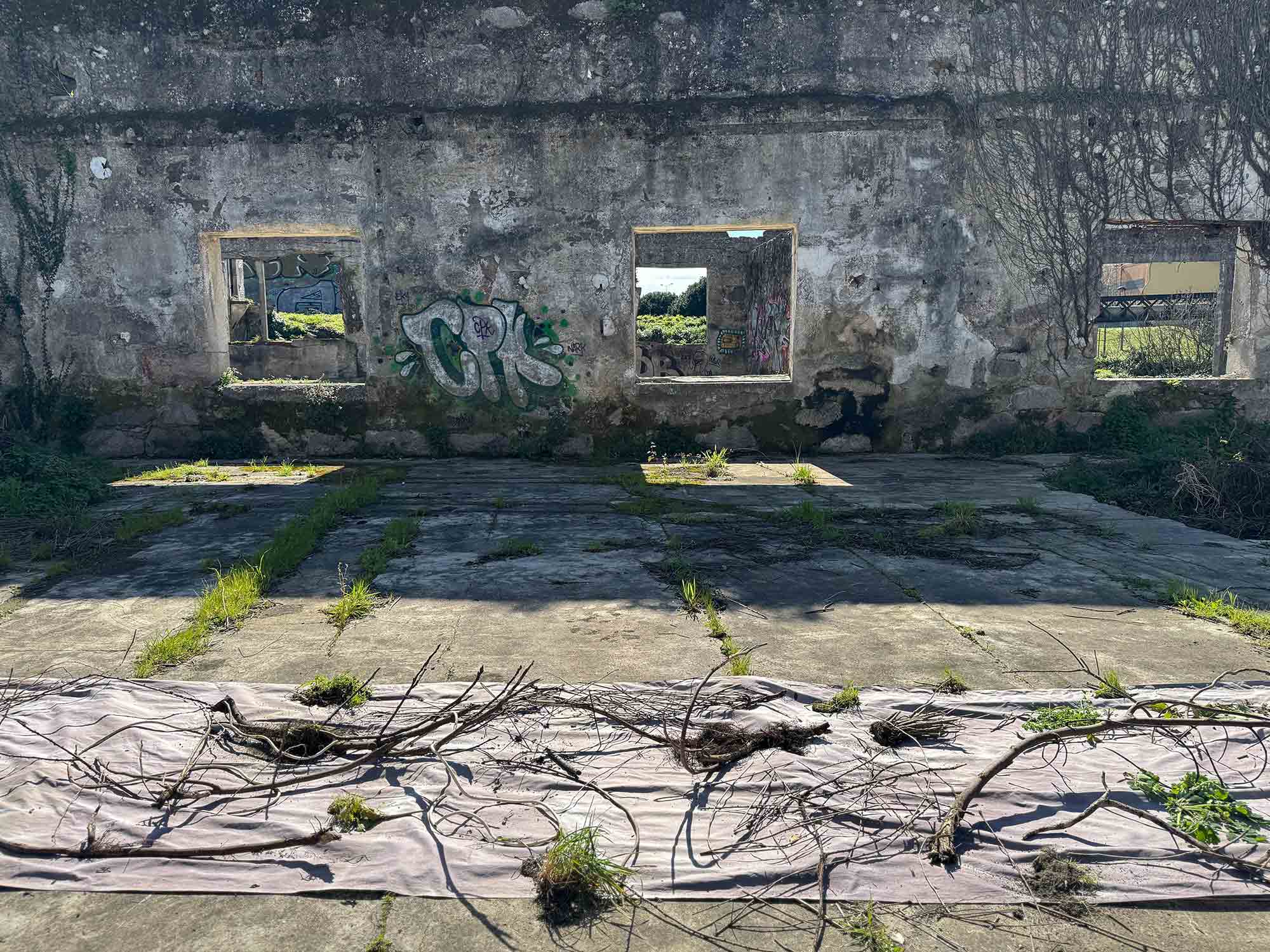
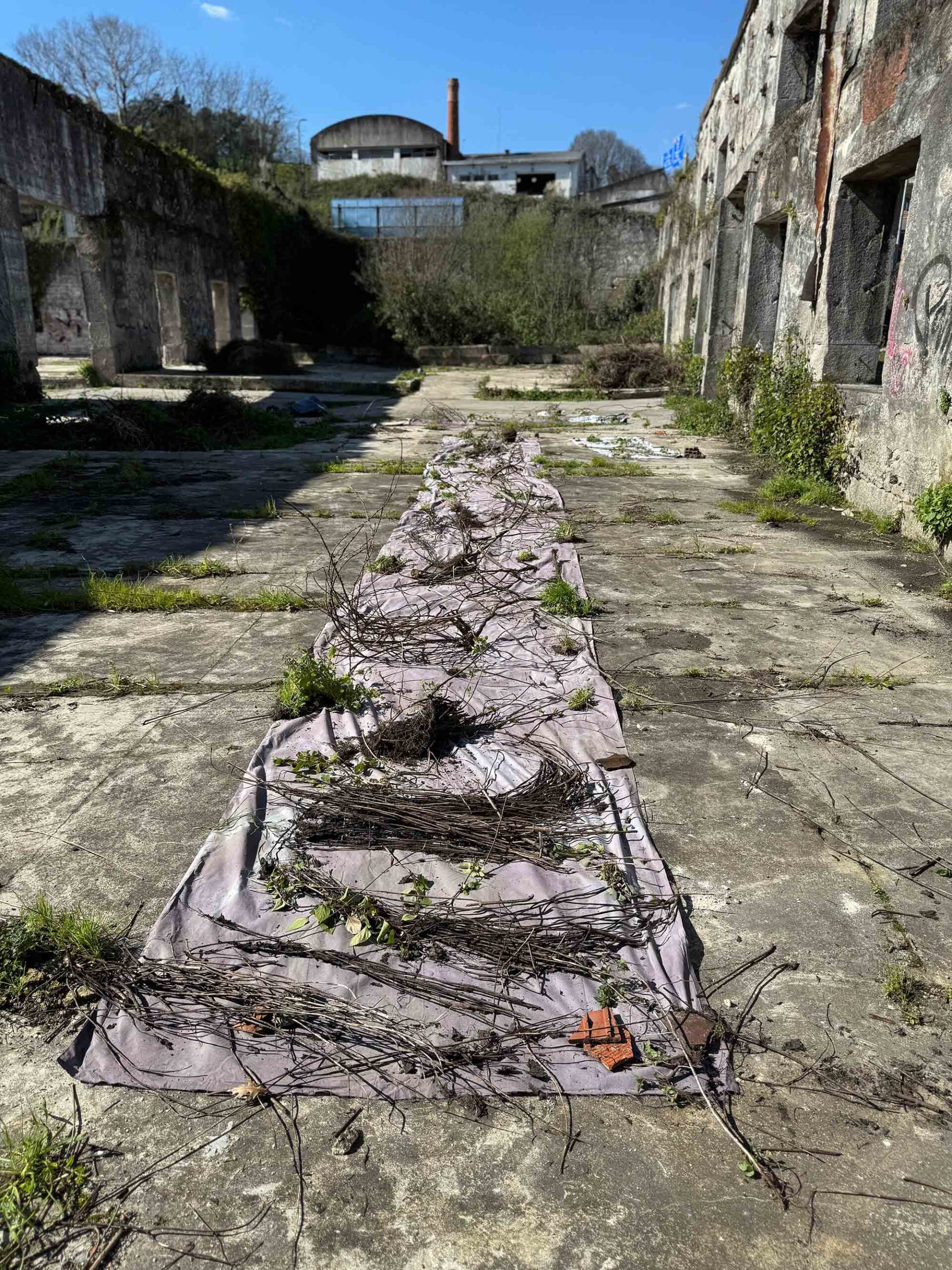
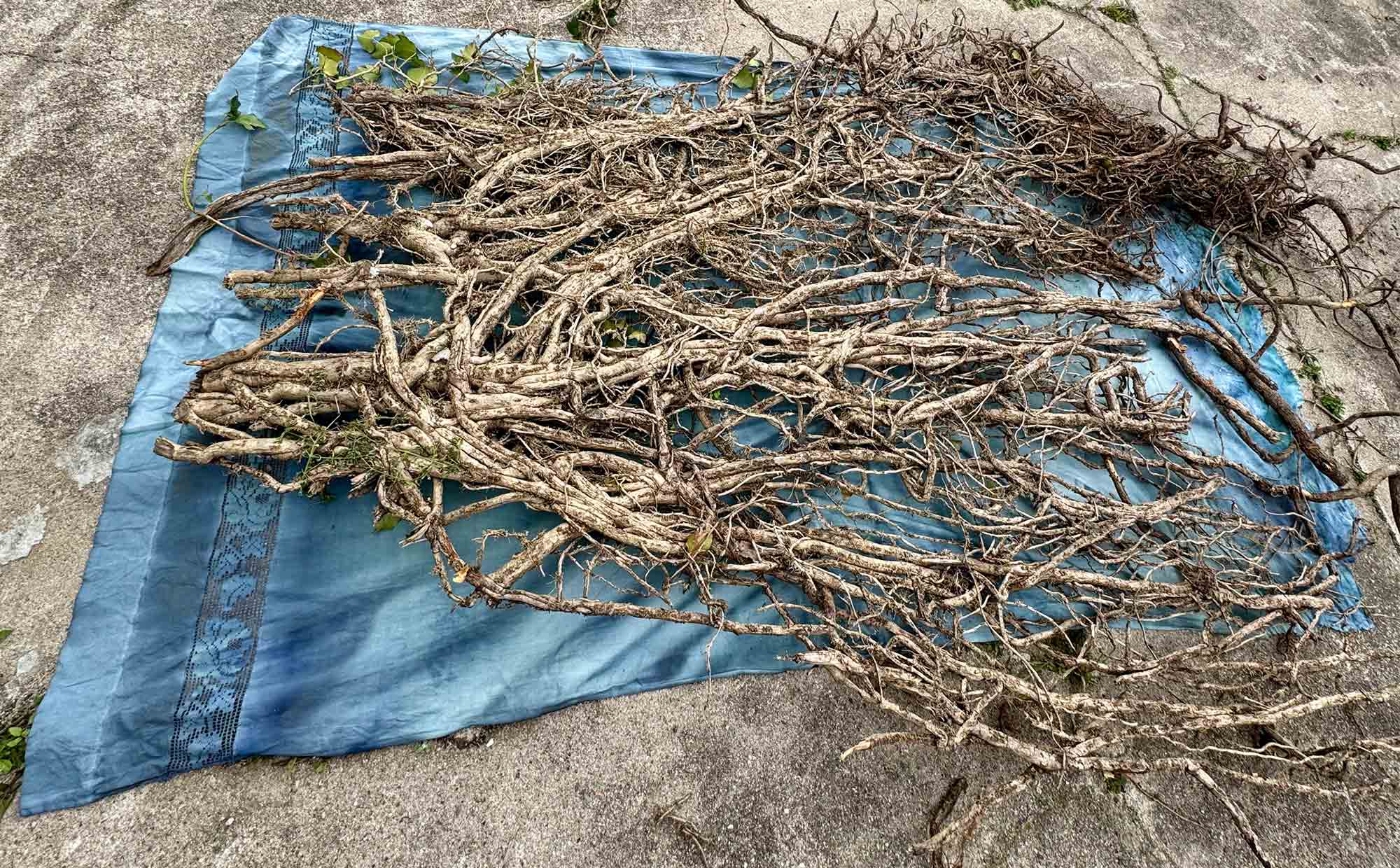
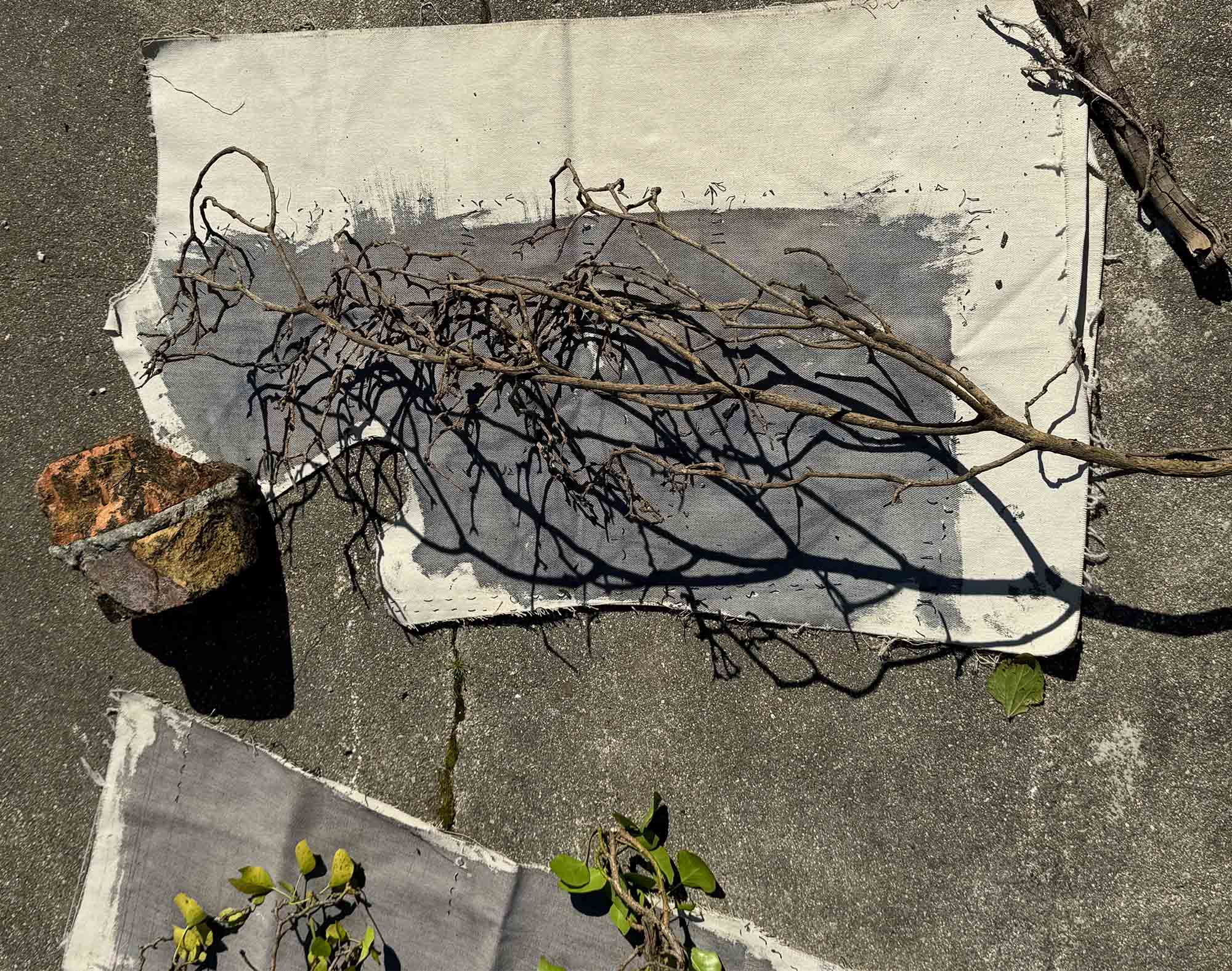
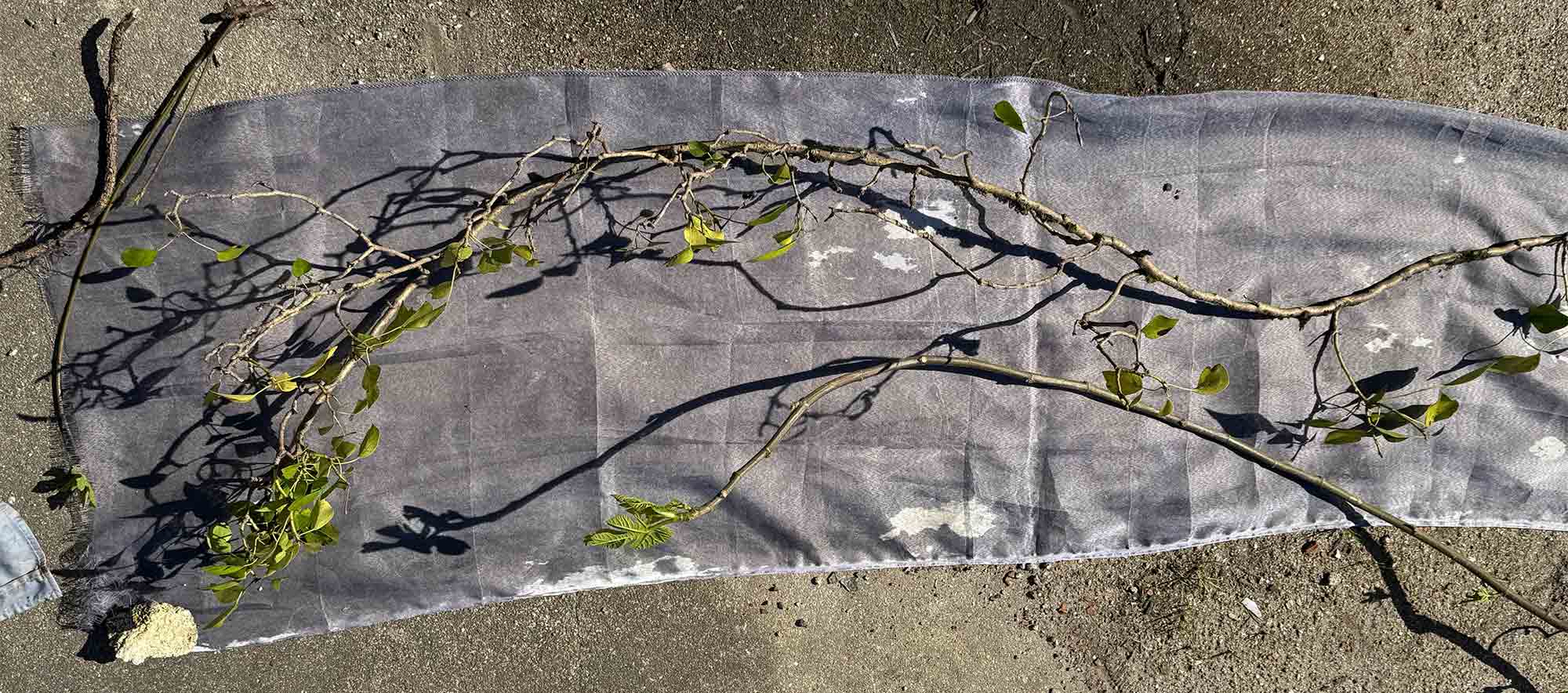
O primeiro nasce do contacto direto com o território. Recolho plantas em deriva, reutilizo tecidos, preparo soluções sensíveis à luz. São gestos lentos, situados, onde o corpo participa na inscrição da imagem. A impressão acontece por proximidade, calor, exposição solar — processos onde a matéria vegetal não representa, mas age.
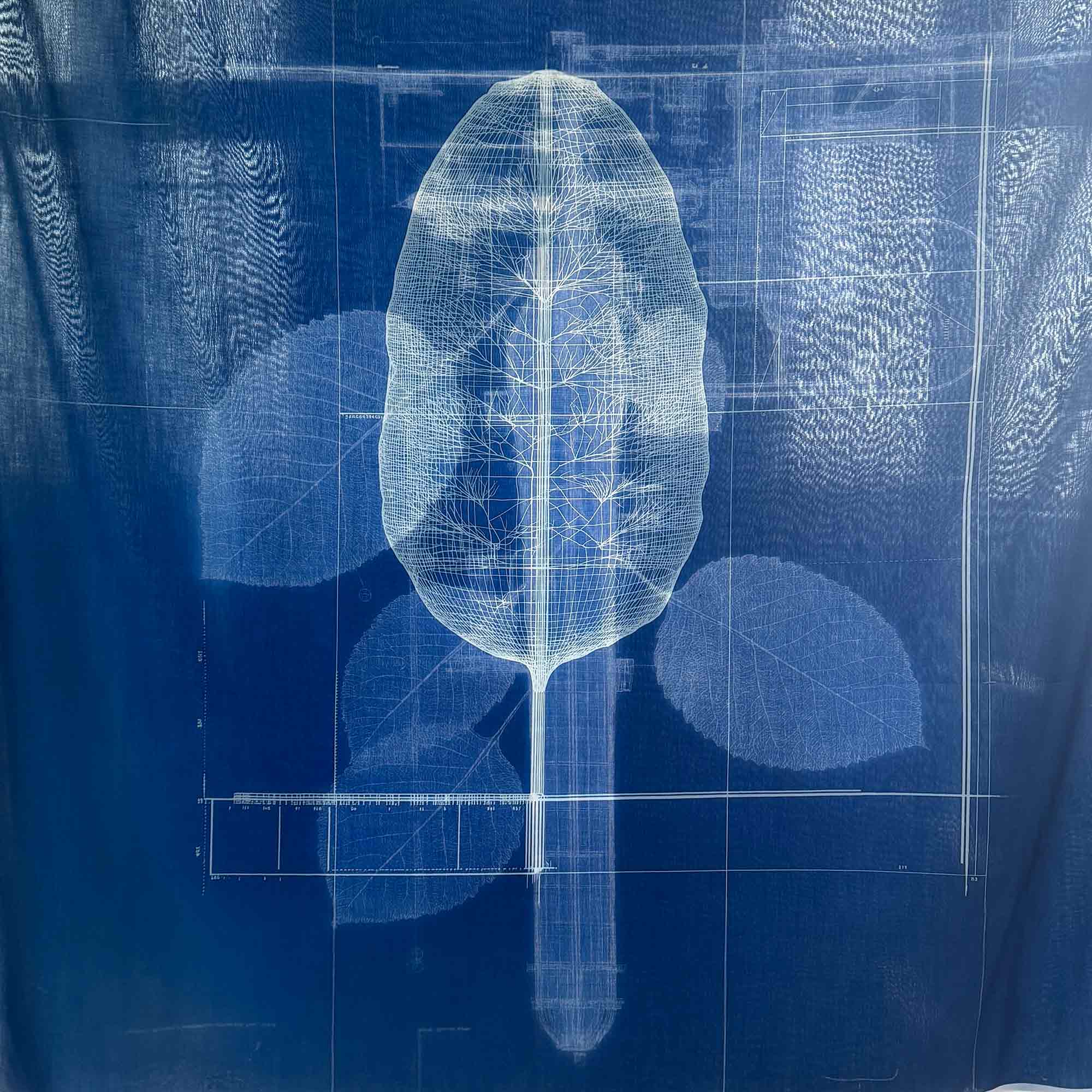
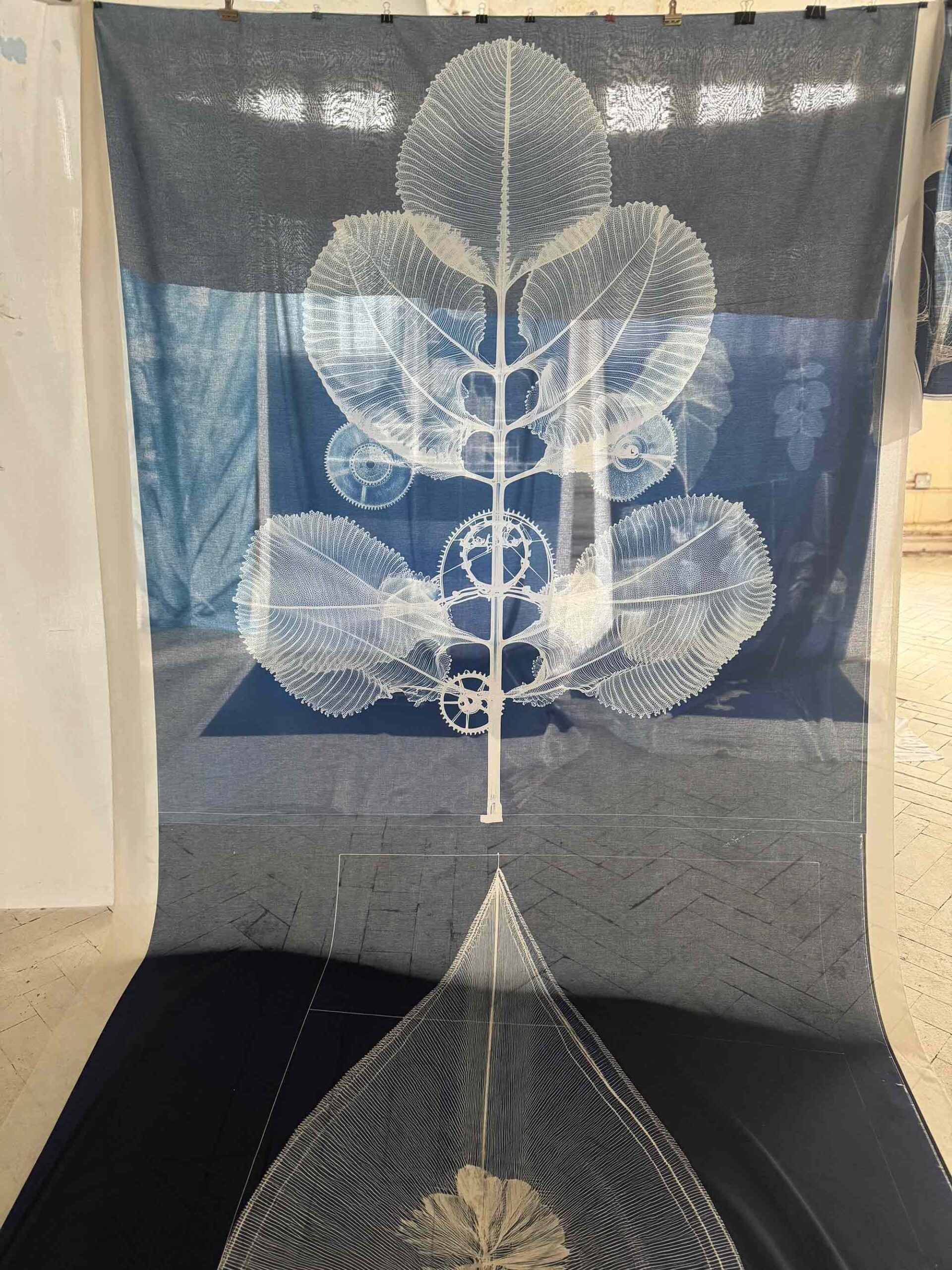
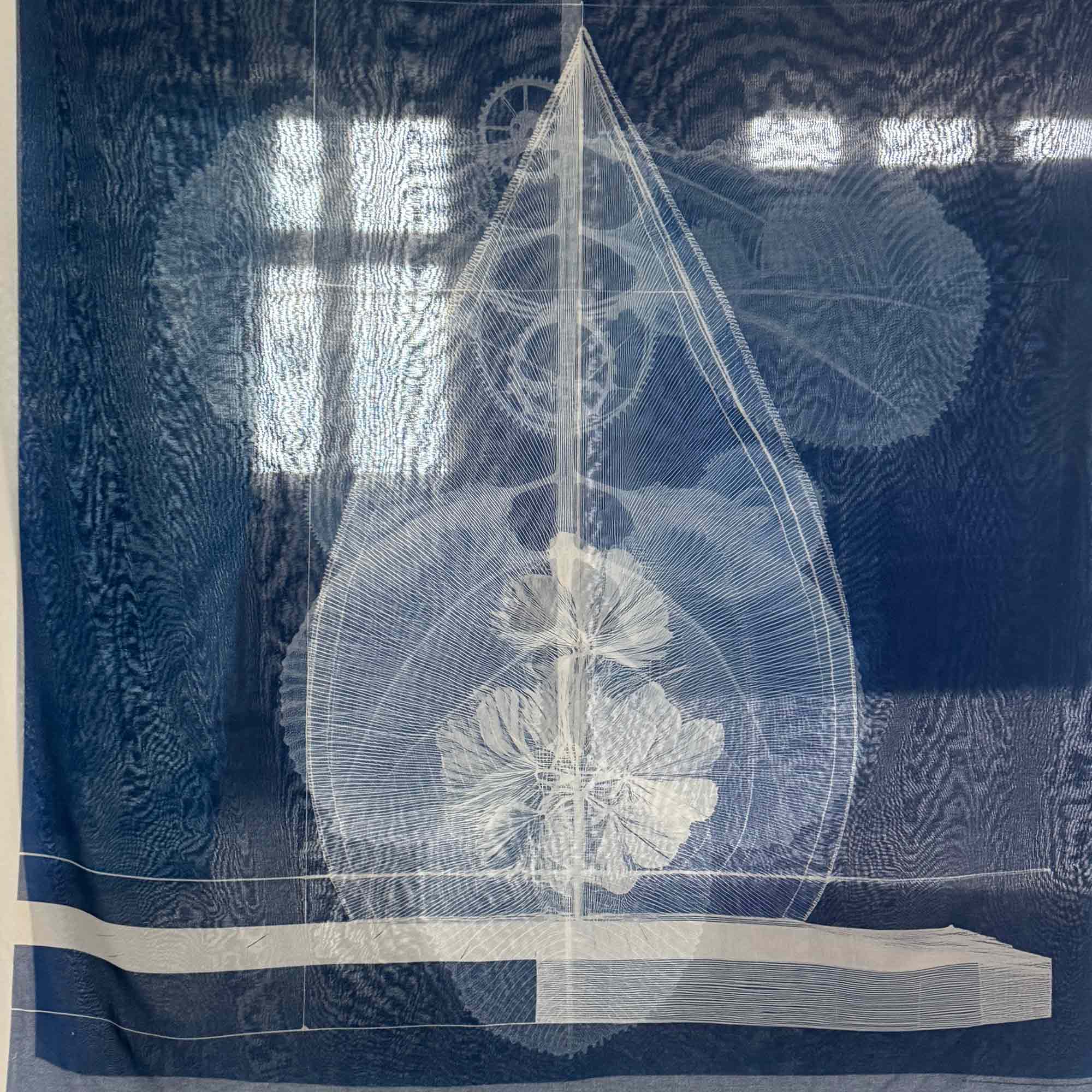
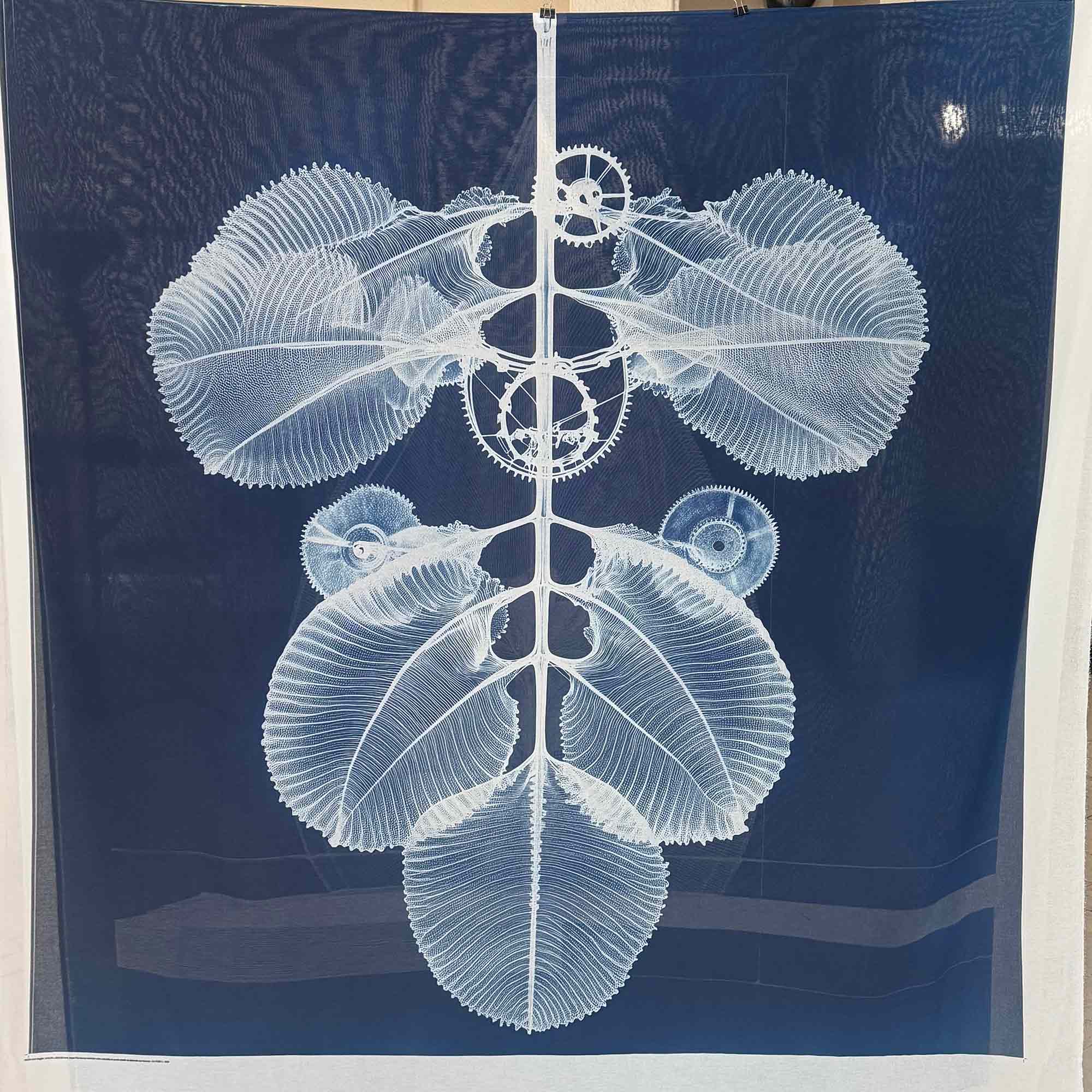
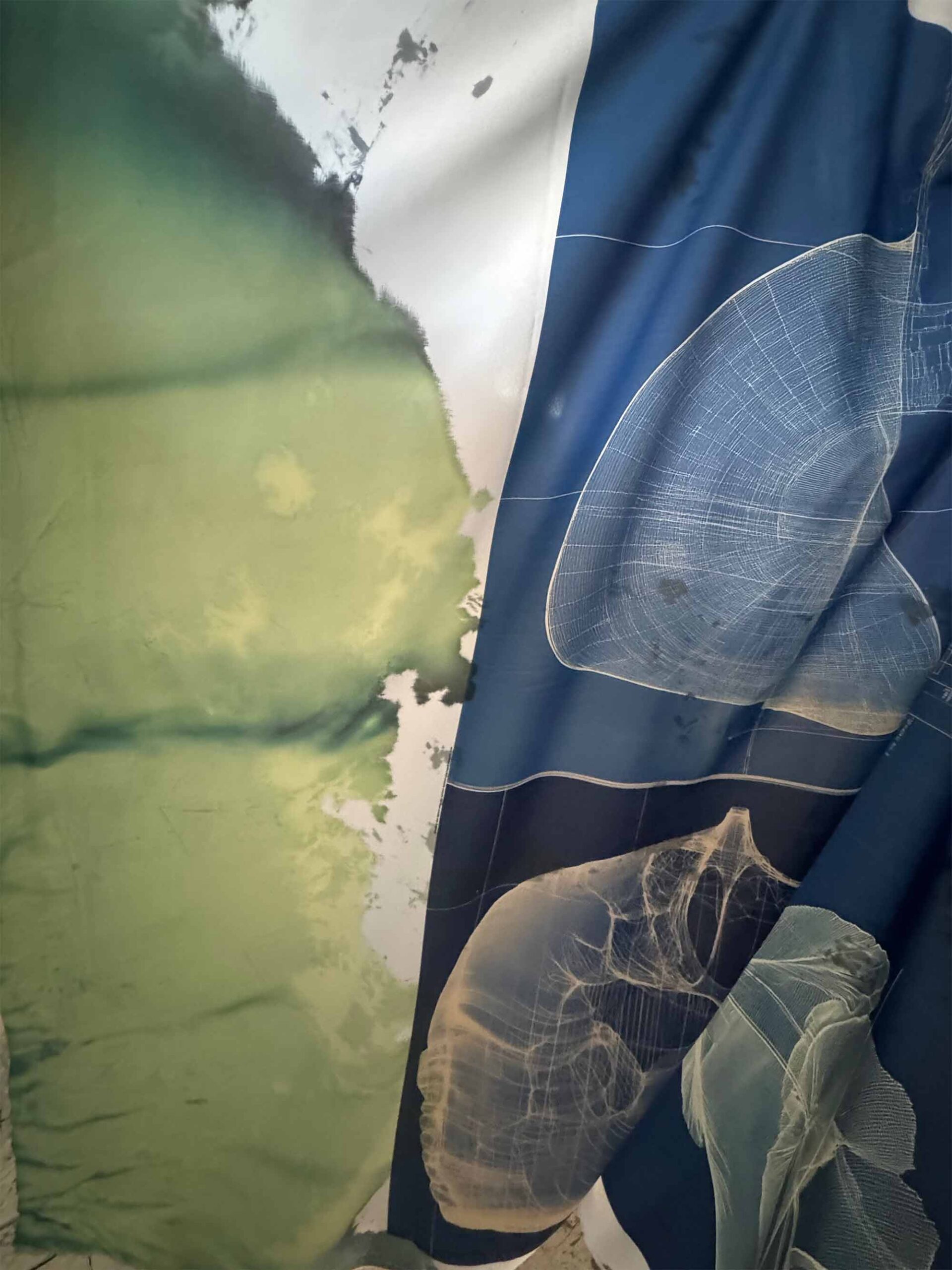
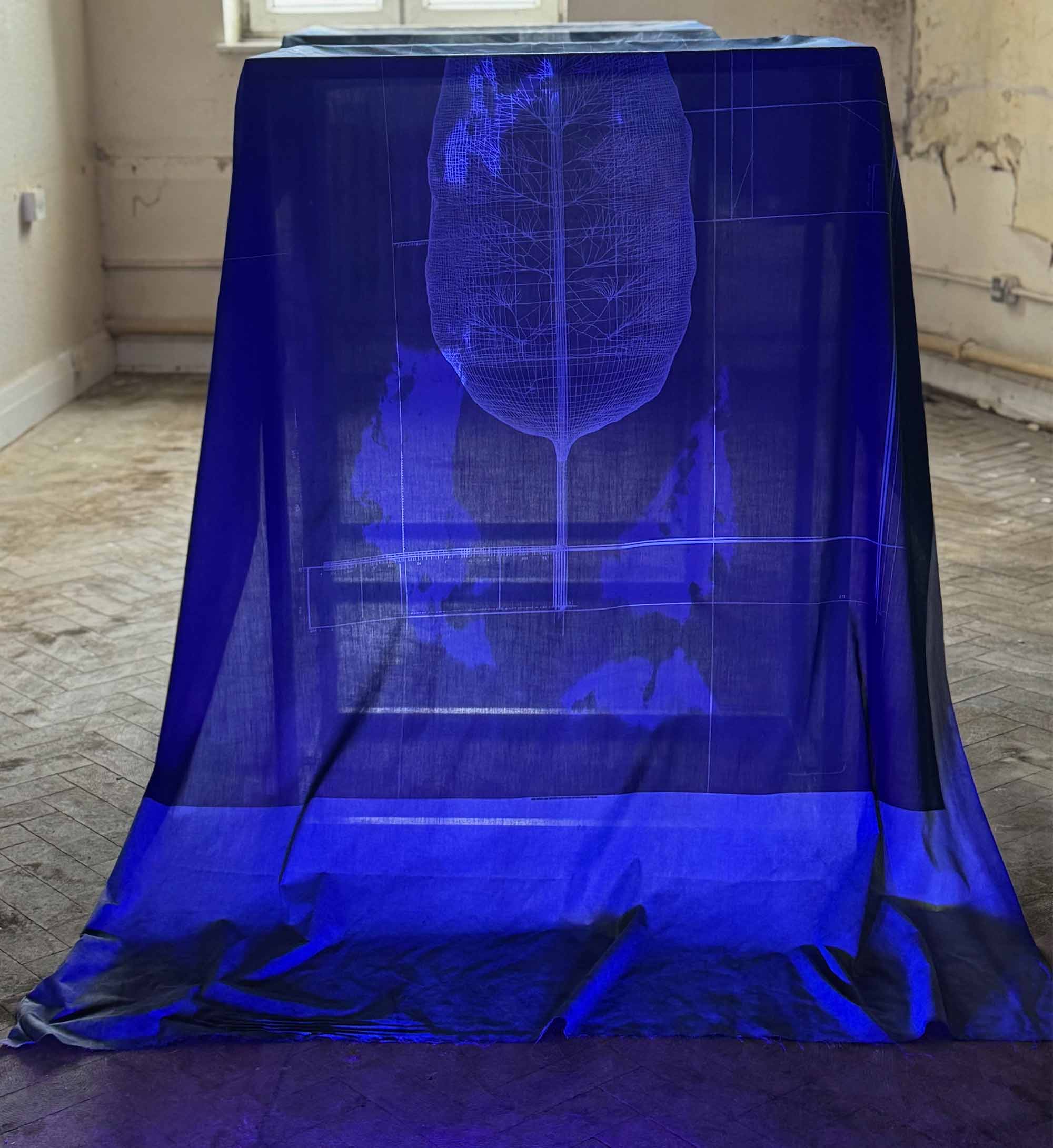
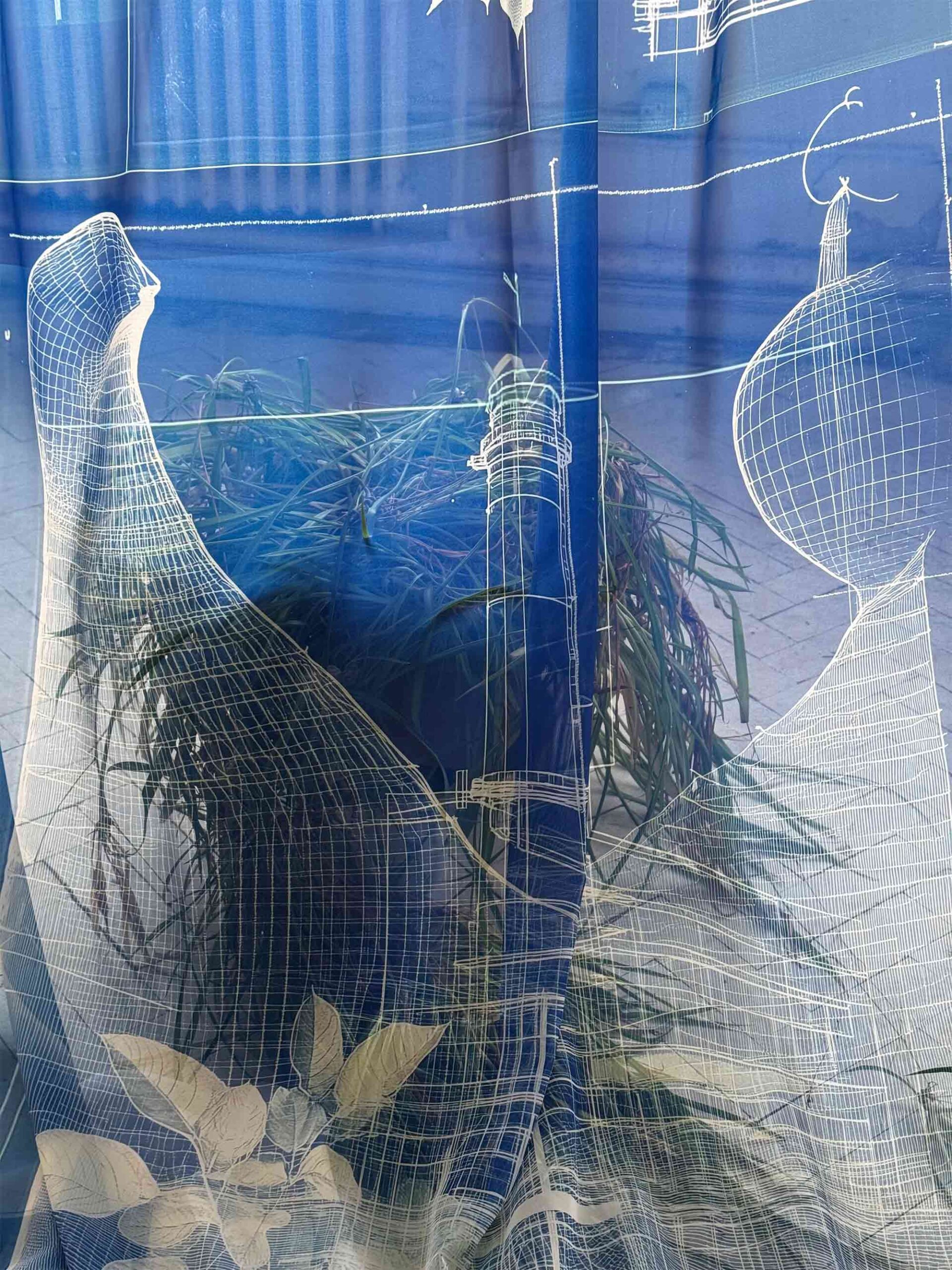
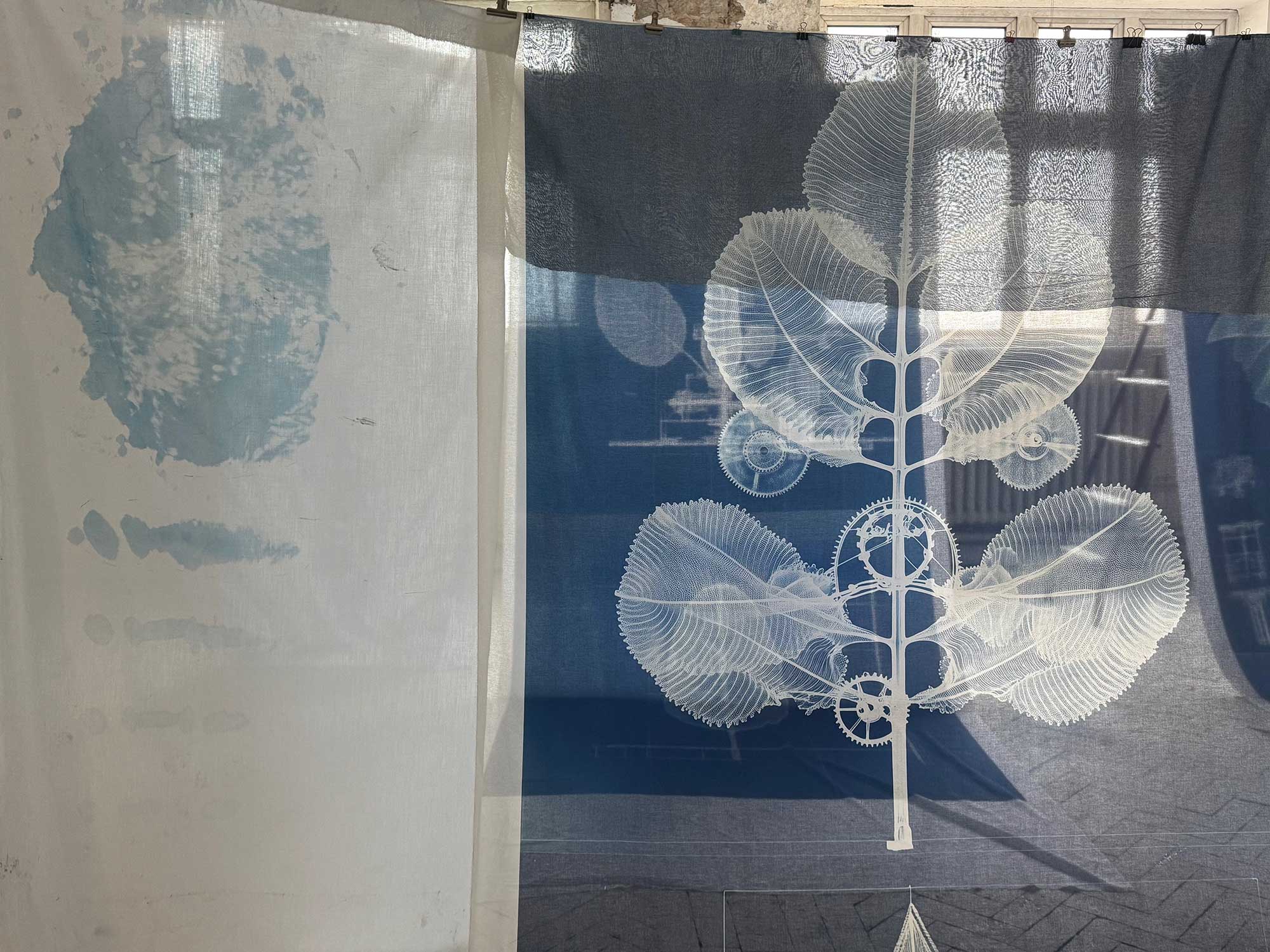
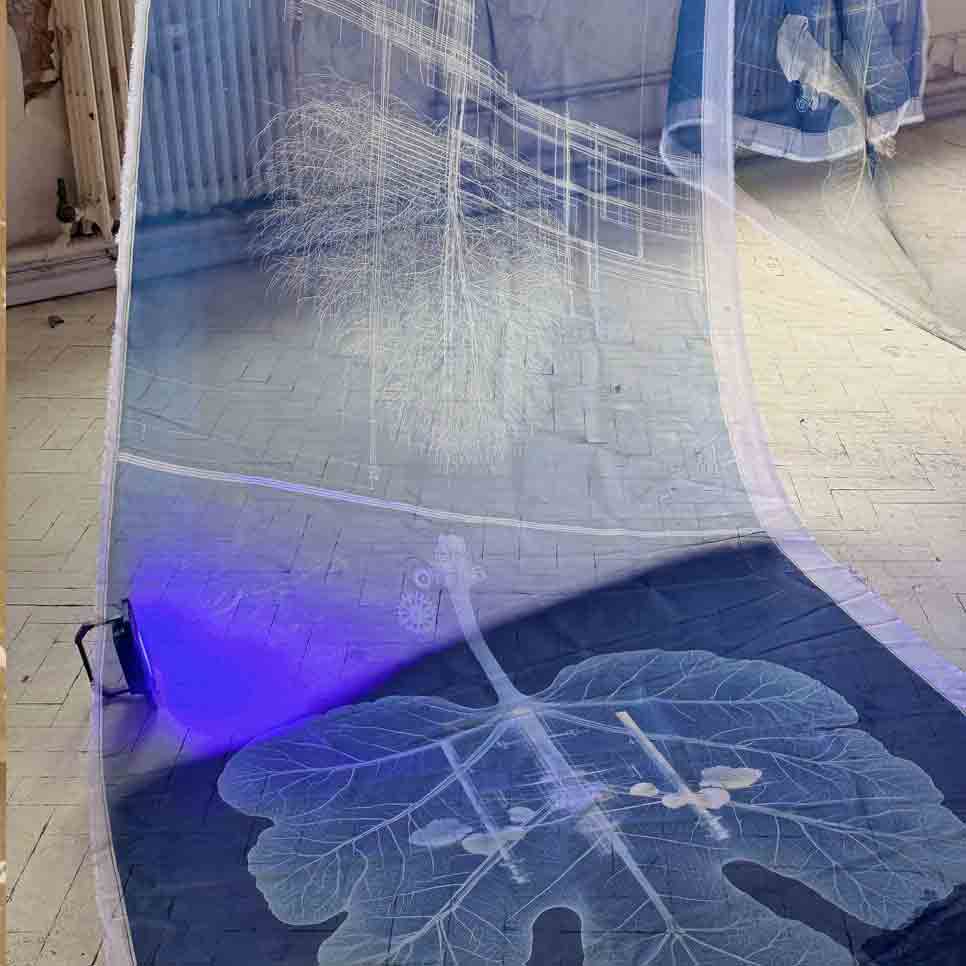
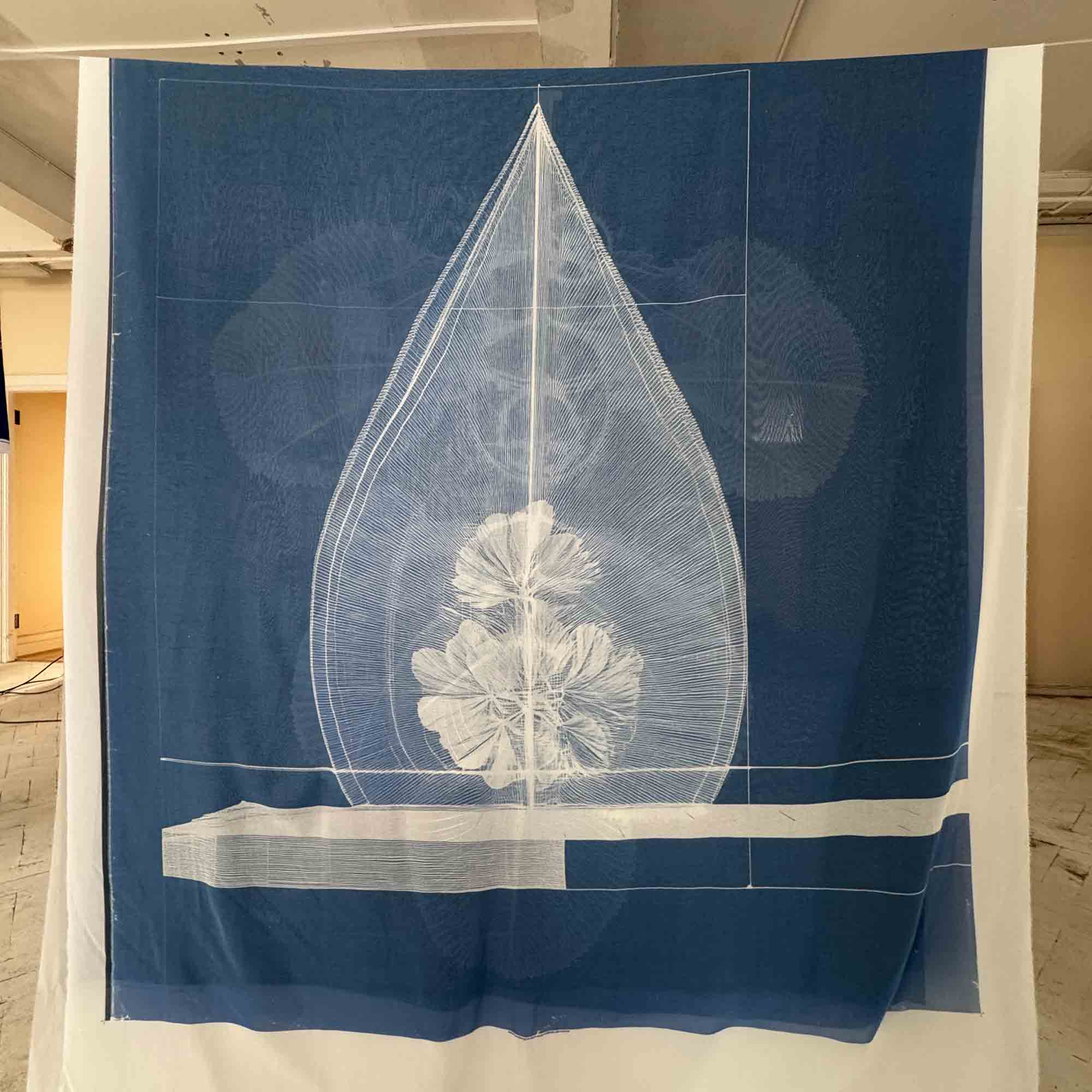
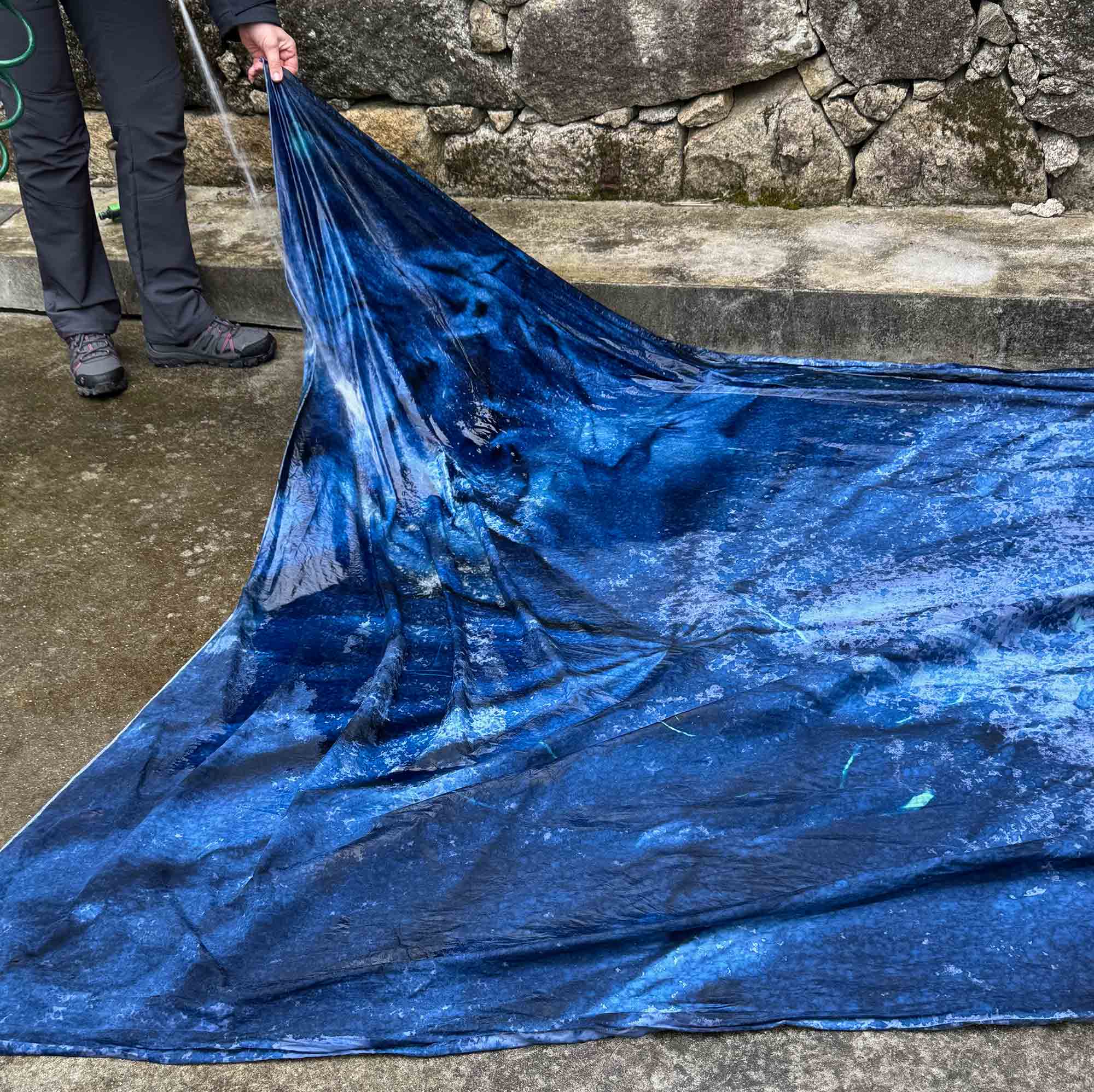
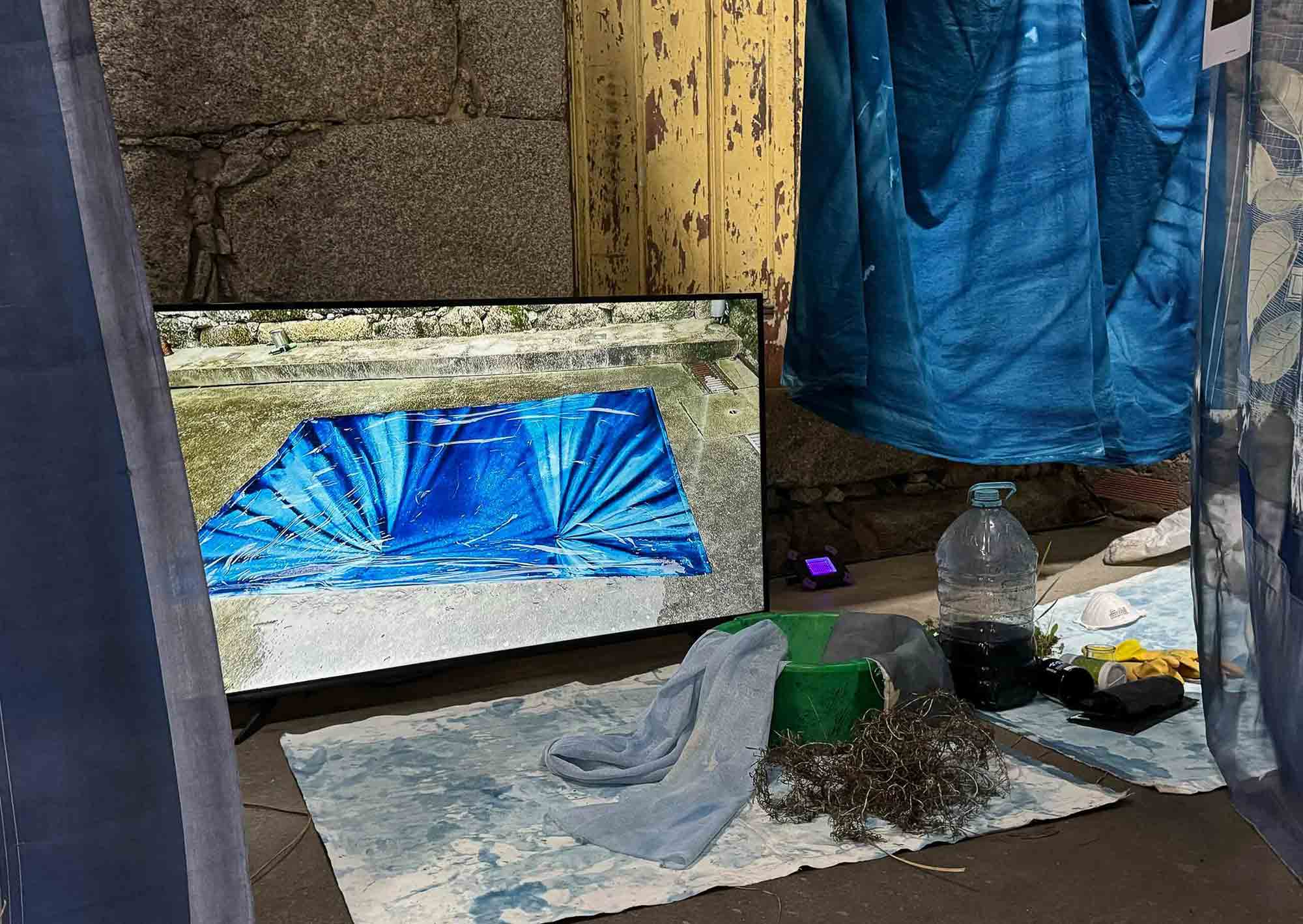
O segundo modo emerge da linguagem e dos sistemas algorítmicos. Descrevo imagens que não existem ainda, e estas são sintetizadas por redes neuronais. Depois de geradas, são transferidas para tecido através de impressão industrial. Mas esse gesto não se encerra aí: volto a intervir manualmente, manchando as superfícies com solução de cianotipia, reintroduzindo instabilidade, erro, variação.
Entre estes dois regimes — o vegetal e o computacional — o tecido torna-se um espaço de negociação.
Não há aqui uma hierarquia entre natural e artificial. Há, antes, uma ecologia da imagem em que múltiplas forças co-produzem o visível: plantas, luz, algoritmos, químicos, gestos humanos.
O que emerge não é uma imagem fixa, mas um campo sensível — onde imprimir é também traduzir, contaminar, escutar o mundo em transição.
PROCESS / PROTOCOLS
Plant-based printing protocols
fitogramas (impressão por contacto e calor)
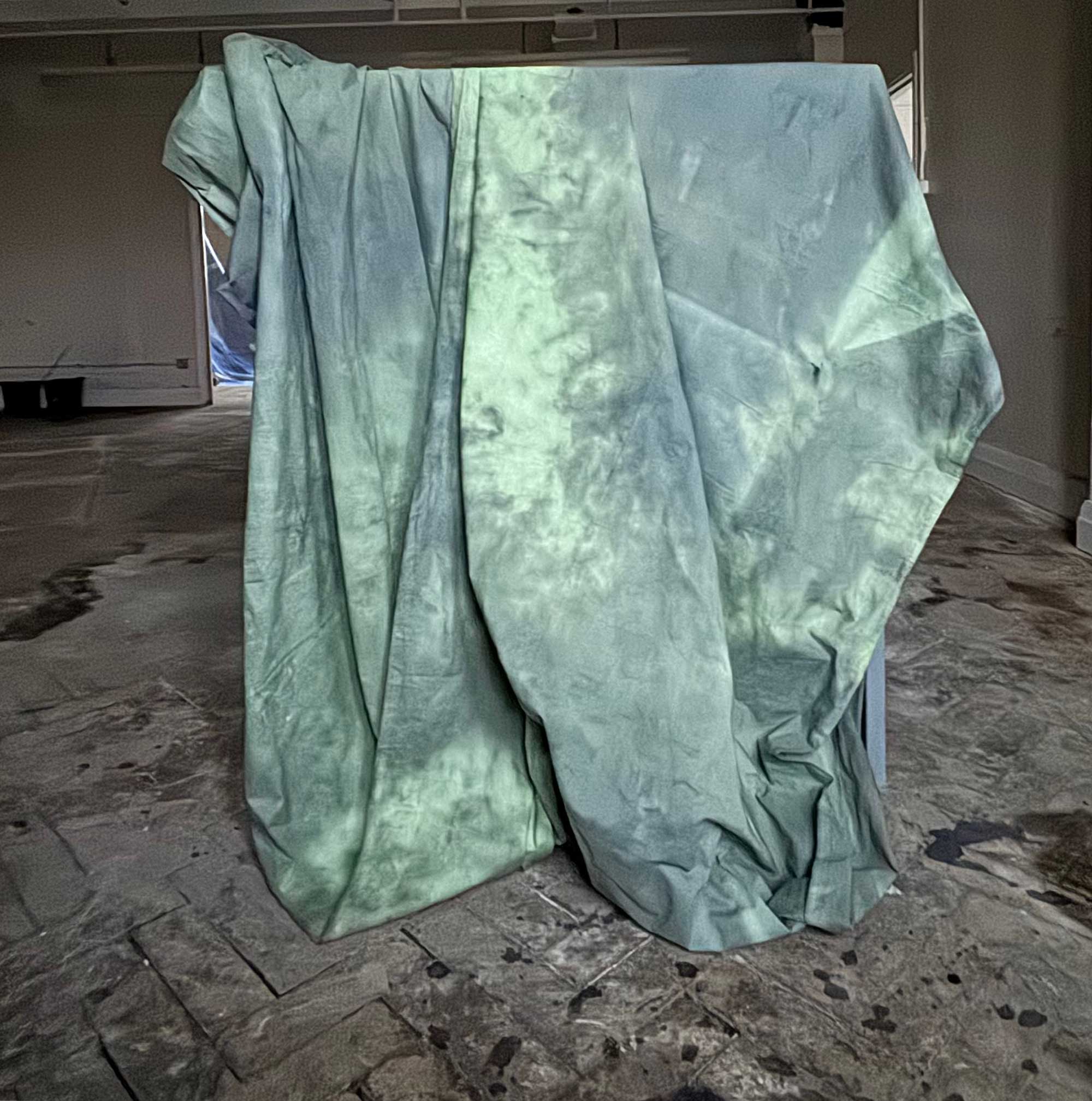
eco-tinturaria artesanal (“panela suja”)
cianotipias solares (luz, tecido e vegetal)
Generative printing protocols
imagens geradas por descrição textual (IA / redes neuronais)
impressão têxtil industrial (on demand)
intervenção manual com solução de cianotipia
In textiles, I begin by listening.
The herbarium ceases to be merely a collection of plants and becomes a field of printing — a surface where different regimes of image meet, friction, and transform.
In this project, I work with two distinct modes of relating to image and matter.
The first emerges from direct contact with the territory. I gather plants through dérive, reuse textiles, prepare light-sensitive solutions. These are slow, situated gestures, where the body participates in the inscription of the image. Printing takes place through proximity, heat, solar exposure — processes in which vegetal matter does not represent, but acts.
The second mode emerges from language and algorithmic systems. I describe images that do not yet exist, and these are synthesised by neural networks. Once generated, they are transferred onto textile through industrial printing. But the gesture does not end there: I return to intervene manually, staining the surfaces with cyanotype solution, reintroducing instability, error, variation.
Between these two regimes — the vegetal and the computational — the textile becomes a space of negotiation.
There is no hierarchy here between natural and artificial. There is, instead, an ecology of the image in which multiple forces co-produce the visible: plants, light, algorithms, chemicals, human gestures.
What emerges is not a fixed image, but a sensitive field — where printing is also a way of translating, contaminating, listening to a world in transition.
PROCESS / PROTOCOLS
Plant-based printing protocols
Phytograms (printing by contact and heat)
Artisanal eco-dyeing (“dirty pot”)
Solar cyanotypes (light, textile, and plant)
Generative printing protocols
Images generated from textual description (AI / neural networks)
Industrial textile printing (on demand)
Manual intervention with cyanotype solution
TITLE: Protocolos de impressão têxtil
AUTHOR: paula roush
MEDIUM: Fitogramas (impressão por contacto e calor)
Panela suja (eco-tinturaria artesanal)
Cianotipias solares (luz, tecido e vegetal)
dimensoes variaveis
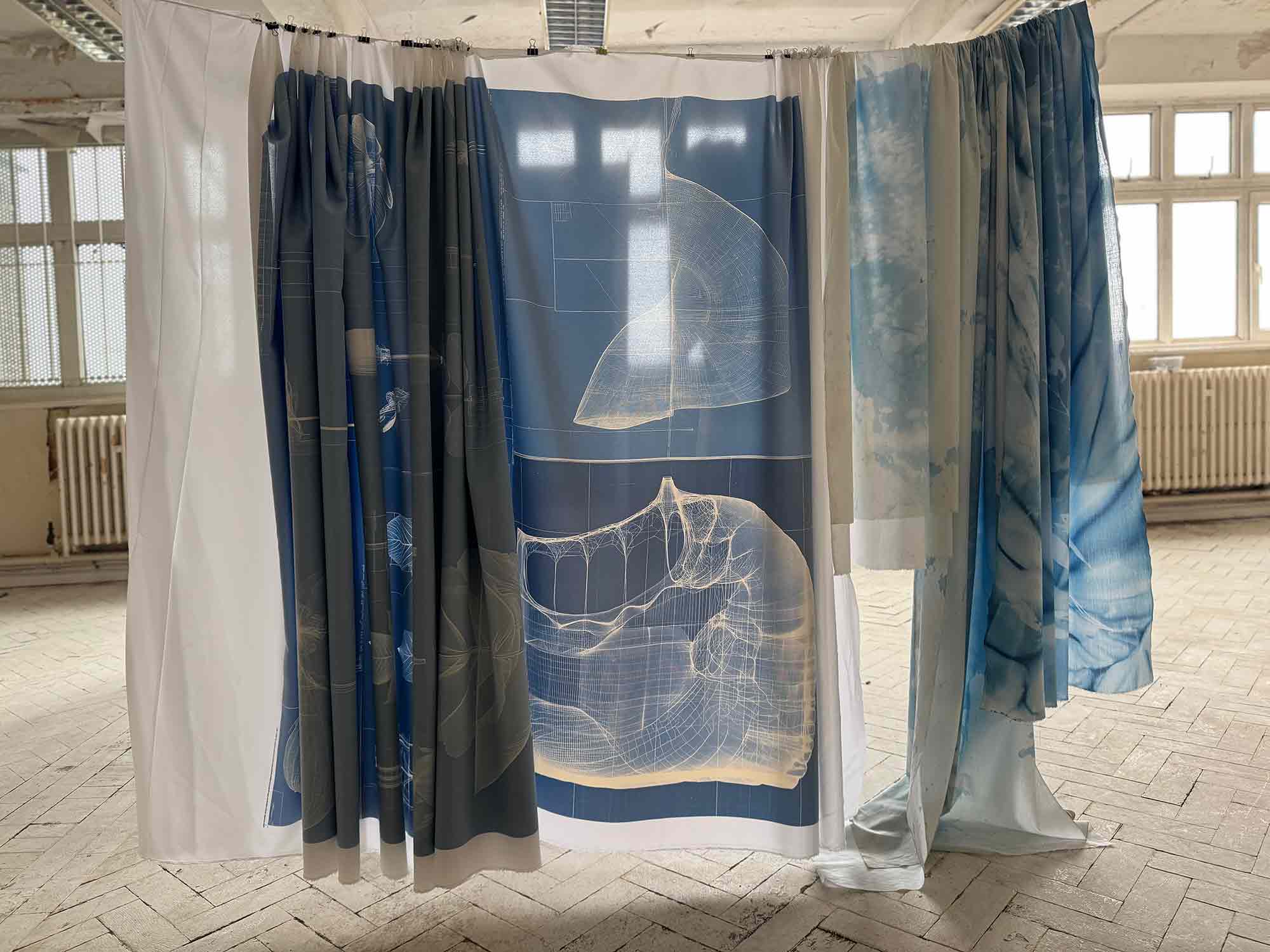
No Herbário do Antropoceno, os gestos de impressão têxtil desdobram-se em dois modos distintos de relação com a imagem e a matéria: um baseado na presença vegetal e atmosférica, outro mediado por linguagem e sistemas algorítmicos.
Os protocolos de impressão com matéria vegetal envolvem contacto direto com o território — plantas recolhidas em deriva, tecidos reutilizados, soluções sensíveis à luz. são práticas situadas, ecológicas e tácteis.
Fitogramas (impressão por contacto e calor)
Panela suja (eco-tinturaria artesanal)
Cianotipias solares (luz, tecido e vegetal)
Os protocolos de impressão generativa operam por via algorítmica: imagens criadas com base em descrições textuais e inteligência artificial, produzidas por redes neuronais treinadas. Estas imagens, depois de geradas, são impressas em tecido numa fábrica de impressão on demand, e posteriormente manchadas com solução de cianotipia — cruzando síntese maquínica e intervenção manual.
Estes dois regimes de impressão coexistem neste herbário expandido. juntos, desenham uma ecologia da imagem onde o gesto humano é apenas uma das forças que imprime, sonha, contamina e traduz o mundo em transição.
TITLE: Textile printing protocols
AUTHOR: paula roush
MEDIUM: Phytograms (contact and heat printing); Dirty pot (handcrafted eco-dyeing); Solar cyanotypes (light, fabric, and plant); dimensions variable.
In the Herbarium of the Anthropocene, the gestures of textile printing unfold in two distinct modes of relation between image and matter: one grounded in vegetal and atmospheric presence, the other mediated by language and algorithmic systems.
The printing protocols with plant matter involve direct contact with the territory — plants collected while drifting, reused fabrics, and light-sensitive solutions. These are situated, ecological, and tactile practices.
Phytograms (contact and heat printing)
Dirty pot (handcrafted eco-dyeing)
Solar cyanotypes (light, fabric, and plant)
The generative printing protocols operate algorithmically: images created from textual descriptions through artificial intelligence, produced by trained neural networks. Once generated, these images are printed on fabric in an on-demand printing factory and later stained with cyanotype solution — crossing machinic synthesis with manual intervention.
These two regimes of printing coexist within this expanded herbarium. Together, they trace an ecology of the image in which the human gesture is only one of the forces that prints, dreams, contaminates, and translates the world in transition.